

Reviews
Review: Elektra Luxx
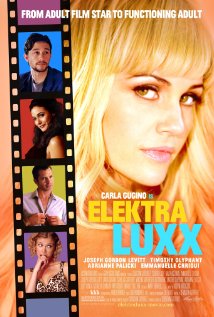
Carla Gugino plays the titular Elektra Luxx, a retired porn superstar making a living teaching an adult sex-ed class ("How to act like a porn star in bed"). She's just found out she's pregnant and is having a really bad week. She's suffering an existential crisis, worried about how she can be a good mother and still explain to her child what she used to do for a living. Just as she's dealing with this, people begin appearing in her life, making her question who she is and who she wants to be.
The movie, written and directed by Sebastian Gutierrez, looks like it would have been more suited to a playhouse stage than the silver screen. This, despite an impressive number of stars: Gugino, Joseph Gordon-Levitt, Kathleen Quinlan (Event Horizon, Apollo 13), Marley Shelton, Malin Ackerman, Timothy Olyphant, Justin Kirk and Julianne Moore. The dialogue, full of random non-sequiturs, meanders through each scene. A chance encounter with a former co-star, Holly Rocket (Friday Night Lights' Adrianne Palicki) spawns a tedious and completely disconnected subplot that follows Holly and her best friend on a vacation, culminating in the two falling in love.
Things become a little more clear upon learning Elektra Luxx is actually a follow-up to Gutierrez's 2009 release Women in Trouble. Elektra Luxx is a sequel to that virtually unseen flick with most of the same actors. Taken alone, it is a mess, with characters that appear out of nowhere even in the last 10 minutes of the film, as clunky dialogue explains their connection to Elektra. A friend is actually the mother of a spoiled trust-fund brat neighbor, for instance. The entire lesbian love-affair vacation should have been dropped, as it completely breaks the narrative of Elektra's story, involves characters who have no introduction (unless you've seen the first film), and frankly put me to sleep both times I watched the movie.
SXSW Review: Building Hope

Typically I'm a staunch believer in the cinéma vérité style of documentary filmmaking, with little if any involvement on the filmmaker's part so I can feel immersed in the story. On the other hand, there's Austin filmmaker Turk Pipkin, who narrates and is seen in his documentary films including Nobelity, One Peace at a Time and now Building Hope. His latest film often focuses on The Nobelity Project, an Austin-based nonprofit led by the filmmaker and his wife Christy Pipkin. The Nobelity Project partnered with a remote low-income African community with great results for the local primary school, and so Pipkin promised to help build Mahiga Hope High, the first high school for the community, while connecting Kenyans with American supporters.
In Building Hope, viewers learn that in Kenya, primary school is free and mandatory but families have to pay their teenagers to attend high school. Making matters worse are the gaps in qualified teachers, high school tuition and poor conditions of the few existing high schools, including lack of clean water and sports facilities. Without a high school education, the children of Mahiga are left with few options in life. The Pipkins were determined to change this fact, by introducing the "1000 Voices for Hope" program with the goal of getting 1,000 donors to donate $100. Donors included Austin musicians Lyle Lovett, Emily & Martie of The Dixie Chicks and Willie Nelson, who stated, "That's a choir I want to sing in."
SXSW Review: A Matter of Taste: Serving Up Paul Liebrandt
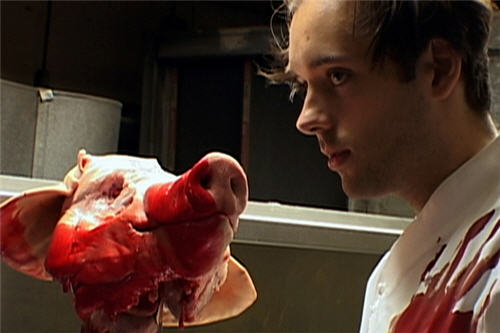
A Matter of Taste: Serving Up Paul Liebrandt may seem like it's riding on the coattails of foodie phenomenon of recent years. Nine years in the making, the documentary about a rising-star New York chef pre-dates Top Chef by some years.
Liebrandt made a splash on the New York City food scene as the epitome of enfant terrible chef, arrogant with the skill to back it up. But as A Matter of Taste reveals, all the skill in the world does not equate to success, especially when your art depends on location, reputation and finances. At 24, Liebrandt was the youngest chef to receive a three-star review from The New York Times, but outside of New York you may not have heard of him. Until now.
Sally Rowe's feature directorial debut focuses as much on the business side of restaurants as the man as Liebrandt matures as a chef and a person. When Rowe started filming him, Liebrandt was on the verge of culinary stardom only to have it elude him in arguably the most competitive restaurant arena in the world. Filled with interviews of food critics and celebrity chefs such as Thomas Keller and Eric Ripert, A Matter of Taste is insightfully engaging as Liebrandt's journey is documented, with Liebrandt is the viewer's guide to into the kitchens of New York. Most people know about "location, location, location" but the economic realities are much more involved, as is the personal toll of working the hours necessary to bring those gorgeous dishes to your table.
SXSW Review: Otis Under Sky
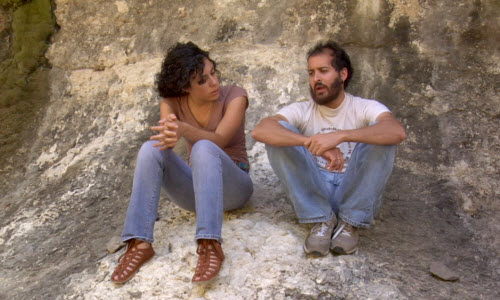
As I sat in the Paramount Theatre watching the beautiful Otis Under Sky, as its story slowly unspooled, I thought of ... Roger Ebert. When Mr. Ebert reviewed the Austin-shot Harmony and Me in 2009, he said that "Austin has never looked more unlovely" and that the title character "never visits a part of town that doesn't look like an anonymous suburb." He would love the Austin portrayed in Otis Under Sky, though: lush parks, glittering downtown lights and lots of lakes and streams, contrasted with city bus rides and shabby housing that reveal parts of Austin tourists and many locals rarely see, but that still catch the eye.
Otis Under Sky is very much an Austin-y movie, without the desperate "everyone wear a Longhorn t-shirt and drink Shiner Bock" measures laughably adopted in Whip It. No one goes to Alamo Drafthouse; you wonder if the characters could afford such an outing. Instead, they head to Mayfield Park to stare at the peacocks ... but not for too long if they don't want to miss the bus back. Only one character in this movie drives a car.
SXSW Review: Incendiary: The Willingham Case
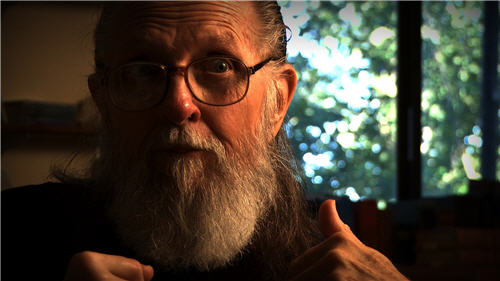
No matter what side of the death penalty issue you're on, the aptly-titled documentary Incendiary: The Willingham Case is a must-see for anyone who believes in government transparency and protecting civil rights.
In 1991, an incomprehensible tragedy happened in Corsicana, Texas; three small girls died in a house fire. In 2004, their father was executed for their murder. And in 2011, the provocative documentary Incendiary brings focus to the controversial investigation that not only led to a man's death but illuminated the intractability of the Texas state government. The Willingham case has been making headlines because the state of Texas -- and particularly Governor Rick Perry -- has vehemently refused to reconsider the case, even when they could have stayed the execution when reports of a flawed investigation came to light.
SXSW Review: Terri
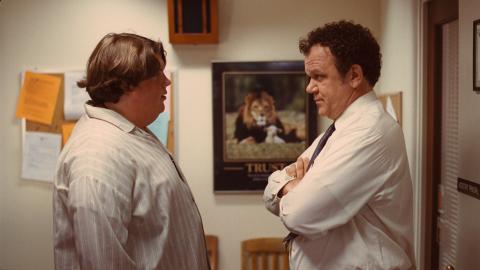
There may be no crueler creature on Earth than the average teenager. Slaves to conformity even when trying to be nonconformist, one of teenagers' favorite pastimes is making life miserable for anyone who varies too far from the holy teenage trifecta of great looks, great clothes and great social skills.
The unfortunate titular character of coming-of-age indie film Terri has none of these attributes. Obese, forever clad in pajamas and a quiet loner not really by choice, Terri (Jacob Wysocki) is the quintessential tormented, friendless fat kid who retreats into his own world to escape his schoolmates' endless cruelty. Terri, which screened three times at SXSW, is the quirkiest movie I saw at the festival, an entertaining but oddly written story of a misfit teen's struggle to fit into his inhospitable small-town world.
Terri lives in a dirty, cluttered house with his Uncle James (Creed Bratton), himself an oddball with an unnamed, Alzheimer's-like illness that sets him adrift between complete mental clarity and a trancelike fog of unawareness. The two rely completely on each other for companionship and compassion, as they seem to have no family or friends. Terri's main purpose in life is helping James get through the often frightening moments when his disease takes over. (In one instance, Terri catches James staring glassy-eyed while cooking at the stove, completely oblivious to the burning food in front of him.) When James is lucid, he reciprocates by being Terri's gentle mentor and only friendly human contact.
SXSW Review: The Greatest Movie Ever Sold
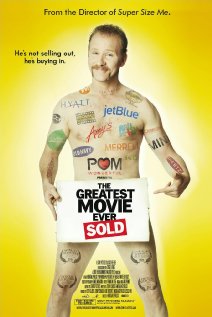
I'm not the greatest fan of Morgan Spurlock. I felt his Super Size Me was over-dramaticized, heavy-handed, and unfair. I only ever saw one episode of his series 30 Days, and I haven't seen any of his other work. Having heard people describe him as "a poor man's Michael Moore," I entered the Paramount with low expectations for the premiere of The Greatest Movie Ever Sold.
Product placement has become an integral, and inescapable part of TV and film production. Spurlock and co-writer Jeremy Chilnick began with the idea that if co-promotion of products could help make a movie a blockbuster, it could also influence the success of a documentary. So, they set out to make a documentary whose production was financed entirely through product placement and co-promotion. In order to do that, they decided to make the documentary about product placement and co-promotion.
The majority of The Greatest Movie Ever Sold consists of Spurlock meeting with various marketing heads and CEOs to pitch the film and request their participation in it. It is safe to assume they had no idea the meetings would be filmed and themselves be integrated into the final product. Interspersed with these are interviews with consumer advocates, including Ralph Nader; trips to the grocery store presumably to do product research, where Spurlock mostly makes fun of the "Mane 'n Tail" hair conditioner; and a trip to São Paulo, Brazil, where all outdoor advertising (billboards, cabs, buses, everything) has been outlawed.
The Greatest Movie Ever Sold is humorous and entertaining, but doesn't exactly serve as biting commentary on the state of advertising in the media. I believe that documentaries should be fair to their subjects, but if anything it felt the corporate sponsors were presented in a way that if not more favorable, they at least got more camera time. A notable moment was the attorney who when asked his rates stated the real question is how much his $700/hour would offset the fee for appearance and promotion in the film.
SXSW Review: Fly Away
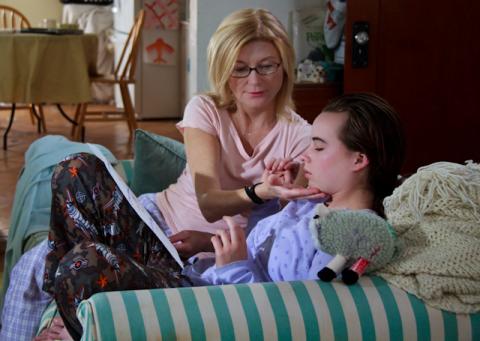
The challenges of autism have inspired many great films, from the often-quoted classic Rain Man to the Austin-made Temple Grandin. This isn't surprising, because while autism can be devastating, the successes of autistic people can be very inspirational. Their stories are tailor-made for powerfully dramatic movies.
Fly Away is an example of how autism's challenges can translate into interesting cinema. The low-budget indie, which played SXSW this year, is the story of single mother Jeanne (Beth Broderick) and her teen daughter Mandy (Ashley Rickards), whose severe autism impacts their lives in both expected and unexpected ways. While Fly Away is uneven, it's a mildly entertaining and poignant depiction of living with autism.
Mandy has reached a point in her life where Jeanne must make some difficult decisions about the girl's future. Now an adolescent, Mandy still behaves like a young child at times, throwing tantrums and demanding her way. But she's also becoming a woman who's curious about dating and marriage. She exhibits common autistic behaviors such as fixating on objects, constantly repeating words and phrases, and not listening to others, as if she's in her own world. Jeanne can manage these behaviors, but is less able to handle Mandy's violent outbursts, which get her suspended from her special education program.
SXSW Review: My Sucky Teen Romance
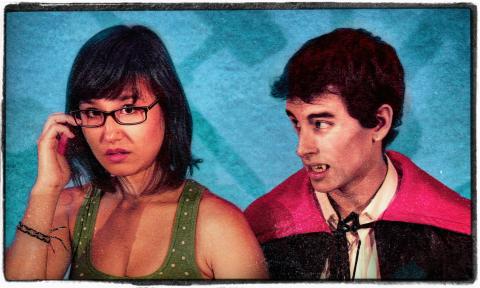
It bodes well for Austin filmmaker Emily Hagins's new feature, My Sucky Teen Romance, that the current Twilight-fueled vampire craze shows no signs of abating. Last year's installment of the bloodily romantic franchise, Eclipse, grossed more than $300 million, and new Twilight movies will be released this year and next. It seems that tweens and teens (and adults who dare admit it) have not yet had their fill of films and novels about pale, fanged, lovelorn teenagers. (No, I'm not one of those adults. But I think you knew that.)
Of course, I'm sure Hagins has no aspirations that her film will gross $300 million; the teenage filmmaker probably be happy just to find a distributor. But if the wildly enthusiastic reception at My Sucky Teen Romance's raucous world premiere at the Paramount on March 15 is any indication, a lot of Hagins's friends and fans hope the movie will be a smashing success.
SXSW Review: Inside America

The so-called American Dream is little more than a fantasy for many Americans. We're told to pursue an ideal life of finding a good job, owning a home, and living in a happy, stable family situation. But for much of America, this life isn't reality and never will be.
The impossible disconnect between the increasingly mythological American Dream and life's harsh realities is the underlying theme of Inside America, an unfiltered and unflinching look at the lives of six high school students in Brownsville, Texas. A narrative film with the look and feel of a documentary, Inside America (which had its US premiere at SXSW on March 14 at the ACC Vimeo Theater) is jarringly, agonizingly realistic.
Curiously, while Inside America was filmed in Brownsville, it's actually an Austrian movie. Austrian director and writer Barbara Eder spent a year as an exchange student in Brownsville in 1994; her experiences during that time gave her the idea for the movie. She and producer Constanze Schumann spent three weeks in Brownsville in 2006 hanging out with students and gathering material for the script. They returned in 2007 and managed to shoot a terrific movie with a crew of only five people, a miniscule budget (all the actors are volunteers), and limited access to the film's main set, Brownsville's Hanna High School.
