

Reviews
SXSW Review: Viva Riva!
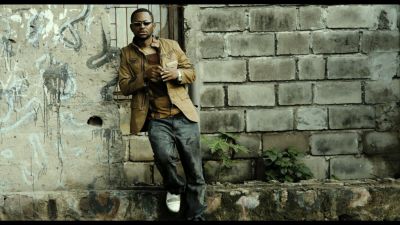
A few facts about the Democratic Republic of the Congo, which you may have known as Zaire: It is the third largest country in Africa and the 12th largest in the world, and the 18th most populous. The citizens are some of the poorest in the world, but the country has untapped natural resources estimated at $24 trillion, making it the richest country in the world. It has been for the last 40 years one of the most corrupt, violent, and lawless places on the planet.
Djo Tunda Wa Munga (pronounced "Joe" for short) has written, produced, and directed the first movie ever to come out of the Congo, a country which until now has had no film industry. Viva Riva! is a gorgeously gritty, sexy adventure that, if it were a book, you couldn't put down. An unintentional blaxploitation piece, the core is a plot you might see in a Tarantino film or something like Snatch, but with all the dials turned up to 11. The depth of violence here isn't an attempt to pander to adolescent bloodlust, but rather an expression of the severe circumstances in which people have had to live in that country.
SXSW Review: Page One: A Year Inside the New York Times

There could not have been a more timely documentary to show at SXSW 2011 than Page One: A Year Inside the New York Times. The first three months of 2011 will go down as a major turning point in the worlds of social media, online news reporting and SEO (search engine optimization) and The New York Times seems to be at the center of it all in one way or another.
Page One shines a light on the difficulty of real news reporting in the world of media convergence and content aggregation. We see new media evangelists trumpet the demise of the "old media" while harvesting the old media's content for their own purposes. We see reporters work on pointed and difficult stories. We see how stories are crafted from ideas, carefully researched and turned into stories. We see the triumphs and the stark realities facing news organizations today. We see the reality of The New York Times in 2011.
Arguably the most compelling character in the story is David Carr. David is a well respected writer for The New York Times and former speaker at SXSW. Throughout the movie we see David defending the track record of The New York Times against new media upstarts. This movie takes us into the mind and process of a quality reporter who cares about getting stories right and does not shrink in the face of adversity. If The New York Times ever needed a defender, they definitely have their man in David Carr.
SXSW Review: The City Dark
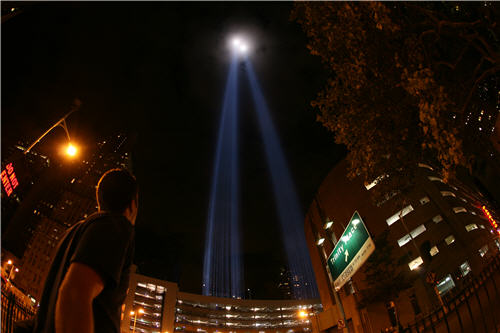
Arguably the invention with the most profound effect on civilization is the light bulb. But along with the advances in technology it heralded, is there a dark side to all the light we have in our lives today? Director Ian Cheney (King Corn) explores the scientific and philosophical side of lighting the night sky in The City Dark.
Cheney explores the history and impact of all the light at night in various chapters, from the history of lighting to light pollution to the impact on nature and humanity. He could easily make a movie on each chapter, but instead includes just enough to make a person consider how much artificial lighting they include in their lives.
The City Dark is not just a romanticized longing for the heavens above. Some of the facts Cheney presents may at first seem like they're not relevant to everyday people, such as light pollution making it difficult for astronomers do their jobs. Urban dwellers may even wave off the impact on other species. But others are much more relevant, such as how light impacts the human body, and how shift work can be deadly to the point the that World Health Organization has made a declaration about it.
Review: Battle: Los Angeles
When I was a young man in junior high, 25 years ago, I read a passage about a group of young men, cadets at the U.S. Air Force Academy who were the last desperate stand of resistance against an unstoppable alien invasion. The author created such an image of heroism that for the next five years it was my entire goal to one day be a cadet at the Air Force Academy.
It took the first Iraq war to scare me away from that path. The author of that piece was L. Ron Hubbard, and the book was Battlefield: Earth, which was eventually adapted into one of the worst films ever made, a film that flushed John Travolta's career so far down the toilet only Quentin Tarantino could reach down and pull him out. Battle: Los Angeles may be for this generation what that book was for me. It plays exactly like a two-hour commercial for the US Marines.
Aaron Eckhart is the sergeant, haunted by the loss of his last platoon, ready to retire, forced by an alien invasion to take a batch of new recruits just out of training into the heart of combat on a mission to find and retrieve any civilians in the area before the bombs are dropped to stop the invaders.
SXSW Review: The First Movie

My favorite thing about a film fest like SXSW is the possibility it allows to step outside your normal comfort levels and discover something you really love that you never expected, or at least something incredibly noteworthy and interesting. The international aspect opens a path not just to films but to nations and cultures that get little or no media coverage in the US. My first film selection for 2011, aptly titled The First Movie, is a documentary that ventures into the most remote section of Iraqi Kurdistan, a region decimated by war.
The First Movie is a sort of dreamy documentary exploration into the filmmaker's psyche. Mark Cousins narrates his journey to Goptapa in northern Iraq, a farming village that in 1988 fell victim to chemical warfare attacks by Saddam Hussein's forces, instantly killing one in seven people. Cousins describes growing up in northern Ireland and how the beauty of the country, unmarked by the violence, seems more real than the war that tore through it.
Review: Red Riding Hood
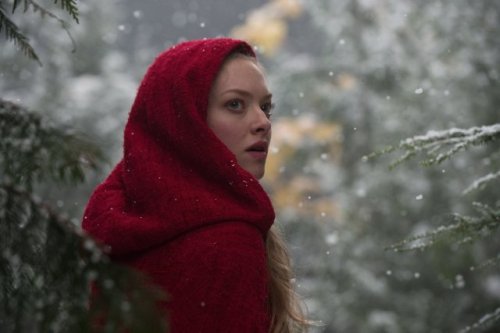
The latest Hollywood trend appears to be retelling classic fairy tales, most recently Beastly and now Red Riding Hood. Unfortunately the tale of a young girl and the false grandmother has suffered the same fate of that of "Beauty and the Beast" -- read Jenn's review of Beastly here -- on so many levels. I have no issues with modernization or re-imaging of classic stories, and look forward to Hansel and Gretel: Witch Hunters and Snow White and the Huntsman both set for release in 2012. However, Red Riding Hood makes no attempt to substantiate the classic antithesis of the safety of the village versus the dangers of the forest, instead focusing on the danger amongst friends and families. With director Catherine Hardwicke of Twilight fame at the helm, the film is more intent on pulling in Twilighters that are jonesing for the next in the series, leaving more discerning audiences disappointed.
Set in a medieval village that is haunted by a werewolf, a young girl, Valerie (Amanda Seyfried), falls for an orphaned woodcutter, Peter (Shiloh Fernandez), much to her family's displeasure -- they have plans for her to marry wealthy blacksmith Henry (Max Irons). The star-crossed lovers have plans to run away together, but their plans are quickly abandoned when Valerie's is found dead from a werewolf attack. Father Auguste (Lukas Haas) calls on the expertise of wolf hunter Father Solomon (Gary Oldman) to save the village from the brutal animal, but Solomon turns out to have his own brutal methods. He has no qualms at offering Valerie to appease the beast.
Review: Rango
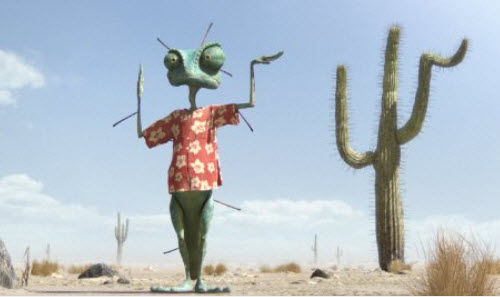
It was disappointing to hear that director Gore Verbinski wouldn't be making the next Pirates of the Caribbean movie, but now that I've seen the reason, all is forgiven. Rango, opening today, is a family movie that isn't just for kids, and not only for kids and their parents, either. Rated PG, the animated film includes saucy, bawdy, even raunchy language that will give parents a good belly-laugh, but roll like a tumbleweed right over the heads of most children under 13. And it's still got enough good slapstick humor and standard cartoon elements to keep the kids entertained.
But for lovers of film, Rango is on an entirely different plain of the Old West. First, Rango himself (Johnny Depp) is a chameleon, the actor of lizards, who spends his idle time in the terrarium acting out movies of his own design with his only companions, a headless Barbie doll and a wind-up fish. He spends all his time being other people, but doesn't really have a grip on who he actually is. In something like a Picasso-view of Toy Story in reverse, when Rango is separated from the family who owns him, he doesn't try to get back to them. There's no attachment, and they're gone without a second thought. Instead, he heads into the desert to find water and discover who he is, in an adventure narrated in theatrical style by a chorus of avian mariachis.
Review: Beastly

It's dangerous to tempt fate, whether it's baiting a curse-hurling witch or titling a substance-versus-style plotted film "Beastly." In the case of the latter, it's all too tempting to hurl that invective right back at the movie. Unfortunately, it's too self-conscious to earn that moniker.
Alex Pettyfer (I Am Number Four) stars as Kyle, the vicious, entitled scion ruling over the in-crowd at his prestigious prep school. It's good to be Kyle, or like him, and in his world if you're not like him, you're dumb and/or ugly. All too quickly he offends one of the outcasts who just happens to be a witch (Mary-Kate Olsen).
Beastly doesn't waste a lot of time before jumping into the story, or character development. After Kyle flaunts his position and power one too many times, Kendra (Olsen) curses Kyle to look as ugly on the outside as he is on the inside. Apparently Kyle isn't so ugly on the inside as he appears, as Beastly can't quite go beyond the realm of "pretty-ugly." Instead of making him hideous, he's actually more attractive (and interesting) with his stylish disfiguration. Even Kendra, who is called ugly, has a Lady Gaga freak-chic sensibility that is more likely to cause a fashion craze than it is to repel.
Review: Barney's Version
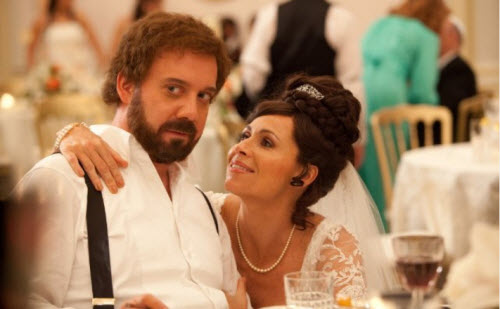
Although no one would argue that Barney Panofsky is a good role model, he's undeniably entertaining.
Hard drinking, completely self absorbed and proudly politically incorrect, Barney (Paul Giamatti) is the protagonist of Barney's Version, a dark, wry and witty study of a life lived fully, if not quite ethically. If creativity and pithy sarcasm are Barney's strong suits, honesty and empathy for others are not; nor are fidelity, sobriety or high idealism. Frankly, he's just short of being a complete SOB.
Why, then, do we find ourselves almost rooting for him now and then? Because thanks to a great script and the even greater Giamatti, Barney transforms SOBism into a high art.
Based on the acclaimed Mordecai Richler novel of the same title, Barney's Version opens as 65-year-old television producer Barney reflects on his colorful and often sordid life. The story is told largely in flashbacks spanning four decades, chronicling Barney's young adulthood in Rome and Montreal in the 1970s, his slightly shady financial schemes, three marriages, and later life of parenthood and career doldrums.
Review: Drive Angry 3D
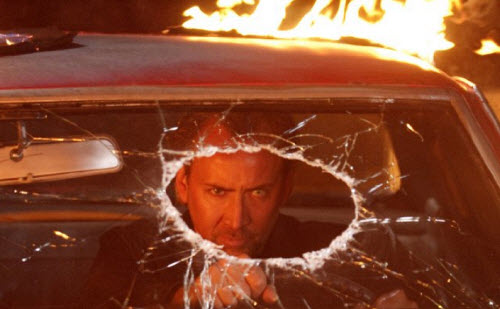
"A vengeful father escapes from hell and chases after the men who killed his daughter and kidnapped his granddaughter." This antiseptic description from IMDb fails to capture the hellacious power of 2011's first truly awesome grindhouse action flick.
Drive Angry 3D inhabits a fantastic world where Hell is envisioned as a literal prison for the souls of the damned who are forced to witness the suffering of their loved ones. Nicolas Cage plays John Milton, a character not unlike Todd McFarlane's Spawn, who steals "The Godkiller" and leaves Hell to hunt down Satanic cult leader Jonah King (Billy Burke) and save his grandchild. Along the way, he picks up Piper (Amber Heard), his partner in ass-kicking, while being pursued by The Accountant (William Fichtner). David Morse later turns up as Milton's best friend, Webster (Daniel perhaps?).
