

SXSW Review: The Greatest Movie Ever Sold
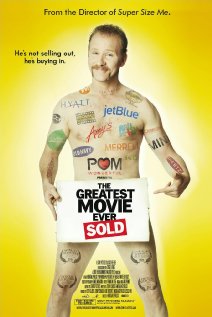
I'm not the greatest fan of Morgan Spurlock. I felt his Super Size Me was over-dramaticized, heavy-handed, and unfair. I only ever saw one episode of his series 30 Days, and I haven't seen any of his other work. Having heard people describe him as "a poor man's Michael Moore," I entered the Paramount with low expectations for the premiere of The Greatest Movie Ever Sold.
Product placement has become an integral, and inescapable part of TV and film production. Spurlock and co-writer Jeremy Chilnick began with the idea that if co-promotion of products could help make a movie a blockbuster, it could also influence the success of a documentary. So, they set out to make a documentary whose production was financed entirely through product placement and co-promotion. In order to do that, they decided to make the documentary about product placement and co-promotion.
The majority of The Greatest Movie Ever Sold consists of Spurlock meeting with various marketing heads and CEOs to pitch the film and request their participation in it. It is safe to assume they had no idea the meetings would be filmed and themselves be integrated into the final product. Interspersed with these are interviews with consumer advocates, including Ralph Nader; trips to the grocery store presumably to do product research, where Spurlock mostly makes fun of the "Mane 'n Tail" hair conditioner; and a trip to São Paulo, Brazil, where all outdoor advertising (billboards, cabs, buses, everything) has been outlawed.
The Greatest Movie Ever Sold is humorous and entertaining, but doesn't exactly serve as biting commentary on the state of advertising in the media. I believe that documentaries should be fair to their subjects, but if anything it felt the corporate sponsors were presented in a way that if not more favorable, they at least got more camera time. A notable moment was the attorney who when asked his rates stated the real question is how much his $700/hour would offset the fee for appearance and promotion in the film.
The only real dark side of advertising that was presented involved research where subjects are given MRIs or CAT scans while being shown advertising in order to determine which images are most effective. Spurlock does devote a couple of minutes to joking about all the concessions required by his contracts, what he can and can't say, where he has to purchase gas, what he can eat or drink on-screen, etc. But these are all conditions to which he agreed when he signed the contracts. In the end, The Greatest Movie Ever Sold doesn't seem to have had a point other than to see whether it could be made in the first place.
The full list of sponsors includes at least: Thayer's Natural Remedies, Sheetz, Seventh Generation, Petland Discounts, Old Navy, MovieTickets.com, Merrell, Mane 'N Tail, Jet Blue, Hyatt Hotels & Resorts, Get it for Free Online, Carrera /Solstice, Ban, The Aruba Tourism Authority, Amy's Kitchen, and presenting sponsor (for a $1 million buy-in) POM Wonderful. Each is visible heavily through the movie, and there are a couple of humorous ads embedded within the film.
While the movie had a definite impact on my opinion of the sponsoring products, particularly Merrell and POM Wonderful, it failed to notably increase my opinion of Morgan Spurlock as a documentary filmmaker. He forgets that we already see sponsored/cross-promoted documentaries every single day. They're called infomercials.