

Reviews
Review: The Tree of Life

To flesh out a review, a film critic sometimes relies on production notes for a synopsis, short biographies of cast and crew members and production details that readers might find interesting. These notes usually are very concise, running no more than a few pages.
And then there are the production notes for Terrence Malick's sprawling and much anticipated new movie, The Tree of Life. If you're familiar with Malick, it may not surprise you that The Tree of Life's production notes are 45 pages long. With their lengthy expositions about the film's genesis and meaning, even the production notes for this most Malick of Malick films are themselves very, uh, Malick. (Much as I adore Malick's work, I did not read all 45 pages.)
Not that being very Malick is a bad thing, of course, especially if we define "Malick" to mean "laden with sumptuous imagery and thought-provoking ideas." And The Tree of Life certainly is thought provoking; had I not found the production notes' ponderous content to be a perfect metaphor for this exceedingly ponderous and metaphorical film, I might have opened this review with a paragraph containing only one word: "Hmm."
Review: Kung Fu Panda 2
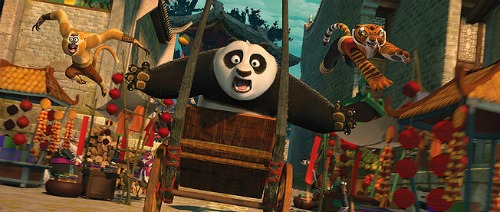
I'll admit first off that I really liked Kung Fu Panda when it came out a few years back. Therefore, it's not that big of a surprise that I loved Kung Fu Panda 2. This sequel, helmed by Jennifer Yuh in her film directing debut, comes the closest to Pixar heart than any other Dreamworks animated movie I've seen, but still keeps the laughs coming.
A colorful shadow puppet tale kicks off the movie. In this prologue, we learn the story of Lord Shen (Gary Oldman), a peacock who becomes so obsessed with firepower that his parents kick him out of their kingdom. Then we join our cuddly protagonist Po (Jack Black) and his Furious Five friends as they play with dumplings and fight Lord Shen's underlings, who are stealing metal from poor villagers.
Lord Shen forges the stolen metal for a cannon he uses to take out one of Po's kung-fu heroes, Master Thundering Rhino (Victor Garber!), when he refuses Shen entry into his childhood home. Po and the Furious Five must travel to protect this city from destruction, spouting silliness along the way. Master Shifu (Dustin Hoffman) warns the group that Shen's weapons could mean the end of kung fu. Po replies, "But I just got kung fu!" This main plotline may seem somewhat predictable, but it's handled in such an enjoyable fashion that it didn't bother me.
Review: The Hangover Part II
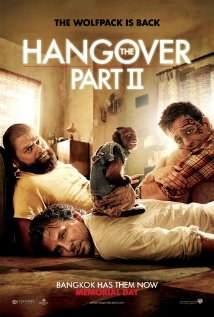 I really wanted to love The Hangover Part II. Its predecessor left me laughing for days. The trio of Bradley Cooper, Ed Helms and Zach Galifianakis was lightning in a bottle, and the over-the-top script pushed the limits in the name of harmless fun. I'm not a pessimist who expects to hate every sequel, and I was really looking forward to this second outing, also directed by Todd Phillips.
I didn't believe early reports that it was simply a rehash of the original script, though it would seem so at first. Cooper, Helms and Galifianakis again wake up and trace the events of a drug-fueled night of partying, and have to complete a mission in time to return for a wedding. Again, the jokes are outrageous, and The Hangover Part II is good for a few laughs, but that's where the similarity ends.
My first complaint is that it takes 30 minutes to muddle through the setup at the beginning of the movie. There's a scene at Stu's (Helms) office, another at the Garner mansion, a banquet in Thailand, and so on. It really takes a while to get moving as compared to the snappy script of The Hangover.
Second problem regards the fourth companion, Justin Bartha as Doug. Doug spent the entirety of the first movie missing (and it was his wedding they had to get to). I had hoped in The Hangover Part II, we would see more of him and it would bring a new dynamic that would allow Bartha to show off his comedic chops. Instead, though Doug gets more screen time, he is stuck back at the hotel while the rest of the "wolf pack" parties without him. Taking his place as the missing man and object of the search is Mason Lee as Stu's soon-to-be brother-in-law, Teddy.
Third problem I had was that the dynamic here is changed. Cooper is no longer really leading the group and feels like he's just along for the ride. He's underused, and isn't really the focus of any of the gags, which are held almost exclusively for Helms. It felt almost like he has grown to be too big a star and was doing his pals a favor being in their little movie.
VOD Review: How to Fold a Flag

The Iraq war documentary How to Fold a Flag opens with an intriguing quote from German writer and military veteran Ernst Jünger: "We were asked to believe that the war was over. We laughed. For we were the war."
This quote is wholly appropriate for the SXSW 2010 film, which has just become available on cable VOD and online, including Amazon Instant Video
Directors Petra Epperlein and Michael Tucker follow up on five soldiers featured in their acclaimed 2004 documentary Gunner Palace. How to Fold a Flag updates us on the civilian lives of four soldiers, while also interviewing the parents of a fifth soldier killed in Iraq. Like its predecessor, the film is an unblinking and often caustic look at the Iraq war's toll.
Review: Pirates of the Caribbean: On Stranger Tides
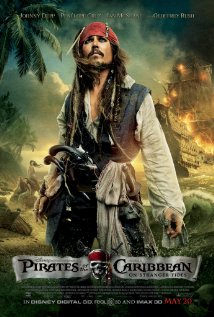
Since Pirates of the Caribbean: The Curse of the Black Pearl was released in 2003, I have been an enormous fan of the Pirates of the Caribbean movies. No other film series in the last decade has captured my imagination the way Pirates did with its astounding special effects and swashbuckling adventure.
But it never would have been a success without Johnny Depp's inspired performance as Captain Jack Sparrow. Depp practically invented his own pirate language as Sparrow, and indeed, Jack Sparrow costumes dominated Halloween parties that year (and the next). While the first three installments encapsulated the tale of William Turner and Elizabeth Swann, they were also undeniably the adventures of Jack Sparrow on his quest for fortune, reknown and life eternal.
Pirates of the Caribbean: At World's End not only concluded the Elizabeth-William arc, it neatly set up a new adventure with the map to the Fountain of Youth. Returning for a fourth movie, Pirates of the Caribbean: On Stranger Tides, Depp reunites with Geoffrey Rush's Barbossa and joins Ian McShane's dread pirate Blackbeard as well as Penélope Cruz.
As the ultimate fan of the Pirates series, I was anxious that Gore Verbinski would not be returning to direct (probably too busy working on that masterpiece Rango, see my review here), but Rob Marshall (Chicago, Memoirs of a Geisha) is no slouch. I needn't have feared as On Stranger Tides captured the magic and even provided a few pleasant surprises. The decision to film in 3D was my main disagreement. 3D would have better served the epic scope of At World's End, but was entirely unnecessary here.
On Stranger Tides is ostensibly designed as the first of a new trilogy, and is scaled back greatly in scope. While the previous Pirates outings were heavy with sea travel and battles, even going all the way to the end of the world and back, the events in On Stranger Tides take place primarily on land, reflecting a smaller budget. In fact, the action moves smoothly between six locations by my count, and I don't recall there being any battles at sea. However, the film tells a good story, and the land-bound action is entertaining.
Review: Skateland
I came of age in the early 1980s, but feel no nostalgia for the era. From its anti-government politics to its greed-fueled economic ethos to its mostly insipid popular culture, the decade of Ronald Reagan, Madonna and Dallas wasn't exactly America's finest hour. Thirty years later, sentiments like "government is the problem" and soulless techno-pop like "Rock the Casbah" are hardly the stuff of fond memories. (That is, at least for those of us who so wish we'd come of age during America's coolest decade, the 1960s.)
That said, I do enjoy some modern cinematic takes on the Eighties; it's interesting to see the era filtered through various filmmakers' visions, even if their sentiments are more nostalgic than mine. I particularly enjoy films that regard Eighties culture with a mixture of warm fuzziness and well deserved mockery.
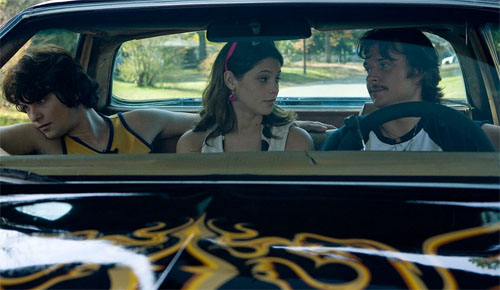
A case in point is Skateland, a pleasantly entertaining story about coming of age in a small Texas town in 1983. The film sets an oft-told tale of dawning adulthood and family turmoil against an authentic backdrop of, well, 1983. (Think Camaros, skin-tight jeans and music stores -- remember those? -- in shopping malls. 'Nuff said.)
Skateland's protagonist is 19-year-old Ritchie Wheeler (Shiloh Fernandez), manager of his town's once-popular but now fading roller rink. Although he toys with a writing career (the awards on his bedroom wall attest to his talent), Ritchie is mostly content to work at his dead-end job, party with his friends and maintain a halfhearted relationship with his friend Michelle (Ashley Greene).
Review: Bridesmaids
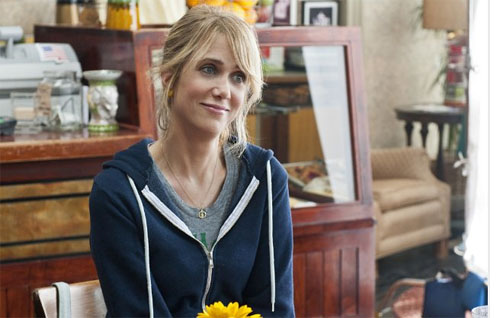
I'm resisting the very strong urge to write "OMG COMEDY WRITTEN BY SMART WOMEN GO PAY TO SEE IT THIS WEEKEND GO GO SO WE CAN HAVE MORE NOW NOW GO NOW." Let's face it -- we don't get many smart comedies written by women and starring women. Women are supposed to make do with comedies with a sexist and mean undertone, or ridiculously cliched melodramas, or those "women are all sisters" movies with bonding over shopping and/or Motown dancing scenes.
Bridesmaids has shopping and female friends being ridiculous and even wedding planning, all things that would normally have me running away as far as possible and begging someone else to please review the movie because I would rather clean the cat's butt than watch such a thing (unless it was made in the 1930s, but they understood wit back then). However, writers Kristen Wiig and Annie Mumalo have teamed up with director Paul Feig and producer Judd Apatow to bring us a comedy about women that is primarily meant to make us laugh, and secondarily meant to have strong and realistic female characters in it, and the result may not be perfect but it's damned refreshing.
Review: Everything Must Go
When it comes to choice of roles, Will Ferrell and Tom Cruise share something in common. They regularly choose roles that are safe and play in a limited range. In a Tom/Will movie Tom is Tom and Will is Will. But every once in awhile they break from their self-created molds and pick roles that color outside of the lines. For Cruise, the roles that color outside the lines include Frank T.J. Mackey in Magnolia and Les Grossman in Tropic Thunder. For Ferrell, the role of Nick Halsey in Everything Must Go is his departure from a typical Will Ferrell movie.
Nick Halsey is having a particularly bad day: Fired from his job, returns home to find all his worldly possessions strewn across the lawn ... and to add insult to injury, the locks to his house have been changed by his wife. But his misery doesn't stop there. I won't go into details. Let's just say that more bad stuff happens.
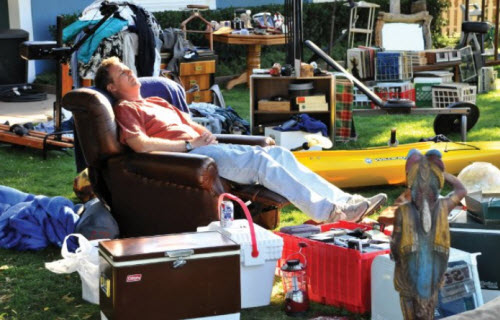
After these initial tragedies, Nick gets drunk on PBR (Pabst Blue Ribbon) Tall Boys and eventually crashes on the front lawn of his house in a recliner. Having nowhere else to go, he sets up shop on the front lawn. In a normal Will Ferrell movie this is the point where we get silly slapstick comedy laced with filler to take us to the next comedy skit. Not this time. Ferrell does a commendable job of showing the despair of a man that has just lost everything. He carries this emotional thread throughout the movie.
Review: True Legend
The name Woo-ping Yuen may not sound familiar to general filmgoers, but you don't have to be a martial-arts film fan to have witnessed Master Yuen's contribution to the action movie industry. Best known to the general populace for his contribution to The Matrix and Kill Bill series, Yuen is an international legend due in part to his action/fight choreography and martial arts direction. He's often credited with playing an integral part in action/martial arts star Jackie Chan's career by casting and directing him in the 1978 classic martial arts film Drunken Master.
One would think that with over 40 years of experience under his belt, the 65-year-old Yuen would be ready to rest on his laurels -- not so, as he returns to the director's chair for the first time in almost 15 years with True Legend, a Fantastic Fest 2010 selection that returns to Austin on Friday for a theatrical run at Alamo Drafthouse on South Lamar.
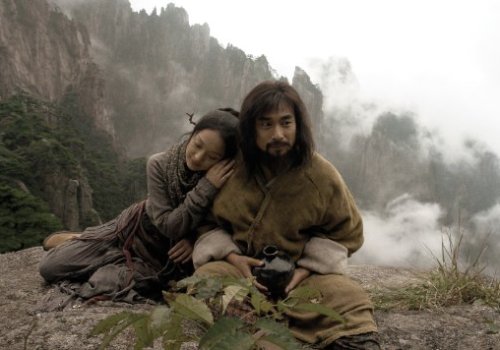
True Legend presents the "Chronicles of Wushu Masters: Beggar Su" in three parts. The short but remarkable intro shows how how Su Qi-Er (Man Cheuk Chiu), a renowned Qing dynasty general, saves a prince in a decisive battle. Su is offered the governship of a province, but he declines and turns over his troops to his foster brother, Yuan Lie (Andy On) instead. Su plans to retire from the military so he can start a family with his wife Yuan Ying (Xun Zhou) -- who is Yuan Lie's sister -- and open his own Wushu martial arts school.
Review: There Be Dragons
 In recent years, the Spanish Civil War has featured in a number of great movies, Guillermo del Toro's Pan's Labyrinth and The Devil's Backbone among others. To an American audience with little or no education on the subject, it can be difficult to follow or understand when the armies aren't wearing blue or gray. A few minutes reading the Wikipedia entry can be most helpful in at least providing a frame of reference.
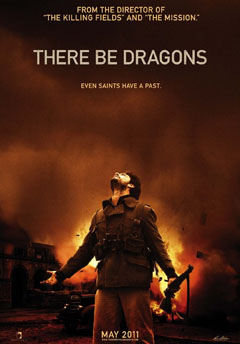
There Be Dragons, written and directed by Oscar-nominated director Roland Joffé (The Killing Fields, The Mission) follows two childhood friends in separate stories through the events of the war. Based on the true story of St. Josemaría Escrivá, There Be Dragons presents the founding and philosophy of Opus Dei, the organization he founded within the Catholic church (and which was depicted negatively in The Da Vinci Code).
Dougray Scott as Robert is researching Father Josemaría Escrivá (Charlie Cox) and learns that his estranged father Manolo (Wes Bentley) was not only from the same town, but had also briefly attended divinity school with the saint. After eight years of silence, Robert returns home to Spain to hear his father's story, including several unpleasant surprises (the figurative dragons from the title).
There Be Dragons begins with the unattributed quote "Every saint has a past, and every sinner a future," which neatly describes the plot and dichotomy between Manolo and Josemariá. In one of the ugliest periods of world history, I found the story of Josemaría more captivating (and the film dedicates more time to this story and the philosophy of Opus Dei) while the military path followed by Manolo was darker, more violent and disturbing. In the end, the stories reunite in a way that is almost touching enough to bring a tear to one's eye.
