

Reviews
Sundance Review: Alive Inside
 Of the five documentaries nominated for Academy Awards this year, four played Sundance Film Festival 2013. Festival Director John Cooper credited this to the heightened aesthetic excellence in the films at the festival as well as that "the world is accepting non-fiction in really interesting ways." During a discussion of the business and profits of independent films, Cooper stated that "at Sundance, we have to think a little differently. We think of impact. When you look at something like Invisible War is changing policy, when you look at Blackfish -- awareness is actually changing how things are done in our world. It's as important as how much money they (the films) make -- and actually way more important to us."
The documentary film that most affirmed this vision at this year's festival for me was director Michael Rossato-Bennett's documentary Alive Inside: A Story of Music and Memory. This moving and groundbreaking documentary received the Sundance Audience Award for U.S. Documentary, as well as a standing ovation at its premiere at Sundance 2014.
As high as I'd set my expectations for Alive Inside, the film far exceeded what I'd imagined. I nearly left the press screening that I attended simply because I was emotionally overwhelmed and in tears, while still a response that I would still describe as a positive experience from the aspect of grieving and healing after personally witnessing the mental deterioration of a beloved elder. Anyone who has ever had a loved one suffer from Alzheimer's disease, dementia, stroke or mental illness will recognize the profound impact of this film's core message -- that personalized music therapy can not only awaken but in some cases prolong our emotional and mental faculties.
Slamdance Review: La Bare
 Preconceived notions about the male entertainment industry can drive some viewers away from film content, and I myself had little interest in seeing Magic Mike when it was released in 2012. However, a timely discussion with local filmmaker Richard Linklater about Matthew McConaughey's stellar roles of that preceding year led to his recommendation of Magic Mike due to the depth of McConaughey's performance as male strip club owner Dallas.
Joe Manganiello co-starred as Big Dick Richie in the film, which became a smash hit. Manganiello was so inspired by the discussions about the film's related topics of "objectification and post-feminist relations between the sexes" and interest in the characters that he and his brother Nick Manganiello decided to capture the men's stories themselves. The 3:59 Incorporated production team went to the birthplace of male entertainment -- the first La Bare club in Dallas, Texas, which has been open since 1978 -- resulting in their documentary, La Bare.
The men of La Bare are each unique and engaging in their own right. First up is the veteran Randy "Master Blaster" Ricks, a self-professed "205 lbs of twisted steel and sex appeal" who has danced at the club since its opening. His elderly mother Mary Lou supports him in his endeavors, even helping to run a side strip-o-gram service. Backing up Randy are the younger generation who go by first-name-only nicknames -- "Channing," "Chase," "Cesar," for example -- and who come from various backgrounds, including ex-military.
Lone Star Cinema: Screen Door Jesus

According to the faithful, images of Jesus have appeared on many objects -- tortillas, turtles and moldy drywall, to name a few. One alleged appearance happened in 1969 in Port Neches, Texas, where followers of the J-man claimed to see his likeness on the screen door of a house. The image attracted hordes of true believers and curiosity seekers until the owner tired of the crowds and removed the door.
This bit of Southeast Texas lore inspired Port Neches native Christopher Cooke to write the acclaimed anthology Screen Door Jesus & Other Stories, which filmmaker Kirk Davis adapted for his debut feature Screen Door Jesus. The 2003 film is an uneven but largely accurate look at religion in a small East Texas town.
Screen Door Jesus weaves many loosely related story lines into a narrative about religious fervor and religious doubt. The film's central story involves Mother Harper (Cynthia Dorn), who sees Jesus on the screen door of her home. Her front yard becomes a Mecca of sorts for local Christians, dozens of whom spend day after day praying before the image.
Slamdance Review: Copenhagen
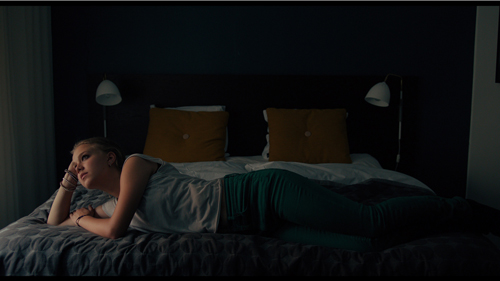
The Slamdance Film Festival tends to be overshadowed and thus overlooked by its larger concurrent counterpart, which is a shame due to the quality independent programming that takes place on the two screens at Treasure Mountain Inn in Park City.
This year was no exception, with writer/director Mark Raso leading the charge with the artistic storytelling of coming of age with his Slamdance Audience award-winning narrative feature, Copenhagen.
At first glance one might think this story transcends locale, but Raso's unique twists affirm the selection of Denmark's capital for the setting. The colorful facades of the 17th-century buildings and deep canals of the Nyhavn district serve as the background of a lushly told story of young love and personal redemption for its main characters, Will (Gethin Anthony) and Effy (Frederikke Dahl Hansen).
Review: Labor Day
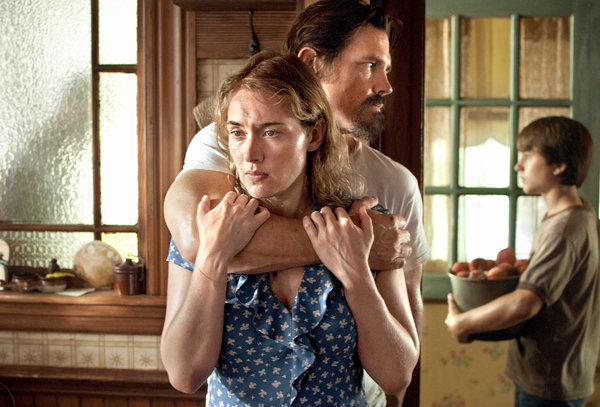
Whenever I hear mention of writer/director Jason Reitman's work, I instantly think of this formula: awkward, lonely lead character + quirky and slightly unrealistic story premise = a somewhat enduring dramady of a film. When I saw the opening credits for Labor Day, I actually let out some bizarre open-mouthed gasp because I didn't realize he had written and directed it -- I'd clearly done my research in advance.
I was waiting to meet the outspoken lead, the one who is cool on the outside but incredibly lost and confused on the inside. It was a great surprise to instead encounter Adele (Kate Winslet), a single mother trying to raise her 13-year-old son Henry (Gattlin Griffith). We meet these two some years after Henry's father has left them, trying to cope with Adele's social anxiety and fear of the outside world. Henry feels the burden of being the only man in the house, trying to fill a gap he knows cannot be filled. A monthly trip to the grocery store seems to be routine -- that is, until an escaped convict named Frank (Josh Brolin) comes along.
Sundance Review: Ping Pong Summer
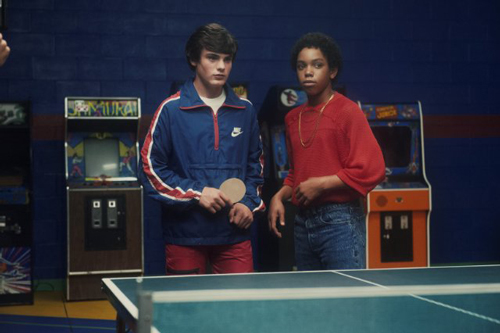 "Are you ready for the summer?" Those lyrics from the 1979 summer classic Meatballs sprung to mind when I watched Ping Pong Summer, a film written and directed by now-Austinite Michael Tully. Although Tully's comedy takes place later in 1985, his movie embodies the whimsical and quirky nature of both Meatballs and National Lampoon's Vacation.
Meet the Miracle family on their summer vacation to Ocean City, Maryland -- the quirky father effortlessly portrayed by John Hannah and Lea Thompson as the mother who innocently mistakes her 13-year-old son Rad (Marcello Conte) as engaging in pre-pubescent self-gratification. Rad's shyness isn't bolstered by his father's insistence of loading his state trooper vehicle down with all their luggage, or his mother's selection of a summer cottage next to the town's crazy lady Randi Jammer (Susan Sarandon), but that doesn't stop him from making a new best friend and crushing on the most desirable girl in Ocean City.
Review: The Past
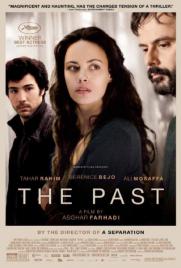 The Past opens with an airport arrival scene. A woman -- she seems happy but anxious -- waits for a man, who emerges into view calm and alone. They greet each other familiarly but with an underlying hesitance, and over the next few minutes exchange sparse, direct words as they hurry to the car through a sudden downpour and proceed to their next destination.
Because minimal background details are offered in these beginning moments (and fed out very conservatively over the rest of the film) the story immediately feels like a puzzle, and the initial basic questions -- who are these people? where are they going? -- soon make way for much more serious mysteries to unfold.
The plot that writer/director Asghar Farhadi (A Separation) does eventually reveal is at first somewhat mundane in its modern glumness. Ahmad (played impressively and stoically by Ali Mosaffa) has returned to France from his home country of Iran to settle the details of a divorce. Four years earlier he left his wife Marie (Berenice Bejo) and her two daughters, whom he had helped to raise.
The marriage didn't end too dramatically and everyone is civil enough, but whispers of unfinished business and repressed feelings fuss just below the surface of every interaction. Closure, if such a thing is possible, has certainly not been achieved, and everyone accepts this transitional and often awkward reality as simply the way things are.
Realistic in its complicated portrayals of domesticity and relationships and deliberately paced, it's a surprise when the "normal" problems introduced at the beginning of The Past advance to more salacious matters involving jealousy, adultery, email spying and suicide. Without giving away too much, Marie's angsty teenage daughter plays a pivotal role, as does Marie's new lover and his troubled young son.
The Past requires room to breathe and time to find its way towards the larger truth ultimately at the heart of the story, and though it's a demanding experience it's not an unrewarding one. Consistently solid acting (even the young children strike all the right heartbreaking notes) and a narrative that explores the tough and gritty aspects of human tragedy make this a fine, haunting film.
Sundance Review: Hellion
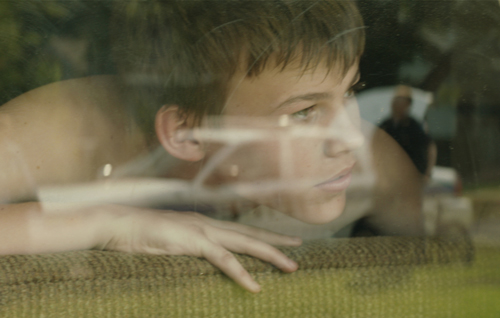 Local writer and director Kat Candler returned to Sundance Film Festival for her third consecutive year, with the feature-length version of Hellion. In 2012 Candler debuted the short that served as the basis for this dramatic feature, and in 2013 her short film Black Metal screened at the fest and online.
Hellion stars Aaron Paul as Hollis Wilson, a disconsolate widower raising his sons Jacob (Josh Wiggins) and Wes (Deke Garner) with the support of his sister-in-law Pam (Juliette Lewis). The boys are left without supervision most of the time, with Jacob engaging in delinquent acts around their southeast Texas town of Port Neches and Wes insistent on tagging along. After Jacob's actions result in his younger brother being taken from their home, he must overcome his anger and pain from his father's abandonment and mother's death to repair the tenuous bonds that hold the Wilson men together.
With the wealth of emotions exhibited from the main characters in Hellion, this film could very well tip towards the more melodramatic under a less-conscientious filmmaker. However, Candler's direction as well as her solid writing provides an in-depth characterization of her lead actors. Paul and Wiggins are well suited and immersed in their roles, and their interactions are spot on.
Sundance Review: Boyhood

Austin filmmaker Richard Linklater finally unveiled his long-awaited epic drama Boyhood at the 2014 Sundance Film Festival, with a capacity crowd at both the premiere and press screening. Written and directed by Linklater and featuring Ellar Coltrane as the central character Mason, the movie is an opus of 164 minutes portraying the growth and influences on one boy. Mason -- along with his assertive older sister Samantha (Lorelei Linklater) -- faces the challenges of the dysfunctional family structure comprising the fiercely maternal Olivia (Patricia Arquette), who is desperate to provide a father to her children in lieu of an absentee father, Mason Sr. (Ethan Hawke).
Boyhood follows the family for 12 years, from 2002 to 2013, with seamless transitions between periods noted by aging of the main and supporting characters as well as by cultural references, music and wardrobes. From the introductory moment of Mason and Samantha engaged in a typical sibling interaction, viewers are engaged by the natural charm of these youngsters. As their father is "off in Alaska," Olivia must meet her children's needs while trying to fulfill her own desires for companionship and better herself through a college education.
Lone Star Cinema: 25th Hour
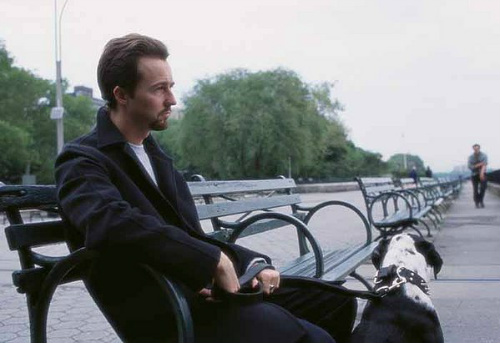
It seems strange to select such a New York City-centric film as Spike Lee's 25th Hour for Lone Star Cinema, but the epilogue for the movie was filmed in our state. So, here we are. Released a year after 9/11, the movie moves at a kind of meditative pace as drug dealer Monty Brogan (Edward Norton) spends his last day as a free man in NYC. He meanders around the city with his rescued pitbull Doyle, and has dinner with his dad (a gruff Brian Cox, The Bourne Identity) before meeting friends at a club for one last fete.
There are a few flashbacks as Monty recalls meeting his younger lady love, Naturelle (Rosario Dawson, Rent) and suspects her possible involvement in the bust that led to his arrest. His two closest friends are from childhood: slick investment banker Frank (Barry Pepper, True Grit) and lumpy prep school teacher Jacob (Philip Seymour Hoffman, Capote). All three commiserate and celebrate with Marty as he faces a seven-year sentence.
25th Hour is based on a screenplay by David Benioff, who wrote the original novel (and would go on to run HBO's Game of Thrones). The language is gritty, especially in the harsh monologue Norton's character delivers to a bathroom mirror: a rant about ethnic and other minorities in the city that speaks more to his feeling of absolute desparation than anything else. The rapport between the three fellows is often believably strained and forced, for what do they really have in common anymore besides the length of time they've known each other?
