

New Releases
Review: Iron Man 3
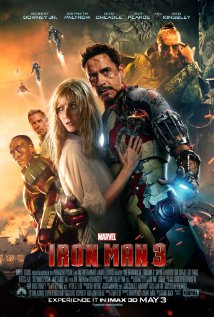 Shane Black is one of the pioneering Hollywood screenwriters of the contemporary action genre. The screenwriter for Lethal Weapon 1 & 2, Last Action Hero and his directorial debut Kiss Kiss Bang Bang now takes the reins of one of the biggest and most-beloved moneymaking franchises in the golden age of comic-book Hollywood. A $200 million budget is proof Marvel and Disney think Iron Man 3 is in good hands, but canon-obsessed fanboys may not agree.
Co-scripted with TV writer Drew Pearce (who's also credited in the upcoming Pacific Rim and Sherlock Holmes 3), this entry in the series incorporates many fan-favorite storylines and characters from the Iron Man comics. Though they're brought together in a mega-blockbuster of an action film, one or two departures from established canon will be the subject of controversy among hardcore fans for the foreseeable future. Naturally, I won't go into specifics here (no spoilers!) but moviegoers who are more interested in what's onscreen and less concerned with the printed page will have a great time. I guarantee it.
If that phrase is familiar to you, you'll understand when I say this movie is all about suits. It's clear from a shot in the trailer that in Iron Man 3, Tony Stark has more suits than a Men's Wearhouse. At least a double-digit percentage of the effects budget must have been spent on animating Stark putting on, taking off, getting into or being knocked out of one of his battle-armored suits. In fact, Robert Downey Jr. probably spends more screen time putting on his superheroic suits than actually fighting in them.
That's probably a deliberate choice, as the story heavily involves Stark's internal conflict between spending time with the people he loves and spending every moment working to protect them. This is a struggle we've seen before in films like Superman II, when Clark gives up his powers to be with Lois, or to an extent in the 2007 Spider-Man 3, when Peter Parker's emotional turmoil affects his superhero abilities.
After the events at the end of The Avengers, Tony Stark is suffering from insomnia and panic attacks as he works ceaselessly to improve his armor designs. After challenging a mysterious terrorist figure known only as The Mandarin to a one-on-one battle, the resulting surprise (?) attack leaves him stranded, forced to deal with the powerful enemy minus his usual limitless resources and therefore prove Iron Man is Stark himself, and not just the battle suit. This theme is echoed in the heroics of Don Cheadle as Col. James Rhodes, aka War Machine, who likewise finds himself forced to operate outside the suit when they team up.
Review: No Place on Earth

When Chris Nicola traveled to the Ukraine, it was to understand his own family's history and explore caves. Not only did he inexplicably discover everyday objects such as buttons and shoes in a remote cave, but he also unearthed a rumor of a group of Jews who lived in a cave. These discoveries led to an incredible Holocaust survival story of how 38 people lived underground for a year and a half -- the longest recorded sustained underground survival -- to escape the death camps. Nicola confirmed the story by locating 14 of the original cave inhabitants.
The experiences of these Ukrainian Jews is captured in the documentary No Place on Earth -- which opens in Austin tomorrow at Regal Arbor -- by longtime television producer Janet Tobias in her film directorial debut. The survivors are now in their eighties and nineties, but they were quite young when they took refuge in the cave. According to Tobias (from the press notes), "There were no leaders in the cave above about 35. And they were doers – they weren’t thinkers and analyzers. They really didn’t have the time to sit around and contemplate."
No Place on Earth can easily be described as a docu-drama rather than documentary, as the movie relies mostly on dramatic re-enactments of the group's experience in the cave. This vérité style is enhanced with interwoven present-day interviews with the main storytellers, including brothers Saul and Sam Stermer and sisters Sonia and Sima Dodyk. Thanks to the resourcefulness and determination of the brothers, the group had a community that survived despite the odds -- often with very little food or water for days on end, and with very little light.
Review: Trash Dance

Trash Dance opens Friday for a weeklong run at Violet Crown Cinema.
The adage that one person's trash is another person's treasure is relevant to Trash Dance, but doesn't apply in the strictest sense. In the Austin indie documentary and the dance performance it celebrates, the treasure isn't the trash -- it's the unlikely beauty of trash collection.
Director Andrew Garrison's film is an inspiring look at the Trash Project, Austin choreographer Allison Orr's ambitious dance performance featuring 24 City of Austin Solid Waste Services Department employees and 16 large sanitation vehicles. (That's right -- trash trucks.) The performance and the film find artistry in the mundane world of picking up garbage; more importantly, they show us there is dignity in even the hardest and least desirable jobs.
Creating the dance was a year-long project starting in late 2008. Orr knew that to choreograph such a work, she had to get to know the workers, earn their trust, understand what they do and study their movements. So she spent many days the job with them, and not just as an observer. She emptied garbage cans, picked up litter, collected dead animals (a task she could barely stomach) and learned to appreciate the finer points of picking up trash. Garrison's film crew tagged along, capturing every messy detail and introducing us to some of the people who keep our world clean.
Review: The Company You Keep
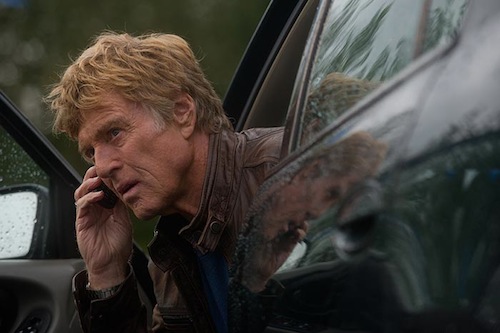
Robert Redford's newest film The Company You Keep is a charmingly small movie with a larger-than-life cast. It tells the story of members of the Weather Underground, a radical political group from the late Sixties who were well known for both their opposition to the Vietnam War and the use of violence to deliver their message. The Company You Keep deals primarily with the aftermath of this violence.
During this group's heyday, some of the members decided to rob a bank. During the robbery, a security guard is killed and many members of the group are forced to go underground. After four decades underground, the first crack in their wall of secrecy breaks when Sharon Solarz (Susan Sarandon), one of the bank robbers, is captured at a gas station near Albany, New York. Soon after, the news of Sharon's arrest reaches the desk of Ben Shepard (Shia LaBeouf), a young ambitious reporter for a struggling newspaper in Albany. After a well-deserved razzing by his editor, Shepard decides to follow up on the story of Solarz's involvement with the Weather Underground.
'Mud' Returns to Austin Today
On weekends as a kid, my sister and I would go play on my godparents' farm, which was just outside of the county seat where we lived in rural Maryland. Their two kids were our greatest friends, and together we formed a fearsome foursome, subjecting ourselves to our own glorious reign of terror that included snapping turtle bites, egregious poison ivy, falls from trees, fences, tire swings, horses and roofs, unfriendly ghost sightings, four-wheeler accidents and various fights with fists/mud/sticky burrs/chewing gum. We were always filthy and often bloody, but it was always an amazing adventure.
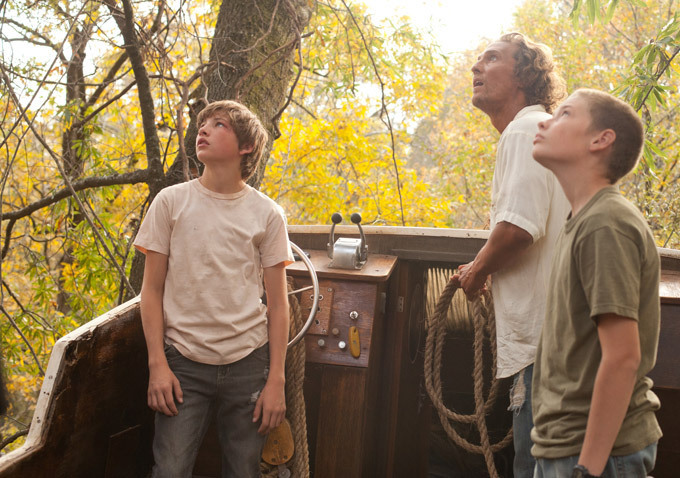
Some great children's films, like The Goonies, The Black Stallion and The Wizard of Oz, have captured youthful myth-making and discovery to cinematic advantage, and often use childhood dramas as a metaphor for adult problems happening just outside the frame. In Jeff Nichols' latest movie Mud, the grown-up world is at the center of the story but is seen through the electric naivete of youth. The magic of Mud is that you don't have to pretend to remember the heightened feeling of being a kid who finds an adventure. With Mud, you can watch the movie through a 12-year-old's eyes without ever leaving your own.
Tye Sheridan and Jacob Lofland play Ellis and Neckbone, a contemporary Arkansas version of Tom Sawyer and Huck Finn. Like those two, one of the boys has a family and one is essentially an orphan, but both have problems at home and find that in this world, trouble itself is routine. The boys have a confidence that's both impressive and comic; they can fish, drive and operate a motorboat, but they are still learning how to curse.
Interview: Shane Carruth, 'Upstream Color'
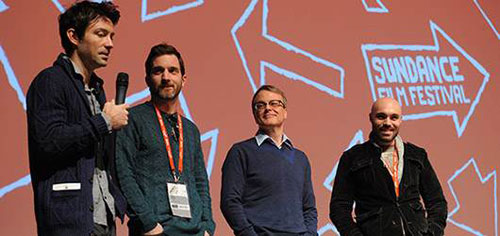
On Friday, the movie Upstream Color opened in Austin and is currently screening at Violet Crown Cinema and Alamo Drafthouse Slaughter.
While at the Sundance Film Festival earlier this year, I sat down for a conversation about the film with writer/director Shane Carruth, pictured above with producer Casey Gooden, production designer Tom Walker and editor David Lowery. This psychological science-fiction narrative is Carruth's long-awaited second feature.
Carruth also stars in the film with Amy Seimetz as a couple reluctantly brought together by forces of nature and fate beyond their control. Together they must piece together their lives and come to an understanding of their connection to one another and other people.
Review: Oblivion
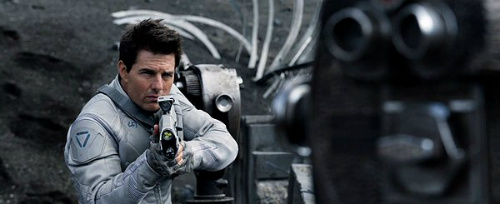
Tom Cruise stars as Jack in the movie Oblivion, director Joseph Kosinski's (Tron: Legacy) cinematic reinterpretation of his own graphic novel. The year is 2077. Jack keeps drones in maintenance; these drones protect ginormous "hydrorigs," which suck in seawater to create fusion power for the removed citizens of Earth. Attacking the hydrorigs and drones are alien-like "scavs," who, Jack tells us, are behind the destruction of the Earth. "We won the war, but lost the planet," he states during some fairly trite narration.
In this post-apocalyptic film, Tom Cruise is onscreen fourth-fifths of the time. If you don't care for Cruise, odds are you won't care for Oblivion. Still, Cruise isn't really the complete problem with the movie. Let me count the ways I was disappointed.
- The hollow depiction of women in Oblivion. Jack works and sleeps with teammate Victoria (Andrea Riseborough, Happy Go Lucky, Made in Dagenham), who has large pupils (especially obvious on an IMAX screen) and no personality. She looks forward to going back to their home on Titan and has sex with Jack in a pool. Jack goes out to check on his drones in his functional clothing, while Vicka, as communications manager, hangs around their pad in tight sheath dresses and stiletto heels.
Review: Starbuck
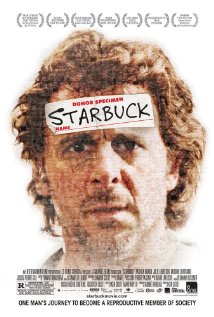
Too much of anything is not good, except maybe it can be. Starbuck is a lighthearted comedy that explores a fresh take about the serious side of what it means to be a father through the lens of someone totally unprepared not just for one child, but for 143 of them.
David Wozniak (Patrick Huard) is a perpetual screwball who has never managed to make the right choices in life. In his forties, working as a delivery driver for his father's butchery, with thugs shaking him down for $80,000 in unpaid debts, David learns of his girlfriend's pregnancy. At the same time, he is confronted by a lawyer with some surprising news.
The lawyer represents a fertility clinic where, during his twenties, David was the most prolific donor, having made deposits over 600 times. It's explained that he has very high-quality sperm, and the doctor who operated the clinic was a little crazy and thus used David's material in the impregnations of over 500 women. Now 142 of his progeny have gathered to form a class-action suit to force the clinic to reveal David's identity.
Until the case is settled, they've prepared profiles of themselves, because they want "Starbuck" (the alias under which the donor is listed) to know something about his children. Faced with a choice between continuing his irresponsible ways or taking control of his life with his girlfriend and new(est) child, David finds himself unable to resist the urge to involve himself in his other children's lives, and thus learn the extent of his own strength.
Ken Scott and Martin Petit have written an extraordinarily original script that is both charming and hilarious, and Scott's direction displays a flair for comedic timing that brings the story to life. From the opening shot, he sets up a scene just enough for the audience to get comfortable with a situation before pulling the rug out from under them to hilarious effect. It's a surprising and effective tool Scott wields when the mood grows too serious.
Review: To the Wonder
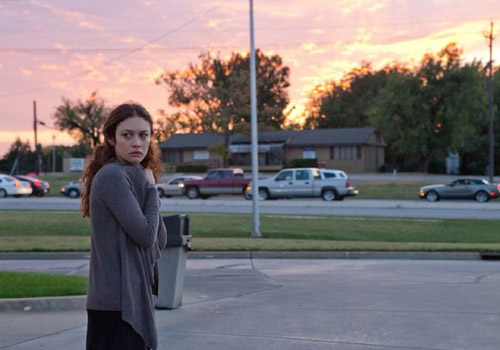
If you're a fan of Terrence Malick, you'll likely be a fan of To the Wonder.
The esteemed filmmaker's latest feature is in every way a Malick film, bearing his unmistakable stamp with its dreamy vibe, spiritual explorations and heavenly visual style. To the Wonder is gorgeous, complex, tragic, sometimes confounding and, like all of Malick's work, definitely not for everyone. I mean this as a compliment.
In To the Wonder's striking opening montage, we're drawn into the white-hot romance between Neil (Ben Affleck), an American traveling in Europe, and Marina (Olga Kurylenko), a Ukrainian divorcee raising her 10-year-old daughter, Tatiana (Tatiana Chiline) in Paris. After a whirlwind affair, Neil invites Marina and Tatiana to live with him in a place rather unlike Europe -- his native Oklahoma.
Review: Somebody Up There Likes Me
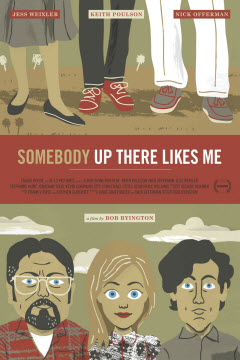 I've seen Somebody Up There Likes Me twice now -- once at SXSW 2012 with a lively local-heavy audience, once via screener with no one else but the cat -- and found the movie terribly funny both times. In fact, after I watched it the second time, I restarted the film so I could to see how the beginning tied into the end (it does, so pay attention) ... then had to stop myself from watching it a third time. The movie opens Friday at Violet Crown Cinema and I'm sorely tempted to go.
I liked it a lot, obviously. But I don't know whether you'd like it. Local filmmaker Bob Byington's universe is not for everyone.
Somebody Up There Likes Me is a comedy, but not in a broad sense -- its humor is very specific. I don't mean that it's full of obscure pop-culture references, either, because the movie could be set in any time or place. (You'd have to know Austin fairly well to recognize it was shot here.) The movie is off-center and your brain has to squint and tilt sideways and around the corner a little to appreciate it. Once you're in the universe of the film, however, it's wonderfully fulfilling.
At the heart of this movie is the relationship between Max (Keith Poulson) and Sal (Nick Offerman), although the focus is ostensibly on Max. Max and Sal work together in a fancy restaurant, along with Lyla (Jess Weixler), who catches Max's eye. Eventually Lyla and Max marry, and ...
You know, recounting this story does no good. It's not important what the characters are doing as much as how they're changing, or not changing, through the years. Because Somebody Up There Likes Me spans decades, although some characters never seem to look any older. Is this a reflection on how much they've matured inside? Possibly. The characters do a number of things externally that might be symbolic of their inner lives.
For example, during Max and Lyla's first date, their conversation is full of misses -- someone mishears, someone misspeaks. It's funny, it's a little awkward, and it's an apt representation of how relationships work (or don't). Lyla loves breadsticks ... and how does her enjoyment of them factor into the film? Lyla's father (Marshall Bell) appears to be an almost tangential character, but what is the extent of his influence on the events in the movie? Kevin Corrigan appears in a single scene, but his advice to Max might be critical. On my second viewing, I wondered fleetingly if Sal and Max were actually different aspects of a single character. And I haven't even mentioned the suitcase.
