

New Releases
Review: Rust and Bone
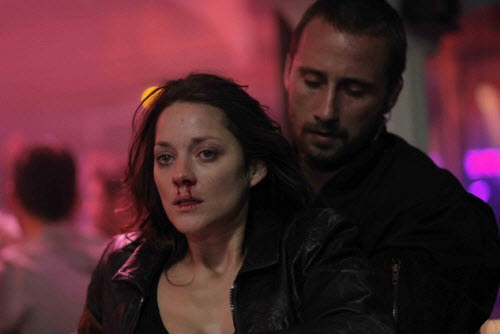
The characters in Rust and Bone, the latest film from Jacques Audiard (A Prophet) truly are down to the bone -- they border on primal at times. Add powerhouse leads like Marion Cotillard and Matthias Schoenaerts and you get an intense experience that's so vivid it's hard to look away, but often so painful it's hard to keep watching. I kept watching, and Rust and Bone ended up being one of my favorite films of 2012.
The movie focuses first on a father and his son: Ali (Schoenaerts) travels with five-year-old Sam to Antibes, a coastal French town, to live with Ali's sister and her husband. Ali finds work as a bouncer and ends up taking Stephanie (Cotillard) back to her home after she's been attacked in the nightclub. Slowly, the movie expands its focus to include Stephanie, who trains killer whales fearlessly in a Sea World-type setting.
But Ali and Stephanie don't really cross paths again until after Stephanie's life has been turned upside-down. Their intense and strange relationship, including the ways it affects Ali's son, is the heart of Rust and Bone.
Review: Gangster Squad
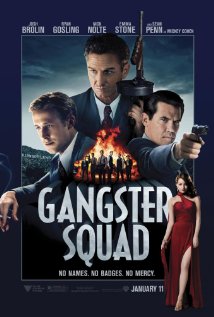
Director Ruben Fleischer is already well known for his hits Zombieland and Thirty Minutes or Less, but his latest movie, Gangster Squad is absolutely nothing like those features. That is to say, the gritty true-crime tale based on Paul Lieberman's seven-part LA Times-published "Tales from the Gangster Squad" series is a full 180 degrees from Fleischer's comedic work. Somewhere in the middle between The Untouchables and Dick Tracy, Gangster Squad is an exceedingly bloody, bloodthirsty historical account of extensively-researched events from the early 20th century.
The film opens with an account of Mickey Cohen (Sean Penn), a mad-dog ex-boxer mob boss who violently disposes of any competitors. Penn plays Cohen so over-the-top it's impossible not to compare him to a Dick Tracy villain brought to life, a role he appears to relish. At times, his performance almost reaches Nicolas Cage levels of crazy.
Counter to this is Josh Brolin in the role he was born to play. The physical resemblance to Dick Tracy is unmistakeable, and Brolin plays Sgt. John O'Mara cool as a cucumber while, with violence equal to Cohen's, he takes down a room full of pimps assaulting a young girl. My favorite lines from the film: "'What happened to you?' 'They resisted arrest.' 'What happened to them?' 'They resisted,'" sums up the character, a war hero who's one of the only cops so honest he refuses all attempts to bribe him.
When word of O'Mara's exploits reaches the chief (Nick Nolte), he tasks the sergeant with forming an unofficial hit squad to clean up the city -- not by directly taking Cohen down, since somebody else would just take his place, but instead by making his criminal efforts unprofitable.
With his wife's guidance, O'Mara recruits a team including among others Gunslinger Max Kennard (Robert Patrick), radio man Conway Keeler (Giovanni Ribisi), and his close friend Sgt. Jerry Wooters (Ryan Gosling). What follows is an account of their exploits as they stumble through one bloody encounter after another. The story is straight-forward with little imagination in the plot, but the presentation is effective. Fleischer deserves credit for a beautiful recreation of 1940s LA which compares favorably to that of LA Confidential and hits practically every well-known location.
Review: Zero Dark Thirty
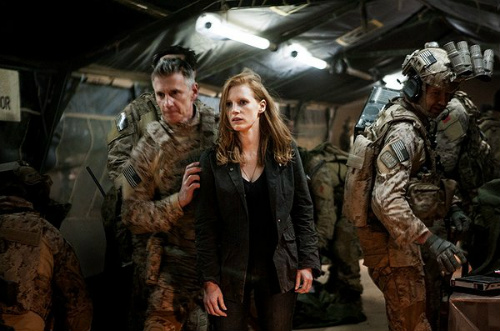
In the first moments of Kathryn Bigelow's new Zero Dark Thirty, the audience faces a black screen as heartbreaking distress calls from September 11, 2001 are heard. Then we are thrust into a gritty scene of a Saudi prisoner being tortured by the CIA for information. A few minutes in, our intrepid protagonist, CIA analyst Maya (Jessica Chastain) is revealed.
Bigelow's film fictionalizes the search for Osama bin Laden, with periods of time during the hunt split into titled vignettes. The multi-year hunt is condensed to about 2.5 hours, which still tends to feel long. Some say the movie is pro-torture, some say it is not. I'd say a realistic depiction of the story would include torture since it was indeed used by the agency (although it hardly seems effective). However, these scenes in Zero Dark Thirty are too long and arduous and only serve to slow the narrative. Just as the agents are frustrated at the lack of information they get through these sadistic and arcane methods, I was slightly peeved that the story might never get moving.
Review: Promised Land
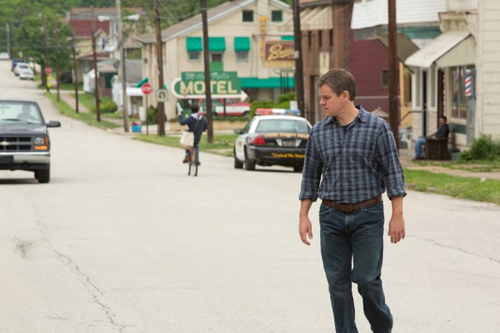
The politically charged Promised Land is a far better movie than it could have been, given that issue-oriented "message films" are sometimes little more than preachy, plot-thin polemics.
Fortunately, Gus Van Sant's drama focuses more on its plot and characters than on the issue behind the story, the natural gas extraction method known as "fracking." While no doubt a message film, it soft-pedals its politics -- and even acknowledges the issue's complexity -- while delivering an interesting story.
Promised Land is the story of Steve Butler (Matt Damon) and Sue Thomason (Frances McDormand), two energy company sales executives dispatched to the rural town of McKinley (the state isn't specified) to convince the locals to sell natural gas drilling rights to their properties. Butler and Thomason expect their job will be an easy one; McKinley has long been economically depressed, and they're offering what seems like large amounts of money to the town's ever-poorer residents.
Their job gets complicated, however, when local schoolteacher Frank Yates (Hal Holbrook) disrupts a community meeting about the gas drilling. Warning everyone of the dangers of fracking -- which involves injecting fluid into wells under high pressure to break rocks and release the natural gas trapped within them -- Yates and his supporters convince local officials to delay their decision to allow fracking in the town. Enter environmental activist Dustin Noble (John Krasinski), and things quickly grow heated as Noble wages his own anti-fracking campaign and does his best to interfere with Butler and Thomason's work.
Review: The Impossible
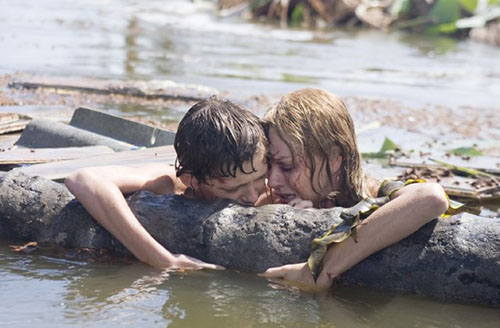 December 24 marked the eighth anniversary of one of the deadliest natural disasters in recorded history, an underwater earthquake in the Indian Ocean off the coast of Sumatra, Indonesia, that triggered a series of tsunamis. Over 230,000 people were killed in 14 countries that encompass the Indian Ocean, mostly in the coastal communities of Indonesia, Sri Lanka, India, and Thailand. In 2004 I followed the tragic stories of survival and loss, not just from media but also from "citizen reports" that streamed out from tourists and humanitarian aid workers. The stories included lists of orphaned native children and found young Europeans, separated from their families.
Spanish physician and tsunami survivor Maria Belon recounted her family's personal story on the radio, inspiring producer Belen Atienza (Pan's Labyrinth, The Orphanage) to portray the Belons' experience on the big screen. The result is the harrowing drama The Impossible from the filmmaking team behind the tragic horror story The Orphanage, including writer Sergio G. Sanchez and director Juan Antonio Bayona.
Naomi Watts stars as Maria and Ewan McGregor as Henry, a British couple vacationing with their three sons at a resort in Thailand during the Christmas holidays. Within a few minutes of the movie's opening, disaster strikes and the family is separated by the massive waves. A critically injured Maria is reunited with her son Lucas (Tom Holland) and the pair struggle through the aftermath to find medical assistance and the rest of their family.
Review: Les Misérables
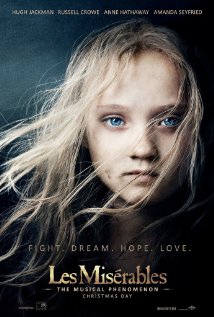 A giant beautiful flawed mess is the best description I can give for the Tom Hooper-directed big-screen adaptation of Les Misérables, itself a musical theater adaptation of the 1862 Victor Hugo novel. The story is a sweeping epic, and people unfamiliar with the material may find they are swept off their feet by the spectacle. But for longtime fans of the musical, the movie is a bumpy ride more full of downs than ups.
Hugh Jackman takes on the lead role of Jean Valjean, a convict released after 19 years imprisonment for the loaf of bread he stole to feed his sister's starving child. The film opens with a stunning shot of hundreds of prisoners, Valjean among them, struggling with lines to pull a ship into dock. This is one of the strongest images Hooper presents us and a dazzling introduction to Valjean's world. As he is released, Valjean is confronted by Russell Crowe's Javert, who presents him with his release papers, and we begin to see the largest of my problems with Hooper's take.
The characters throughout Les Misérables break out of song into speaking their lines, unlike in the stage musical. Verses that were written to carry enormous emotional weight through their melodic lines are instead spoken, as the actors attempt to express those emotions as if they were acting in a non-musical work. Some characters with only a line or two never actually sing. Jackman and Crowe are accomplished singers, but they don't have the appropriate range for these roles, and are forced to sing many lines an octave lower, virtually killing their impact.
Anne Hathaway's role as the tragic Fantine is perhaps the most dramatic performance, as we see her fall into disgrace and eventually death trying to care for her daughter Cosette. As with Jackman and Crowe, Hathaway's vocal performance takes a backseat to her acting, but that acting is so outstanding that she has become a strong contender for an Oscar.
Review: Django Unchained
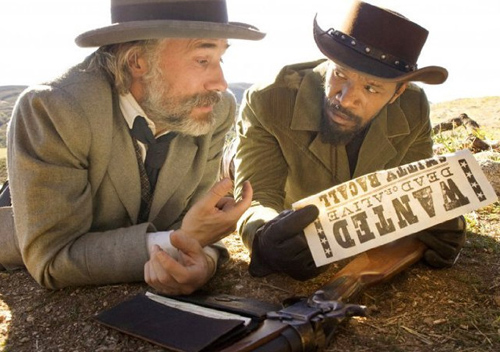
Django Unchained is every bit a Quentin Tarantino film.
Whether this is a compliment or a criticism depends, of course, on your opinion of Quentin Tarantino films. If you adore Tarantino's cinematic trademarks -- the sometimes incongruous mix of oddball humor, seemingly endless conversations, horrific violence, and soundtrack music so unlikely that it somehow works perfectly – you will adore Django Unchained.
If you don't adore such things, you probably already know enough to skip Django Unchained in favor of saner and more easily digestible fare such as Lincoln or Les Miserables. Which is just fine; Tarantino is an acquired taste, and even some devout Tarantino fans have yet to fully acquire it. (I love all things Tarantino, except the violence when it exceeds my tolerance for gore and the conversations when they exceed my tolerance for people who don't know when to shut up.)
Django Unchained is arguably Tarantino's most ambitious film, a sprawling, 165-minute (sigh) period piece set in the South in 1858. The story opens as German-born bounty hunter Dr. King Schultz (Christoph Waltz), encounters Django (Jamie Foxx), a slave who can help Schultz identify his quarry: the Brittle brothers, three fugitive murderers who had brutalized Django in the past. Schultz acquires Django, promising to free him when he and Schultz capture the Brittles.
Review: This Is 40
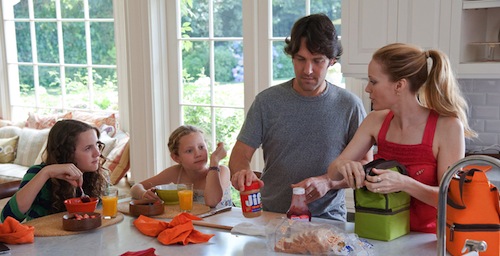
Viagra, flatulence, misbehaving children, troubled businesses, aging parents -- this list could describe late-night infomercial topics, but for our purposes it describes the litany of topics brought to the fore in this winter's charming comedy This Is 40 from filmmaker Judd Apatow.
This Is 40 explores the lives of Pete (Paul Rudd) and Debbie (Leslie Mann), two characters we met in Apatow's 2007 hit comedy Knocked Up. Pete and Debbie are a typical suburban couple with a house, two precocious young daughters, a pair of struggling businesses, difficult relationships with aging parents ... and life clocks striking 12 on that most dreaded age: 40!
The film starts in the bedroom where Pete and Debbie are about to have "relations" when Pete confesses to Debbie his recent ingestion of Viagra. Oops! Debbie has a negative reaction to this and conflict begins. The story then proceeds to take us through the successes and difficulties of the couple's complicated lives. Pete's record company is experiencing difficulties, his father is a drain on family resources and he is afraid of admitting failures to his wife. Debbie is experiencing similar difficulties. One of her business's employees is stealing from her, her relationship with her father is strained at best and worst of all: She is turning 40. The movie is spent dealing with the realities of life, accompanied by some good heartfelt laughs.
Review: Hyde Park on Hudson
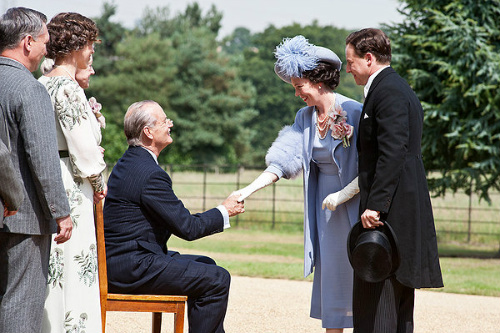
It's that time of year when studios put highbrow films in theaters in hopes that these prestige movies will be celebrated and appreciated. I'm sure many expect Bill Murray to be nominated for some award for his role of President Franklin Delano Roosevelt in Hyde Park on Hudson. Certainly this is very likely, but I don't think it would be right or deserved; he's done far better work in previous outings. While Murray attempts to pull off FDR's speech pattern in one scene, I found myself thinking, "It's about time to watch Scrooged!" In other words, this movie is a big disappointment.
I hadn't previously seen Laura Linney in anything in which she wasn't wonderful, but there's a first time for everything, I guess. She awkwardly plays FDR's single cousin five or six times removed, Daisy, who becomes one of his lovers. FDR in Hyde Park on Hudson is a player, see? His wife Eleanor, played unconvincingly by Olivia Williams (tiny Rushmore reunion!), rarely visits the estate, and he's got some other ladies on the side.
Review: The Hobbit: An Unexpected Journey
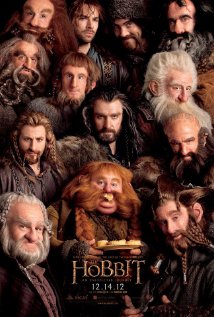 Nine years have now passed since the last entry in Peter Jackson's The Lord of the Rings trilogy, The Return of the King, was released. The series was so wildly successful it seemed obvious that J.R.R. Tolkien's prequel to the series, The Hobbit, would receive the Jackson treatment, but scheduling and rights issues among many other problems almost put an end to the production repeatedly.
Now here we are with The Hobbit: An Unexpected Journey -- the first in a trilogy that brings to life the original tale, Tolkien's first book of Middle-earth, not only in 3D but in the new high frame-rate (HFR) 48 frames-per-second presentation.
Though only 5% of movie theaters will be outfitted and presenting in HFR, no review can fail to mention this gimmick. Some people view it as perfectly lifelike. Another camp sees it as the end of cinema. Based on my own experience watching the film, the technology has potential, but it practically will require more practice to perfect the art. Like an artist used to working in oils who suddenly finds himself using Photoshop, new skills are needed, and this feels like an experiment not quite perfected.
I won't go into specifics on the problems I saw with HFR. You can watch in either or both formats and decide for yourself. Unfortunately, there are other problems with The Hobbit: An Unexpected Journey that can't be solved as simply as choosing which theater to watch it in.
Foremost, the majority of the film suffers from an excess of campiness or silliness. The source novel is more light-hearted in tone than the trilogy, but time and again the line is crossed beyond light-hearted to feeling as if Jackson took a cue from George Lucas' handling of Episode I: The Phantom Menace and made a film for much younger audiences. There are some pacing issues, especially at the beginning, but the tone is the most negative factor.
