

Reviews
Review: Morning Glory

Morning Glory is refreshing; not only is it a witty workplace comedy (these seem pretty rare nowadays), but it scores laughs without dumbing anything down. I went to the screening after dealing with a lousy day, hoping that the movie would just be decent, and it surpassed my expectations. It made me laugh, often and sometimes quite loudly. What an excellent remedy to a cruddy day!
Becky (Rachel McAdams) loves working on morning shows, and her life goal is to produce The Today Show. Because of network cutbacks, she loses her producer position at a New Jersey TV station, but is eventually hired by network TV muckety muck Jerry Barnes (Jeff Goldblum). Becky becomes executive producer for Day Break, a struggling morning show (consistently fourth in the ratings) featuring Colleen Peck (Diane Keaton, marvelous as ever) and her skeazy co-anchor Paul McVee (Ty Burrell). Among the changes Becky puts into place, McVee is out and curmudgeonly newsman Mike Pomeroy (Harrison Ford) is in.
AFF 2010 Review: Echotone

In the late 1980s, I was heavily involved in the Houston music scene due to my stint at a college radio station and later at a pub that featured nightly live music. However, the music scene there became stagnant and our establishment dropped to two nights a week with a meager budget to pay the bands. Local band Fab Motion captured the plight of many musicians with a lyrical response to the standard "Hey hippie, get a job!" with "What? I have THREE jobs." All ears turned to Austin, where bands such as the True Believers, The Reivers, Ian Moore, Joe Ely and Stevie Ray Vaughn had audiophiles wondering if our capital city would be the next Athens, Georgia. When I moved to Austin in 1993, I enjoyed the freedom to see live music any night of the week in the "Live Music Capital of the World" and play from a diverse range of local artists while deejaying at UT Austin's 91.7 KVRX.
Now that Austin has high-rises rising up amongst our downtown skyline, how are our local musicians impacted? Director Nathan Christ examines this important topic in his documentary, Echotone, as he and cinematographer Robert Garza follow Austin's independent music culture over a two-year period, featuring musicians, venues, promoters and others within the city landscape. Echotone is a poignant reminder of the abundance of talent and passion in the Austin music scene, along with the challenges and frustrations faced by creative artists and local music venues.
Review: Fair Game

Opening this election week, Fair Game is chock full of drama. Based on the true story of how sources in the Bush administration outed Valerie Plame as a CIA operative, the movie is a mix of genres: spy movie, family drama and political intrigue. I'd say that the film ranks up with All the President's Men as far as political pictures go. It shares the same drive and energy, and it gives an informative look into part of the mess the administration got itself into. Not only that, but the movie shows the strain this action put on Plame's marriage. Fair Game strikes a good balance in its depiction of politics/CIA elements with more domestic elements.
Fair Game kicks off in late 2001, with Plame (Naomi Watts) in Kuala Lumpur posing as Canadian Jessica McDowell (one of her many aliases). Not ten minutes later, we see her at dinner with friends back in DC, refraining from comment on political discussion even as her husband (Sean Penn) can't help from participating. She tells any friends/acquaintances who ask that she is a venture capitalist, while in secret she serves as a spy for the CIA.
When the Bush administration asks for investigation into rumors of large amounts of yellowcake uranium from Niger being sold to Iraq, Plame's boss (Michael Kelly) asks if her husband can look into it. And thus the shenanigans begin!
Review: Megamind

DreamWorks Animations brings in their mastermind behind their successful Madagascar franchise, Tom McGrath, to deliver their latest animated 3D film, Megamind. This 3D movie is action-packed and visual eye candy, reminiscent of but not meeting the technological standards set by Wall-E and Despicable Me. The storyline and characters are engaging enough for Megamind to at least have temporary success, but will it have a lasting impact on audiences?
The world of Megamind revolves around two central characters, Megamind (Will Ferrell) and Metro Man (Brad Pitt), whose lives resemble that of Kal-el aka Clark Kent/Superman. Sent as babies from their home planets doomed for destruction, they land on Earth, where they are adopted by strangers. Metro Man lives a life of luxury, but Megamind is unfortunately diverted into Metro City prison where he's raised by inmates. He's sent to a school for gifted children where he is constantly upstaged by Metro Man. Megamind eventually accepts his fate of being bad is the one thing he is good at, and thus begins a never-ending battle waged between the two rivals.
Review: Four Lions

With his Drafthouse Films' first release, Tim League is taking a sizable risk, one that will hopefully pay off. Exploding onto U.S. screens in several cities this weekend (including Austin, of course), Four Lions takes dark comedy to new levels as it tells the story of a ragtag group of Muslims who have self-organized into a jihadist cell. Written and directed by Chris Morris, the film opened to moderate success in the UK this summer.
While the movie has received critical acclaim (Four Lions was nominated for a Grand Jury Prize at Sundance and has just received five BIFA nominations), the real test for the film will be how it is received by American audiences. The arthouse crowd is well acclimated to British comedy, but with the exception of Monty Python, Britcom appeals to a soberingly small section of the U.S. public, so Four Lions will have to fight an uphill battle to fill the seats. A U.S. tour by Tim League, Bad Ass Digest chief editor Devin Faraci, and Chris Morris, as well as a "Twitter bomb" and great word-of-mouth publicity, should help.
AFF 2010 Review: Miss Nobody
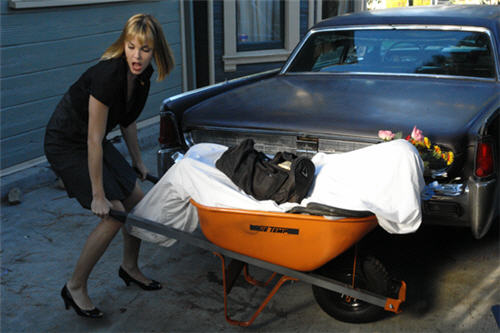
Likeable murderers in film are usually limited to those we admire for their style, not for being sweet and sympathetic. Miss Nobody is an exception and one of the sweetest black comedies you'll likely ever see from its vivacious opening credits til the startling final shot.
With its Pushing Daisies sensibilities, Miss Nobody is the colorful and cheerful murders-by-number tale of an insignificant admin assistant who takes a chance and becomes an executive ... with a pesky little body count. The invisibly mousey Sarah Jane McKinney (Leslie Bibb) follows up on her friend's suggestion to apply for a promotion, only to find her true calling as she climbs a particularly deadly corporate ladder. When a most fortunate accident launches Sarah Jane's career, she finds herself at the mercy of some of the most Machiavellian corporate execs on screen. This is a truly cutthroat business environment, leaving Sarah Jane no choice but to employ some creative career enders.
AFF 2010 Review: I Didn't Come Here to Die
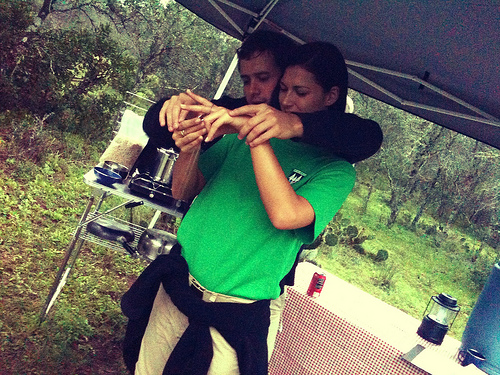
Take a classic slasher setup, a bunch of young people isolated in the woods, and turn the trope on its overly predictable ear and you get the indie horror film I Didn't Come Here to Die by Austinite Bradley Scott Sullivan.
With one of the best ever taglines ("Volunteer work is a killer"), Sullivan's screenplay takes a small group of "Volunteers of American Generating Goodwill" out to a remote location to start work on what will eventually be campgrounds for underprivileged urban youth. As the first team to work on the project, they're roughing it in tents, with no phone service, and supposedly, no alcohol and no fraternization. All the rules in place are for safety's sake, but once rules start being broken, everything and everyone starts down a slippery, bloody slope.
AFF 2010 Review: The Spirit Molecule
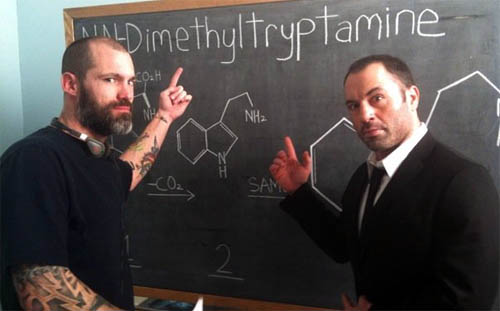
One of the best things about attending film festivals is that while seeing a lot of interesting films, you also learn a lot of interesting things. For example, thanks to the intriguing documentary The Spirit Molecule, I now know that dimethyltryptamine is one hell of a great drug.
Better known as DMT, dimethyltryptamine is the subject of Austin filmmaker Mitch Schultz's über-trippy examination of a drug found in nearly every living organism and considered the world's most powerful psychedelic. Combining stunningly psychedelic animation with thoughtful interviews, The Spirit Molecule is a paean to psychedelic drug use that also asks a lot of questions about the nature of human consciousness.
AFF 2010 Review: Shelter in Place

The long-suffering city of Port Arthur, Texas has a love-hate relationship with the oil industry. Without the industry's refinery jobs, Port Arthur probably would cease to exist, and its residents would be hard pressed to find other employment in a regional economy based almost entirely on petrochemicals. But Port Arthur residents also pay a high price for their reliance on oil, because the industry that sustains them also poisons many of them.
Shelter in Place is a poignant and often enraging look at Port Arthur's poorest residents, who see few benefits from the oil-based economy while suffering almost all of its consequences. The 48-minute-long documentary by British filmmaker Zed Nelson, which screened at Austin Film Festival in partnership with The Texas Observer, is the sort of angrily effective agit-prop film that every anti-regulatory, free-enterprise preaching Texas politician should see, but surely won't.
The film focuses on the hapless inhabitants of Carver Terrace, a decaying Port Arthur neighborhood surrounded by refineries. Carver Terrace often experiences "upsets," an industry term for the release of toxic chemicals such as benzene into the air to relieve pressure in refinery pipes and avoid potential disasters. Upsets can last for many hours and contribute heavily to air pollution, but despite their alarming frequency (there were 13,000 upsets in Texas in 2007 alone), they're perfectly legal in Texas as long as the refineries report them to state environmental regulators.
AFF 2010 Review: Main Street
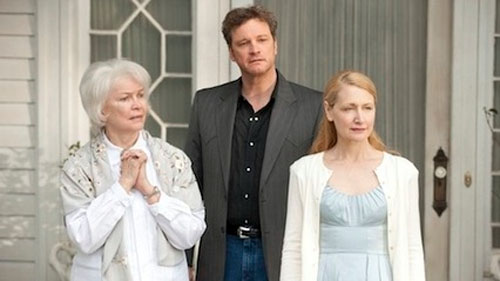
When Main Street screened last Thursday at Austin Film Festival, Horton Foote's daughter Hallie introduced the movie, saying that her father was 92 when he wrote this screenplay. Foote's last screenplay is based in Durham, North Carolina. Durham, at least the way the movie depicts it, is dealing with recession and low tourism numbers, and their young folks are migrating to bigger cities.
Ellen Burstyn plays Georgiana Carr, whose father once ran a tobacco dynasty. She lives in the grand old family home, which is practically a separate character in the film, and has recently rented out her former tobacco warehouse -- now empty -- to somewhat-shady Texan Gus Leroy (Colin Firth, whose accent sounds nothing like Texan). The film starts the evening after she has made the deal with him, as she frets in her living room and calls her niece Willa (Patricia Clarkson, the saving grace of this film). They eventually discover what Leroy is storing in the warehouse: toxic waste. What will this mean for the town?
