

AFF 2010 Review: The Spirit Molecule
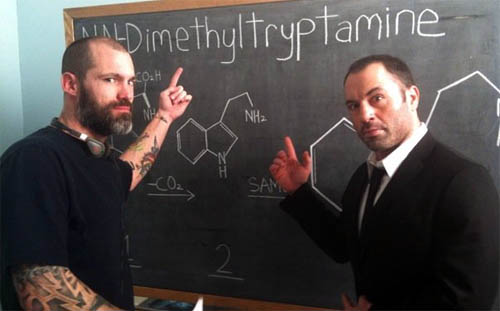
One of the best things about attending film festivals is that while seeing a lot of interesting films, you also learn a lot of interesting things. For example, thanks to the intriguing documentary The Spirit Molecule, I now know that dimethyltryptamine is one hell of a great drug.
Better known as DMT, dimethyltryptamine is the subject of Austin filmmaker Mitch Schultz's über-trippy examination of a drug found in nearly every living organism and considered the world's most powerful psychedelic. Combining stunningly psychedelic animation with thoughtful interviews, The Spirit Molecule is a paean to psychedelic drug use that also asks a lot of questions about the nature of human consciousness.
The film focuses on the research of Dr. Rick Strassman, a University of New Mexico psychiatry professor who dubbed DMT the "god molecule" or "spirit molecule." Over a five-year period in the 1990s, Strassman administered multiple doses of DMT to 60 human volunteers and interviewed them about their experiences while under the drug's influence. In some ways, the results were unsurprising. Many of the test subjects experienced the intense, bizarre visions and strange phenomena that are common during psychedelic drug use. But other results were startling. The DMT users spoke of entering windows into their own souls, questioning the nature of their own humanity and reaching deep levels of alternative consciousness they barely could describe. "To say the least," said one of them, "it was profound."
The Spirit Molecule also explores society's attitude toward psychedelic drug use, contrasting the strict anti-drug policy in the U.S. – which bans not only psychedelic drugs, but also most scientific research into their effects – with the far more tolerant attitudes in other parts of the world. For example, Amazonian indigenous peoples often use ayahuasca, a DMT-laced tea brewed from plants, in spiritual ceremonies.
The documentary has a simple, straightforward structure. Comedian Joe Rogan introduces the film's basic concepts, which are fleshed out with dozens of talking-head interviews with Strassman, his study volunteers and others who have taken DMT, experts in medicine, neuroscience and social science, and even a theologian or two. (The Spirit Molecule may set a new record for the number of Ph.D.s interviewed in a single film.) While some of the comments border on truly eggheaded academic meandering, they're all very interesting. The interviewees ask a lot of questions that even the best scientific and spiritual minds cannot answer: Are psychedelic drug trips merely hallucinations resulting from brain chemistry gone haywire, or do the drugs actually allow our brains to access parallel realities? Do humans have souls? And if we do, what is the true nature of our souls?
Yes, this is very heady stuff, and The Spirit Molecule's wildly intense animation makes it even headier. The intricate, multicolored forms – many of them straight out of 1960s psychedelic films – dance about the screen in perfect synergy with the film's parade of mind-blowing ideas. While The Spirit Molecule may not blow your mind quite the way a generous dose of DMT would, it's one awesome cinematic trip, man.
There is one major omission in The Spirit Molecule: It's a blatantly pro-drug film that fails to mention any of DMT's possible negative side effects. Like any psychedelic, DMT can cause bad trips, and Schultz admitted as much during the post-screening Q&A. He explained that the film is more an exploration of the drug's possibilities (and a plea for more research into these possibilities) than a truly balanced documentary about drug use. While I understand and respect the difference between agit-prop and journalistic documentaries, I think The Spirit Molecule would be a better film – and perhaps a more effective argument for more research – if it told the whole, sometimes ugly story about psychedelic drugs.
That said, I highly recommend The Spirit Molecule as an entertaining, thought-provoking and yes, totally groovy exercise in filmmaking.
Austin connections: Filmmaker Mitch Schultz and line producer Chris Ohlson are from Austin.
Fair and balanced?
I've read the book on which this film is based, and couple of the research subjects had bad experiences, and when they did it was often because he hadn't perfected the dosing at that stage of the research. But there is the possibility of a negative experience. There's also a possibility the sun will go out, but I don't think it's likely (if the dose is right). But I suppose he could have reported his negative cases in the film the way he did in the book.
And it IS a way cool drug.
Umm...
First of all DmT should not be stereotyped like other hallucinogens, and DmT has no negative effects... With most psychadelics there is only really 3 ways to have a bad trip:
1. Being part of an experiment (like most Scientific research) :|
2. Taking too many, or mixing psychedelics
3. Not know anything about the drug you are doing
They can't really find out about any long term or hidden damages cuz its Schedula 1
just like maryjuana
what
Both people so far have got it right! Also, if your read the laws on it (check erowid) the police have a warrent to arrest and criminalise every living creature because every living creature on the planet contains it!
Bad Trips?
whats wrong about them? Life itself has ups and downs. Life has good trips and bad trips. And you must learn for both.
bad trips ?
The quality of the Psychedelic experience is very much influenced by one's environment..DMT ;is a very internal trip and the only real external influence is the auditory..hence I'm sure individuals do not experience 'Bad Trips' when taken in its cultural context !!!! .....it is most definitely a portal to another reality inner and outer space !!!