

Reviews
Dallas IFF Review: Cry

Dallas writer/filmmaker Clay Luther made his feature directorial debut at this year's Dallas International Film Festival (DIFF) with Cry, a drama that explores several timely topics including bullying and homophobia. Luther effectively portrays the complexity of his main characters and avoids the formulaic and simplistic Hollywood ending.
Cry focuses on two neighbors on the opposite ends of life -- Cable (Bill Flynn) is a despondent widower who has lost the will to live and is estranged from his daughter, and Carson (Skyy Moore) is a high-school student who is bullied by fellow basketball player Micah (Erick Lopez).
Carson may not have experienced life, but he has suffered the death of his mother and lives with his openly homosexual uncle, Jeremy (Del Shores). Although Carson has his girlfriend Grace (Cherami Leigh), he's emotionally troubled from the almost daily beatings he receives from Micah. It is inferred that Micah and Carson had been best friends, but a significant event caused an estrangement. As Carson struggles with his personal drama, a tragic event connects him to Cable, who also finds his life a challenge to live. Resolution does not come easy for either of them, but through their relationship they find the will to take the necessary steps towards contentment.
Review: Somebody Up There Likes Me
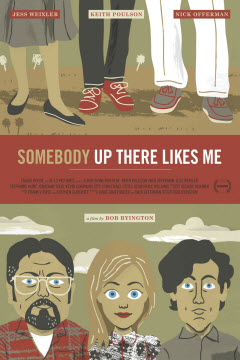 I've seen Somebody Up There Likes Me twice now -- once at SXSW 2012 with a lively local-heavy audience, once via screener with no one else but the cat -- and found the movie terribly funny both times. In fact, after I watched it the second time, I restarted the film so I could to see how the beginning tied into the end (it does, so pay attention) ... then had to stop myself from watching it a third time. The movie opens Friday at Violet Crown Cinema and I'm sorely tempted to go.
I liked it a lot, obviously. But I don't know whether you'd like it. Local filmmaker Bob Byington's universe is not for everyone.
Somebody Up There Likes Me is a comedy, but not in a broad sense -- its humor is very specific. I don't mean that it's full of obscure pop-culture references, either, because the movie could be set in any time or place. (You'd have to know Austin fairly well to recognize it was shot here.) The movie is off-center and your brain has to squint and tilt sideways and around the corner a little to appreciate it. Once you're in the universe of the film, however, it's wonderfully fulfilling.
At the heart of this movie is the relationship between Max (Keith Poulson) and Sal (Nick Offerman), although the focus is ostensibly on Max. Max and Sal work together in a fancy restaurant, along with Lyla (Jess Weixler), who catches Max's eye. Eventually Lyla and Max marry, and ...
You know, recounting this story does no good. It's not important what the characters are doing as much as how they're changing, or not changing, through the years. Because Somebody Up There Likes Me spans decades, although some characters never seem to look any older. Is this a reflection on how much they've matured inside? Possibly. The characters do a number of things externally that might be symbolic of their inner lives.
For example, during Max and Lyla's first date, their conversation is full of misses -- someone mishears, someone misspeaks. It's funny, it's a little awkward, and it's an apt representation of how relationships work (or don't). Lyla loves breadsticks ... and how does her enjoyment of them factor into the film? Lyla's father (Marshall Bell) appears to be an almost tangential character, but what is the extent of his influence on the events in the movie? Kevin Corrigan appears in a single scene, but his advice to Max might be critical. On my second viewing, I wondered fleetingly if Sal and Max were actually different aspects of a single character. And I haven't even mentioned the suitcase.
SXSW Review: Continental
 The documentary Continental faces a tough challenge: Very little film footage or still photos exist for the legendary NYC bathhouse in its heyday. It's understandable -- this was not a place where many people wanted their pictures taken. But it means Continental has to drum up visual interest in other ways.
The movie takes us along on a breezy historical tour of the Continental Baths, one of the most well known and innovative bathhouses in New York in its prime. Steve Ostrow invested in the facility when it was a dark, dank warren of gay sex, and transformed it into a sophisticated gathering place and much cleaner, safer warren of gay sex. Eventually the Continental even drew a straight nightclub crowd for its concerts -- this is the place where Bette Midler launched her career.
Midler isn't one of the interview subjects -- she's represented only by still photos -- but many of the Continental's former employees and regulars happily recount tales of their time there. Interviews with Ostrow are the backbone of Continental, and in fact at times the story is not the history of the bathhouse as much as it is the history of the man who made it great, his work with the gay community, and his lifelong ambition to be an opera singer. He's such a magnetic interview subject that it's understandably why filmmaker Malcolm Ingram would focus on him.
To keep the documentary from being nothing but talking heads, Continental includes many contemporary shots of the hotel that used to be the home for the Continental, as well as the neighborhood surrounding it. It gets a little visually dull after awhile, but then I'm not sure what else Ingram could have done, unless he wanted to totally re-create the premises, a la Errol Morris? Which would have made for a very different movie. The rare footage and stills that do appear onscreen are fascinating -- I wish there were more.
Review: Wrong
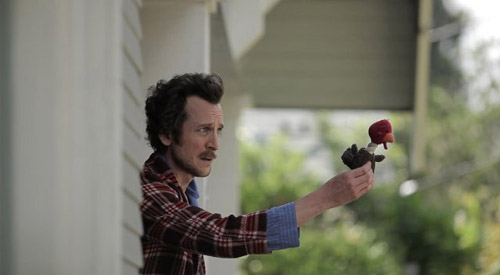
As a fan of Quentin Dupieux's delightfully Dadaistic 2010 feature Rubber, I had high hopes for his new film, Wrong. I envisioned a movie just as quirky as Rubber, but with a more mainstream plot about a man searching for his lost dog.
I was, well, wrong. (Sorry -- I couldn't resist.) Wrong certainly is quirky and absurd, but it lacks the endearingly odd humor, cool factor and narrative originality of Rubber. It's weird, but not engaging.
Wrong is the story of Dolph Springer (Jack Plotnick), who awakens one morning to find that his dog, Paul, has gone missing. What happens next probably will make no more sense in written form than it does on screen, so I'll just say that while looking for his beloved pet, Dolph embarks on journeys both physical and mental.
Along the way, Dolph encounters a host of strange situations and oddball characters, among them a flaky pizza restaurant employee, Emma (Alexis Dziena); his Hispanic gardener with a French accent, Victor (Eric Judor); a hot-tempered pet detective, Ronnie (Steve Little); and the mysteriously metaphysical pet-care book author, Master Chang (William Fichtner). All of them interact with Dolph in off-kilter ways, some of which make more sense than others in the context of the story.
SXSW Review: An Unreal Dream: The Michael Morton Story
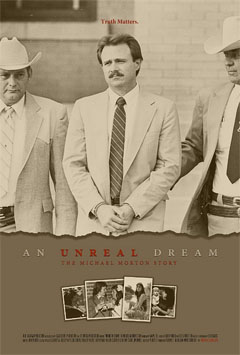 The timing for An Unreal Dream: The Michael Morton Story to premiere in Austin at SXSW could not have been more appropriate, if you know the news story it recounts. And how much you know about Michael Morton's life may dictate how much you enjoy this documentary from Houston writer/filmmaker Al Reinert (For All Mankind, Apollo 13). The film won the Documentary Spotlight audience award at SXSW earlier this month.
The short and incomplete version: Chris Morton, Michael's wife, was found beaten to death in their Williamson County home in 1988. Michael Morton was charged with the crime, found guilty, and sentenced to life in prison. But he continued to assert his innocence. If you've paid attention to Austin-area news in the last week, you know how this situation has played out.
An Unreal Dream is structured as though Michael Morton is casually telling the story of his life to us. He sits at the front of a courtroom and shares his perspective as though we're seated right across from him. His narrative is enhanced by archival news footage, still photos and interviews with people who know him, from his lawyers to his fellow inmates. When his son Eric Olson appears on camera, and he and Morton start to talk about how Morton's prison sentence affected his child, it's heartbreaking.
I didn't know Morton's whole history when I saw An Unreal Dream -- I knew about how he fit in the Chris Morton murder case, and how that's transpired recently, but the details were new to me -- how long he was in prison, etc. And that's why I'm not including those details here, in case you aren't acquainted with them either. I can't say how well the story would hold the attention of a viewer who had closely followed the story over the years.
No matter how much of the background you know, the interviews will still hold your interest. I particularly liked Morton's original defense attorney, Bill Allison. Morton himself recounts his story with extremely personal details. He details his relationship with God in a way that is touching without being cloying or proselytizing.
I felt the documentary lagged during the years Morton was in prison and nothing was going on regarding the case. As interesting as the interview subjects are, they can't carry the film without more forward motion of the plot, so to speak. Fortunately, this interval is fairly brief and the momentum picks up again.
Review: NO

Although set in 1980s Chile, the historical drama NO is eerily relevant to contemporary America, where politicians and political agendas are marketed like any other product.
A fictional story, NO is based on actual events during the campaign to oust Chilean dictator Augusto Pinochet in 1988. Under international political and economic pressure to bring democracy to his country, Pinochet is forced to call an election; the nation will vote yes or no on extending Pinochet's rule for another eight years.
Pinochet's opposition, commonly known as The NO, has 27 days to convince the voters to oust their leader, and is granted 15 minutes of TV airtime every evening to make their case. Pinochet also gives himself a nightly 15 minutes.
Opposition leaders hire René Saavedra (Gael García Bernal), a brazen but successful young advertising executive, to create their TV broadcasts. Not surprisingly, Saavedra envisions a brash and unorthodox campaign: Rather than pandering to voters' fears of Pinochet's violent regime, the ads will present a sunny and optimistic picture of the country's democratic future. The voters don't want to be reminded of murder and repression, Saavedra argues -- they want to be happy, and the campaign theme should be "Happiness is coming if you vote NO!"
SXSW Review: Computer Chess
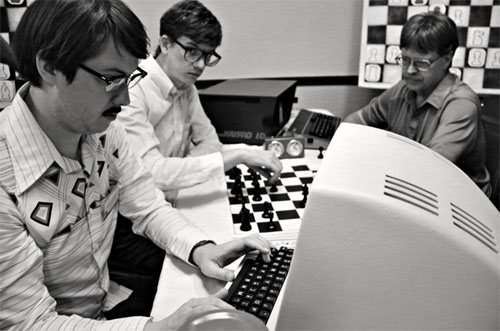
I work in high-tech so I'm no stranger to computer nerds, as they might have been called during the era in which the movie Computer Chess is set -- the 1980s, when computers were beginning to become portable. On the surface, this is a movie about "computers versus humans" in a chess tournament, but filmmaker Andrew Bujalski provides his actors with an environment for their characters to expand beyond nerdy stereotypes, giving the movie thoughtfulness and depth.
Computer Chess takes place at a weekend tournament where teams match their computers' best chess programs with one another, to see which is superior. The winning team will pit their computer against a human chess master. The programmers aren't the only people holding events in the hotel, however, and a weekend couples-encounter retreat provides some amusing contrast.
The film is shot and structured as though it were a documentary or found footage -- Bujalski even used a vintage video camera to shoot in black and white, to great effect. I wouldn't call it a "mockumentary" because it implies a level of screwball spoofery that isn't present. The "action" often pauses for characters to discuss whatever's on their mind, resulting in a slower pace than you might expect but also more fascinating characters and insights. The humor here is mostly subtle and sporadic, except for the couples-encounter scenes and a subplot about a character who can't find a place to sleep.
SXSW Review: A Teacher
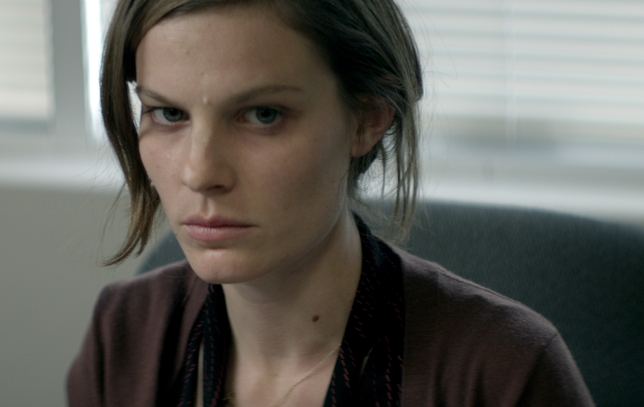
The Austin-shot movie A Teacher, written/directed/produced by Hannah Fidell, colors outside the lines with its portrayal of a high-school romance gone awry.
Maryland native Fidell's follow-up to We're Glad You're Here (2010) takes a decisively different look at adulthood and loss of innocence. While the two films have the same star (Lindsay Burdge), A Teacher raises questions about the role educators have on a student's life, the idea of maturity and what constitutes an "adult." Burdge plays Diana Watts, an AP English teacher at an Austin high school whose consensual relationship with one of her male students (former UT student Will Brittain) spirals out of control.
A Teacher opens with Diana preparing herself to step in front of the classroom stage by going through her morning routine of jogging and driving to work. She loses herself in the motions of normalcy, with her reusable mug and J. Crewesque clothes, but this thirtysomething is far from normal. Or is she?
SXSW Review: This Ain't No Mouse Music
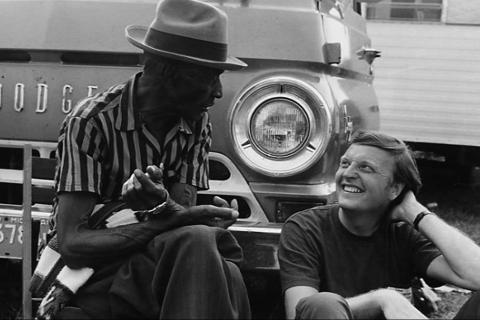
With its origin in music and a 20-year history of supporting mainstream and independent film, Austin’s SXSW creates a unique atmosphere where both universes sometimes collide to create splendid works of art. This year’s festival managed to once again create a unique melding of music and film via the documentary This Ain't No Mouse Music! It's a heartfelt movie that tells the story of Chris Strachwitz and his unique music label Arhoolie Records.
Directed by Chris Simon and Maureen Gosling, This Ain't No Mouse Music! spans a period of over 50 years. Strachwitz's story begins in the summer of 1960 when he travelled to Navasota, Texas to record songwriter and guitarist Mance Lipscomb. During the same trip, Chris also met and recorded legendary bluesman Lightnin' Hopkins. In order to promote these two legendary musicians, Chris founded his own record label, Arhoolie Records. It was all melody from there.
Review: Stoker

Chan-wook Park might not be a familiar name to you, but one of his greatest films is one you've more than likely at least heard of -- Oldboy, the Korean drama that is heavy on violence and style. His American debut feature film, Stoker, has a lot of the familiar tones that are right in Park's wheelhouse. Mia Wasikowska, Nicole Kidman, Dermot Mulroney and Matthew Goode all bring some great performances to an otherwise textbook drama about a family that is shrouded in secrecy among themselves.
India Stoker's (Wasikowska) world turns upside down when her best friend in the world, her father (Mulroney), suddenly dies in a car accident on her 18th birthday. To help the family settle in during these rough times, an uncle India never knew about, Charles (Goode) emerges and unsettlingly has charm and wit that is evident to everyone except India.
