

Reviews
Review: 12 Years a Slave
"Survival's... about keeping your head down."
"I don't want to survive, I wanna live."
I sincerely hope that 2013 is the break-out year for Chiwetel Ejiofor, when he gets the attention from filmgoers (and filmmakers) he so deserves. With his phenomenal, determined performance as Solomon Northup in Steve McQueen's film 12 Years a Slave (and his part in the upcoming dramatization of Half of a Yellow Sun), it could happen!
If, like Jette, you read Northup's biography/slave narrative in school, you're familiar with the story. Northup was a free man of color in mid-19th Century Saratoga, NY, lovingly caring for his wife and two young children and playing the fiddle for parties in the region. Taken in by con men while his family is away, Northup is kidnapped and sold into slavery under another name. He is beaten, threatened, denigrated and tortured during his dozen years as a slave to a couple of plantation owners.
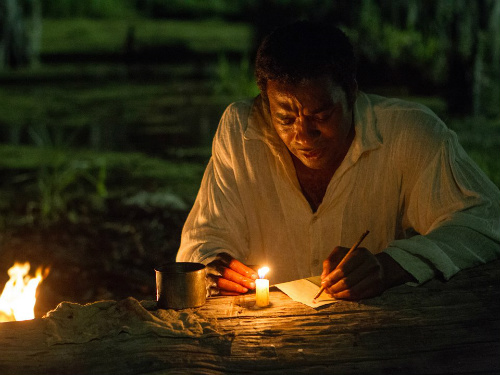
Denial of identity is a major theme of 12 Years a Slave. Upon landing in New Orleans after a horrific steamboat ride, the slave auctioneer (Paul Giamatti) calls Northup by the name of Platt. Captured woman Eliza (Adepero Oduye, Pariah) still calls him Solomon, but once she is gone we see Northup giving in to his renaming. Hope remains that he will be found and taken out of slavery, but as Platt he can't keep straining against the forces holding him down. The last embers of a letter he wanted to send home (and cannot) glow and fade onscreen. When his name -- and the freedom it represents -- is finally returned to him, Ejiofor exhibits Northup's deep relief and joy, lessened only by knowing he cannot help the others left behind.
AFF Review: The Little Tin Man
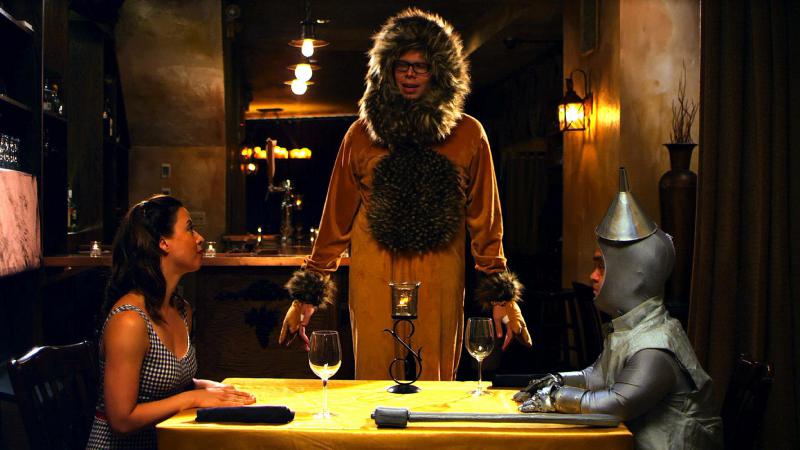
Certain films grab me from just the description of the story. Sure, that's how most films grab us, but sometimes the description can be vague or not true to the story, causing us to miss it entirely. This is why when I read the description, "A struggling dwarf actor auditions for the role of The Tin Man in a Scorsese remake of The Wizard of Oz," I knew I had to do what I could to get a chance to see The Little Tin Man at AFF.
I'll admit: I was sold on the joke of Scorsese remaking The Wizard of Oz, as it is perhaps my favorite movie of all time. That idea alone would make anyone curious to see what The Little Tin Man was about. We often see films that follow the struggle of the working actor, looking for gigs that aren't just commercials and extra work; this isn't a new idea. But a struggling actor who is a little person trying to break the mold on the roles he is typically offered? That is a story I've not seen before.
Review: The Counselor
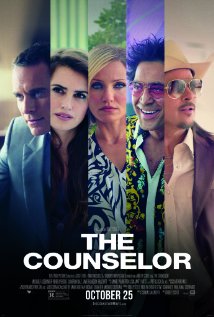 The Counselor is dirty, very very dirty, sexy-dirty. Beginning with Michael Fassbender and Penelope Cruz in bed, to Cameron Diaz being as carnally, carnivorously slutty as you've never seen her before to Javier Bardem's jaw-dropping monologue describing a night with her, this is a pressure cooker of a film, exploding with steam.
It's also a bemusing piece that challenges actors to play a little outside their established roles. Brad Pitt is not the hero but a little bit of a coward, Fassbender's character is directionless, entirely at a loss for what he should do ... and how often is Javier Bardem a sympathetic good guy?
Writer Cormac McCarthy (No Country for Old Men) is at home in west Texas, but director Ridley Scott makes El Paso look a little more glamorous and busy than it really is. (Only pick-up footage was actually shot there, though.)
The story involves Fassbender, credited only as "Counselor" and never called by name, an attorney who has gotten into debt to a criminal element and goes into business with Reiner (Bardem) and Westray (Pitt) in the hopes of making millions selling drugs through a club he and Reiner plan to open. In a murky plot that becomes only slightly more clear by the end, a third party arranges to kill a key player and steal the drug shipment, leaving Counselor holding the bag.
It is clear that, like the actors, McCarthy was trying to stretch himself and achieve something great with The Counselor. He succeeded, at least, in creating something remarkably unique. Rambling philosophical diatribes from supporting actors create a thoughtful mood but don't ultimately have a clear meaning, their delivery at times reminiscent of David Carradine's lines in Kill Bill.
In spite of the death of his brother and producing partner Tony mid-shoot, Ridley Scott has done a great job assembling a phenomenal cast and directing a noteworthy film that will be worth revisiting and may perhaps gain some cult status.
Review: Shepard & Dark
As much as I'd admired Sam Shepard as an actor for decades, I was not familiar with his writing until I read a collection of his short stories, Cruising Paradise. This anthology of 40 short tales written between 1989 and 1995, set mostly in remote reaches of the U.S. and Mexico, depicts the loneliness of a man who grew up in with familial discord brought on by alcoholism. Some of the stories are fictional, but several come straight from Shepard's personal diary.
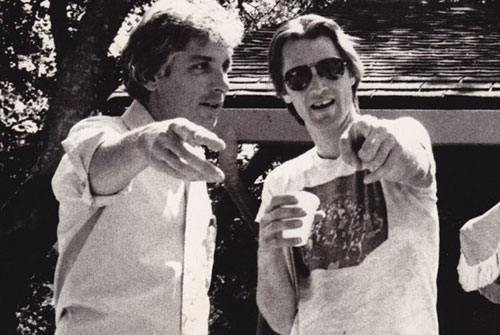
The poignant documentary Shepard & Dark by filmmaker and part-time Austinite Treva Wurmfeld reveals even more of the life and loves of Shepard, told through both personal interviews and archival footage and letters exchanged between himself and Johnny Dark. The pair met in the Sixties during an off-off Broadway play in Greenwich Village that Shepard had written. One playwright from California, the other an odd-jobber from Jersey City, talked about their childhood of airplanes and dogs and found a connection when they shared stories of their fathers.
Review: Wadjda

I'm guessing many women reading this review can remember learning to ride a bicycle -- getting the training wheels off, or refusing to have them in the first place, perhaps having someone hold the back of the seat and run behind you ... and that glorious moment when you achieve solo cycling.
In the movie Wadjda, the title character is a girl who wants to own and ride a bike in a society where such an activity is considered inappropriate for females. An event most of us take for granted becomes subversive, and the simple story of the film takes on many layers. It's remarkably fascinating, primarily due to its contemporary Saudi Arabia setting.
The basic premise of the story -- Wadjda (Waad Mohammed) wants the bicycle for sale at the nearby toy store, and will do anything she can to earn the money for it -- is enhanced by the other women in the ten-year-old character's life. Filmmaker Haifaa Al-Mansour has taken a situation that many of us can identify with, and uses it to show us the shape of women's lives in Saudi Arabia. Wadjda's mother (Reem Abdullah) is consumed with fear that her husband will leave them and marry a woman who can give him a son. The schoolmistress at Wadjda's school, Ms. Hussa (Ahd), is continually finding fault with the girl who simply will not take pains to be appropriately ladylike.
VOD Review: All the Boys Love Mandy Lane
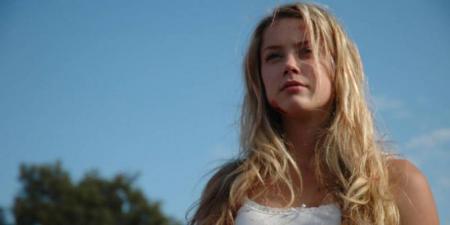
All the boys may love Mandy Lane, but this girl doesn't.
After spending seven years in distribution limbo, the first feature from Jonathan Levine (50/50, Warm Bodies), All the Boys Love Mandy Lane, screened at this year's Fantastic Fest and is available for anyone to watch on various VOD outlets. But for me, having seen the film once was enough.
If I want to watch a 21st-century The Breakfast Club, I'll go hang out in my campus's Quad. That way I won't have to see star and Austin native Amber Heard (Machete Kills) constantly tucking her hair behind her ear or making sidelong glances in an effort to portray the "good girl" (a la Kristen Stewart). You know that really uncomfortable, borderline-gastrointestinal-disorder look? That is not method acting.
Mandy Lane is not only shy and quiet, but has been ostracized by her peers for years, that is, until she sprouted acceptable-sized breasts and began participating in high-school track.
Review: Muscle Shoals
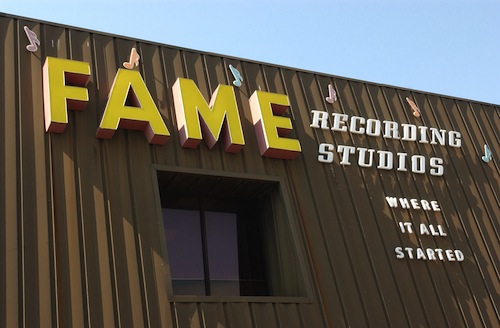
It's been a stellar year for music documentaries. Twenty Feet From Stardom, A Band Called Death and Sound City have all managed to tell important stories and still be crowd-pleasing films. Much like Dave Grohl's warm and friendly portrait of the Sound City studios out in Southern California, the movie Muscle Shoals invites us to take a closer look at a studio where some of the most important recordings of all time have been created.
Rick Hall opened FAME Studios in Muscle Shoals, Alabama in 1960 after establishing a music publishing business. With a life-altering personal tragedy behind him, he focused all of his energy into the studio and truly got hooked by producing local and regional artists. Shortly after Percy Sledge recorded "When A Man Loves A Woman" at FAME in 1966, the floodgates opened and the studio become a destination for Jerry Wexler at Atlantic Records to bring his artists to ensure they'd have hit singles.
Review: Escape from Tomorrow
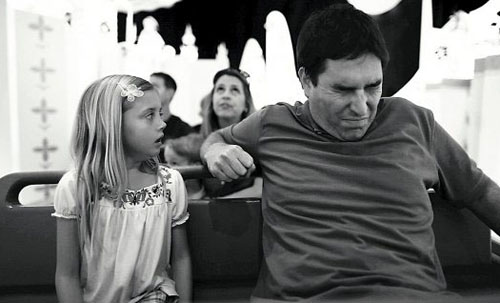
If Don Draper had taken Betty and the kids to Disneyland (circa season two, let's say), and had been fortified by something mysterious from Roger Sterling, and the whole thing had been shot covertly on film by Smitty and Kurt, the result might have been Escape from Tomorrow.
For those of you who don't watch Mad Men, let's just say the movie takes a Disney trip by your average All-American family and turns it completely on its head, with a few kicks in the teeth for good measure. Unfortunately, it moves slowly and ultimately relies too much on weirdness for weirdness' sake. The movie premiered at Sundance, screened at Fantastic Fest and is now available on VOD. It's screening in Austin this week as well.
Escape from Tomorrow potentially offers pleasure to its audience on two levels. The first is the traditional moviegoing experience, natch. But in addition, the movie is controversial -- and interesting -- because much of it was covertly shot at Disney World (including Epcot) and Disneyland. The filmmakers and actors would buy tickets to the parks and pretend to be regular visitors shooting family home video of their vacation antics. In reality, they were shooting a feature film, and had to manage all kinds of tricks to get the shots they needed, like racing around right when a park opened to get shots of deserted rides, and so forth.
Review: Machete Kills
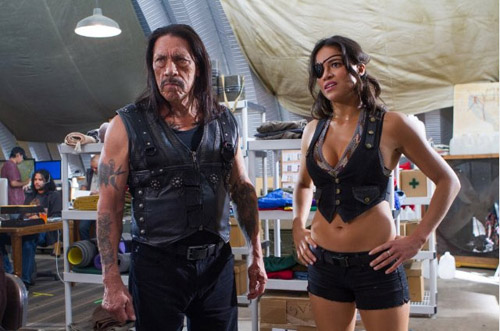
If I had to pick one bright new talent this year, it would be Carlos Estevez.
As the boozing, gun-worshipping, horndogging President Rathcock in Machete Kills, Estevez delivers a powerhouse performance destined to carry him -- a first-time actor whose face is oddly familiar -- to the heights of stardom.
Oh, wait -- IMDb says Carlos Estevez is, in fact, Charlie Sheen. No wonder I'd seen him before. But whatever his name, his performance is ... well, no. I led you astray, gentle Machete fans. To be honest, his performance isn't all that great. It's not awful, and at times it's entertaining and funny. But it's nothing special.
In other words, Estevez/Sheen's performance is like everything else in Machete Kills -- more meh than memorable.
In Robert Rodriguez's follow-up to Machete, President Rathcock recruits the titular ex-Federale (Danny Trejo) to slip into Mexico to take down crazed revolutionary arms dealer Mendez (Demian Bichir). With help from a fellow agent posing as Miss San Antonio (Amber Heard), Machete crosses the border and finds his quarry quickly -- but only after a rather violent encounter in a Mexican cathouse with wicked madam Desdemona (Sofía Vergara) and a bevy of heavily armed hookers.
Fantastic Fest Review: The Zero Theorem
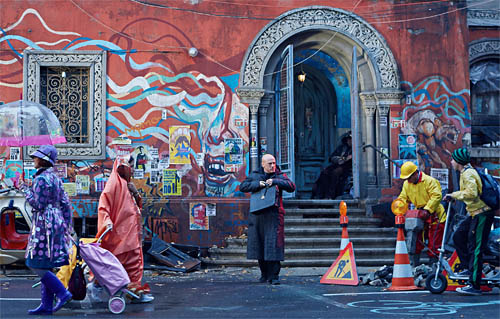
The best things I can say about The Zero Theorem, Terry Gilliam's latest movie, are that first of all, it broke my streak of disappointment with Gilliam films at Fantastic Fest (Tideland in 2006, The Imaginarium of Dr. Parnassus in 2009); and second of all, that it stuck with me vividly for days afterward. The worst things I could say are that it stuck with me in a downbeat, oppressive sort of way (although that might just have been my mood) and that it revisits many themes from Brazil without being nearly as good as that movie.
But that's something you have to deal with when you watch Gilliam's films: They are not going to be Brazil. It's like expecting Chimes at Midnight to be Citizen Kane -- you can't think that way. It's difficult to consider The Zero Theorem all on its own because you might experience delighted relief that it's better than the filmmaker's most recent three movies, but then you have to put the measuring stick away and enjoy the film on its own merits.
And there's a lot to enjoy in The Zero Theorem, starting with Christoph Waltz in the lead at Qohen Leth. It's clear right away that Qohen isn't the most mentally stable individual -- and you wouldn't want to deal with him in real life. He's fixated on his chronic illnesses, and on awaiting a mysterious phone call. In the meantime, he works as a programmer of sorts, with phenomenal speed. All he wants is to be allowed to stay away from the crazy office environment and work quietly from home while he anticipates his call.
