

Reviews
Review: After Tiller
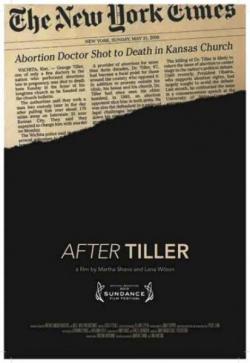 There are four doctors in the United States who openly and legally perform third-trimester abortions. They arrived at their positions not with long-standing intention, but rather due to chance and a stubborn sense of duty -- both to women and to murdered abortion doctor George Tiller.
Tiller performed late-term abortions at his Wichita, Kansas women's health clinic for decades before he was fatally shot by an anti-choice activist in 2009. Though long the target of serious violence (Tiller was shot in both arms in 1993 and his clinic was firebombed in 1986) and also accused of criminal behavior (he was ultimately found not guilty), Tiller never abandoned his simple personal precept: "Women need abortions and I'm going to do them."
After Tiller, the humanistic documentary directed by Martha Shane and Lana Wilson, avoids discussing abortion from a political point of view and is not a tribute to the late Kansas physician. Instead, the film focuses on Drs. LeRoy Carhart, Warren Hern, Susan Robinson and Shelley Sella -- former colleagues and friends of Tiller who have pledged to continue Tiller's mission to meet the needs of a very small group of women.
Late-term abortions account for less than 1% of all abortions performed in this country, and most women who seek them have hearts overflowing with fresh grief. The late discovery of a serious fetal abnormality or a health issue that would threaten the lives of both mother and fetus necessitate consulting with a different doctor than their own, one whose office is likely far from home and surrounded by vocal protesters holding graphic signs.
Other women who seek the procedure do so for different reasons; they are victims of incest or rape, they suffer from emotional disorders, or sometimes they simply lack the financial and family resources to imagine giving birth to and raising a baby. No matter what brings a woman to one of these clinics, the road before her isn't going to be easy.
The anti-abortion demonstrators who take issue with the doctors featured in After Tiller often embrace the idea that people who perform and seek abortions are cold, callous and disrespectful of life. The filmmakers quietly illustrate otherwise by observing these four as they go about their daily routines of speaking to and maybe treating women whose lives have not gone as planned. In these moments it's clear that agonizing decisions are made at these doctors' offices. God is frequently mentioned. There are tears and hugs. Ultimately, complicated gratitude is expressed.
Lone Star Cinema: The Best Little Whorehouse in Texas
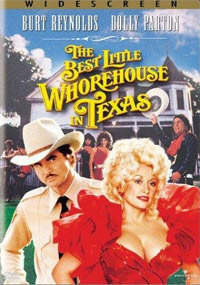 The level of camp in The Best Little Whorehouse in Texas is obvious from the start. Jim Nabors narrates its opening sequence as the amiable Deputy Fred, and he explains the history of the infamous Chicken Ranch brothel as we watch an overview of prostitution through the ages. Everything is fabulously, raucously choreographed -- and the choreography and camp never end in this endearingly goofy movie.
The 1982 film is mostly faithful to the hit musical of the same name, which is somewhat less faithful to the real story of the Chicken Ranch and investigative reporter Marvin Zindler's crusade to close it.
Set in the mid '70s, The Best Little Whorehouse in Texas is the saga of an iconic brothel in the fictional southeast Texas town of Gilbert. (The real brothel's home was La Grange.) Madam Mona Stangley (Dolly Parton) and her employees go about their business with plenty of support from the townspeople, and Miss Mona is a generous and respected member of the community. Even the law is on the brothel's side; this is not surprising, given Mona's longtime affair with Sheriff Ed Earl Dodd (Burt Reynolds).
All is well until Houston TV reporter Melvin P. Thorpe (Dom DeLuise) decides to do an exposé on the Chicken Ranch as a ratings ploy. Sheriff Dodd tries to intervene by paying Thorpe a friendly visit, but to no avail; as Dodd watches, the self-aggrandizing Thorpe announces on his show that "Texas has a whorehouse in it."
In desperation, the sheriff convinces Mona to shut down the Chicken Ranch until the unwanted attention fades away, hoping to foil Thorpe's plans to catch the working girls at work. Mona agrees, but then keeps the place open for one more night for some of her best customers -- the Texas A&M Aggie football team, seeking their traditional reward for defeating the University of Texas Longhorns. (The Longhorns earn the same reward when they win.)
Thorpe ambushes the Chicken Ranch and catches the Aggies in flagrante delicto, infuriating Sheriff Dodd and creating a scandal that ultimately involves the governor of Texas (Charles Durning).
Does the Chicken Ranch survive? If you know your Texas history, you know the answer; if not, you'll have to watch The Best Little Whorehouse in Texas to learn the fate of Miss Mona and her girls.
Fantastic Fest Review: The Congress

My favorite selection from Fantastic Fest 2013 combines the best aspects of all genres represented at the fest. It is a powerful science fiction story with an element of horror in biting social commentary played out in a half real, half animated Bakshi-esque environment. Loosely adapted by director Ari Folman from the Stanislaw Lem novel The Futurological Congress, The Congress expands on the story set down by Lem in a production of which he would likely approve.
Robin Wright won a Fantastic Features best actress award at the fest for her role as Robin Wright, a fictional version of herself who is encouraged by her agent Al (Harvey Keitel) to sell her digital likeness to the studios. In exchange for a small fortune that will allow her to spend her life with her ailing son Aaron (Kodi Smit-McPhee), she can never perform again even in something as small as a church play.
Wanting to maintain the illusion of control, she consents to a 20-year contract with stipulations that her likeness would not be performing in various kinds of roles to which she would object. Unable at first to get comfortable with the scanning apparatus, Robin displays the full range of her emotions as Al relates a story to her that is alternately happy and heartbreaking. Perhaps as a result, at the end of her contract 20 years later, the studio (cleverly called "Miramount") is pushing for a renewal as her digital image has become the most popular actor in their stable.
This is where the story in The Congress more closely resembles Lem's novel, as Robin travels to the "animated zone" to meet and sign her new contract. A chemical cocktail alters her perceptions, and the world takes on a look as if it were animated by Tex Avery, Max Fleischer, Moebius, and Ralph Bakshi in a shared dream. Desert sands assume psychedelic colors, planes undulate like lazily-swimming whales -- in an aquarium, penis-fish swim around while others have mouths resembling vaginas sucking the glass like algae-eaters.
After a lifetime of making bad choices, Robin still seems to be making them, and she is plunged into a situation that may forever separate her from her family. The Congress spells out thematically a powerful update to Lem's commentary on the role of drugs in modern society and adds to it some statements on the monetization of Hollywood as well as making a critical point about the short attention span of modern audiences. Demonstrating the horror that can lay behind "truth" and the vast loneliness inherent in hiding within a world of dreams and fantasy, Folman presents a world that is simultaneously utopian and dystopian, where actors are reduced to a chemical commodity that can be eaten or drunk, and a shared hallucination allows anyone to be anyone or anything they desire.
Fantastic Fest Review: Tales from the Organ Trade

A recurring urban legend is that of a business traveler who awakens in his hotel room after a nightcap in the local bar, finding himself in a bathtub full of ice and a bandaged incision. Upon examination at the hospital, he is informed by doctors that his kidney has been removed.
This cautionary tale would seem quite a fitting start for a horror film, and this year's Fantastic Fest featured a title that is reminiscent of this alleged morbid crime -- Tales from the Organ Trade. However, this film is actually a provocative documentary by writer/director Ric Esther Bienstock and narrated by David Cronenberg that will prompt many people to sign their organ donor card. More importantly, it should cause viewers to wonder what they would do if they or a loved one was in need of a transplant.
Across the world, thousands of people often wait for years for a donor organ while the general perception supported by doctors and the government focuses on the "exploitation of the human condition" to condemn illegal kidney transplants. Bienstock provides an in-depth and well-balanced view of this international phenomena. The stories of two people who have sought and failed to receive organ transplants through conventional means, as well as a third person who owes his survival to an illegal transplant, are contrasted with organ donors in the Philippines.
Review: Runner Runner
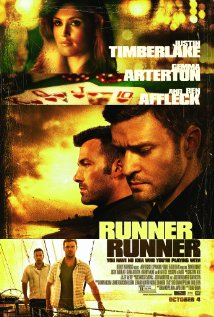
Runner Runner is an enjoyable by-the-numbers tale of doublecross directed by Brad Furman (The Lincoln Lawyer). Scripted by Rounders and Ocean's 13 writers Brian Koppelman and David Levien, it stars Justin Timberlake as Richie Furst, a Princeton whiz-kid who gets in over his head when he travels to Costa Rica to confront Ivan Block (Ben Affleck), the online poker mogul who cheated him out of his college tuition.
Rounding out the cast are Gemma Arterton as Block's bewitching business manager/ex-girlfriend, and Anthony Mackie as the FBI agent pressuring Richie to turn informant.
Furman shoots from a handheld point of view with a narrow focus that makes the movie feel a little smaller than the lavish playboy surroundings where most of it takes place. The shaky-cam does little to liven up Affleck's wooden performance, which seems designed to prove his talents are best used behind the camera. At first jovial then progressively cruel, Block never expresses any emotions outside the range of Affleck's Dazed and Confused role as Fred O'Bannion.
Timberlake, on the other hand, is born to play the down-on-his-luck golden boy. Relying on charisma, luck, and being just enough smarter than the other guy, his Richie is not far removed from his previous lead role as Will Salas in 2011's In Time, which at least had enough action and special effects to make it a more memorable film.
And that is the unfortunate bottom line for Runner Runner. The unusual title refers to a poker term for drawing two cards to make a winning hand, or in other words, being extremely lucky. The movie is fun, it's brief at only 91 minutes ... and unfortunately it's unmemorable as anything but a minor vehicle for one star with the power to rate a better script and another with the cachet to direct his own efforts.
Review: Parkland

Some stories are just too big to tell in 90 minutes; one of them is the assassination of President John F. Kennedy.
This is the fundamental problem with Parkland, a well-intentioned attempt to take an intimate look at the Kennedy assassination from an unusual perspective. Parkland sets out to capture the chaos and emotional turmoil of November 22, 1963 and the three days thereafter, focusing on ordinary people -- Parkland Hospital staffers, FBI agents, and so on -- in extraordinary circumstances. But the film misses its target because the target is far too large.
Parkland wastes no time bringing us into the story. The movie opens only an hour or so before Kennedy is shot, and within minutes we're in a chaotic and bloody Parkland emergency room, where young surgical resident Jim Carrico (Zac Efron) frantically tries to save Kennedy. Assisting him is nurse Doris Nelson (Marcia Gay Harden). Carrico's efforts to revive the gravely injured president are futile, of course, but he works on Kennedy until the other attending physicians tell him to stop.
Secret Service Agent Forrest Sorrels (Billy Bob Thornton), who was in the motorcade, tries to stay on top of many rapidly developing events. Sorrels meets with Abraham Zapruder (Paul Giamatti) and convinces the reluctant bystander to turn over his iconic home movie of the assassination to the authorities.
Fantastic Fest Review: The Fake
 South Korean writer/director Sang-ho Yeon created quite a stir at Fantastic Fest in 2012 with the disturbingly bleak animated drama, The King of Pigs. Serious tales conveyed through animation are rare, and Yeon shows no mercy in demonstrating the brutality and exploitative nature within various castes of South Korean society.
Yeon continues to expose the futility and atrocities suffered by the weak and lower class with his second feature-length animated drama Saibi (The Fake). A dying village is scheduled for evacuation before new construction begins and the land is flooded. Many of the villagers look to their church elder, Choi, to save them both figuratively and spiritually, along with the newly recruited Pastor. Unfortunately neither the villagers or Pastor are aware that Choi is a criminal wanted for fraud. He has promised to build a new housing complex for the villagers, when his actual plan is to take off once he's stolen all of their government compensation money.
Fantastic Fest Review: We Gotta Get Out of This Place
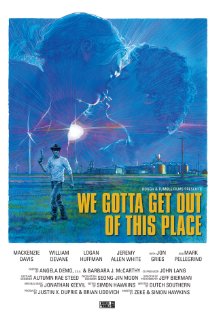 We Gotta Get Out of This Place was shot in Taft and Corpus Christi, Texas, during winter months where endless dead cotton fields perfectly represent the inescapable bleak feelings suffered by small-town high-school students on the cusp of starting new adult lives. Playing something like a more mature version of Something Wicked This Way Comes minus the supernatural element, writer Dutch Southern's screenplay inserts a maliciously scheming petty criminal father-figure into a teenage love triangle, with deadly results.
Mark Pellegrino (Dexter, Lost) has a career packed with dark roles, but Giff is a unique character. The rural mafia boss is uneducated but possesses a devastating crafty intelligence. Perhaps slightly insane, he is predatory, with a charming, even seductive personality that reveals his vicious intent with the punchline of his never-ending one liners. He employs teens B.J. (Logan Huffman) and Bobby (Jeremy Allen White), whom he coerces into working a heist for him to repay a small fortune that B.J. has stolen and then blown in a weekend of partying with Bobby and girlfriend Sue (Mackenzie Davis).
Like Pellegrino, the other leads in this movie are cast true to type. Best known for his role in the ABC reboot of V, Huffman's portrayal of B.J. is a Jim Nightshade analogue. With no prospects for college as a way out of town, he embraces Giff as a mentor and the only hope of finding success. He realizes too late that he is in over his head.
Jeremy Allen White's Bobby, like the light-haired Will Halloway, is more heroic, but his better education and plans to attend college with B.J.'s girlfriend Sue result in a growing feeling of alienation between the lifelong friends. Feelings of betrayal become deadly, and they could all pay the price.
Fantastic Fest Review: Ragnarok
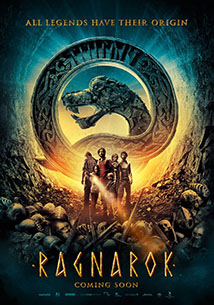 In 1904, Norwegian archaeologist Haakon Shetelig and Swedish archaeologist Gabriel Gustafson excavated one of the greatest discoveries of the Viking Age -- a burial mound located on the Oseberg farm near Tornberg, Norway, containing a well-preserved ship, grave goods and the skeletal remains of two women. The quality and abundance of items within the grave indicate that at least one of the interred was a woman of high status, and it has been suggested that she was the legendary Norwegian Queen Asa.
Norwegian director Mikkel Brænne Sandemose couples this archaeological find with the Norse myth of the end of the world's events in his action/adventure Ragnarok, which premiered at Fantastic Fest. This family-friendly film pays homage to blockbusters such as Raiders of the Lost Ark and The Goonies without the overdone Hollywood gloss. Don't get me wrong -- the movie includes plenty of long shots of sweeping landscapes with a majestic musical score to match, and CGI special effects reminiscent of the most memorable "cat-and-mouse" chase scenes of Jurassic Park. These assets make up the lovely packaging containing the true gift of writer John Kare Raake, an engaging and thrilling story of loss, intrigue, and family bonds that stretch over one thousand years.
Pål Sverre Hagen (Kon-Tiki, Troubled Water) portrays archaeologist Sigurd Svendsen, a widower whose obsession with solving the secrets of the Oseberg ship leaves him ignorant of his children's need for attention. His theory that Vikings had actually traveled further north than popular conception -- to the heavily wooded and unpopulated Finmark, the northernmost region of Norway referred to the "no man's land" that lies between Russia and Norway -- is not well-received by the museum patrons who've funded his research, and he is demoted from his position.
Sigurd's colleague Allan (Nicolai Cleve Broch) returns from an extended field expedition with a rune stone that has apparent ties to the Oseberg ship, as well as runes that translate into the phrase, "Man knows little." Is this phrase an observation, or is it a message from the past? Sigurd is determined to find out, and so with Allan and Allan's field assistant Elisabeth (Sofia Helin), he sets off on an expedition with his reluctant children Ragnhild (Marie Annette Tanderod Berglyd) and Brage (Julian Podolski) in tow.
Fantastic Fest Review: Gravity
 "State of the art" is described on Wikipedia as "the highest level of development of a device, technique, or scientific field, achieved at a particular time." Ever so rarely, a film appears that advances the state of the art in filmmaking to the next level, becoming a benchmark by which other films are judged.
Recently (at least since the late 80s) this has been James Cameron's playground, as a string of blockbusters like The Abyss, Terminator 2, Titanic and Avatar all set new standards for the use of computer graphics in filmmaking. Of course, Steven Spielberg also joined him in the sandbox with Jurassic Park.
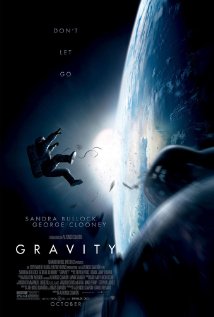
Now Alfonso Cuaron's heavily-anticipated Gravity sets a bar so high one could say without irony that it's in orbit. After more than two decades of computer-generated wonders in film, it is difficult to impress an audience that is already quite used to seeing every wonder a director can imagine. Computer-powered dinosaurs, spaceships, cars and robots make a trip to the cinema feel like stepping into The Matrix, but one thing that anyone with a lot of experience with video games can tell you is the processing power required increases exponentially as you add more objects to a scene. CG can do one object brilliantly. Various tricks allow Peter Jackson to create an army controlled by swarming algorithms or the zombies of World War Z to flow like water.
But there are shots in Gravity that prompt one to exclaim "God Himself made this film!" Thousands, tens of thousands, maybe hundreds of thousands of objects crash into each other, ricochet, and break apart -- all while looking so detailed, so perfect, and each independently travelling along its own path.
