

Reviews
Review: The German Doctor
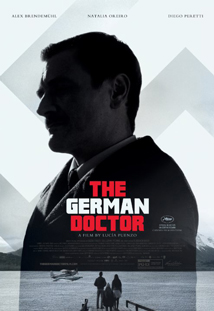 Following the fall of the Third Reich and the liberation of the German Nazi concentration camps, many of the leaders directly involved fled to South America. One of the most famous of those officers was Josef Mengele, a physician in the Auschwitz concentration camp. Due to his barbaric and deadly human experiments performed on prisoners as well as role in the section process for the gas chamber executions, Mengele was known as "The Angel of Death."
Argentian filmmaker Lucia Puenzo's novel Wakolda focuses on this infamous man and the true story of an Argentinian family who unknowingly boarded Mengele at their home, now adapted by Puenzo as the movie The German Doctor. Whereas the novel is told through Mengele’s point of view during his exile in South America, the film instead relies more on 12-year-old Lilith (Florencia Bado). Born premature and having suffered from several illnesses at an early age, Lilith is an underdeveloped prebuscent girl who struggles to fit in at her new German-run school in Patagonia.
A chance encounter while traveling to their new home in the tourist town of Bariloche brings Lilith's family, including her pregnant mother Eva (Natalia Oreiro) and dollmaker father Enzo (Diego Peretti), to the attention of a mysterious and charming German doctor (Alex Brendemühl). The doctor quickly entrenches himself in Lilith and Eva’s favor, offering to help with their growth and medical care. He becomes the family's benefactor as he helps Enzo mass produce his designs at a doll factory.
Puenzo lets the audience know within the first act of The German Doctor that this mysterious doctor is the notorious Mengele. He's received as a hero by fellow Nazis also hiding out in Bariloche, but photographer Nora Eldoc (Elena Roger) -- who is also a Mossad spy and victim of one of Mengele's sterilization practices -- recognizes him immediately. This approach increases the tension as we witness the interaction between the doctor and his naive victims. When asked by Eva whether he's had any experience with childbirth and twins, his reply "hundreds" has a chilling impact. Young Lilith becomes lethargic and experiences pain in her bones as the doctor increases her growth hormone.
HCFF Review: Intramural
 Normally I would not pay much attention to a movie about college guys bonding over sports, especially football. We get more than enough football here in Texas if you are not a fan. But Intramural lured me in -- shot in Austin; directed by Andrew Disney, who showed a nice touch with humor in his previous film Searching for Sonny; written by Bradley Jackson (The Man Who Never Cried). In fact, Jackson pretty much convinced Disney to direct Intramural during Hill Country Film Festival 2012 (after meeting him at Austin Film Festival -- this is why filmmakers should go to film fests), so it felt like a can't-miss as the HCFF closing-night film.
It turns out that Intramural is pretty damn funny, even for middle-age women who don't subscribe to the Texas Cult of Football. The plot is fairly standard -- a bunch of fifth-year college seniors (apparently this is a thing now) decide to get the band, er, intramural team back together for one last hoorah before they graduate. The guys had a championship team in their freshman year that was Marked By Trauma -- yes, it sounds a lot like a combination of Pitch Perfect and The Bad News Bears.
In fact, Intramural is more than aware that it is following in the footsteps of many sports-genre films. One character even gets all Abed (gratuitous Community reference, sorry) about it and makes specific things happen so they will go from underdogs to champions just like teams in sports films -- demanding a training montage, for example.
The characters tend to be types -- even the main character, Caleb (Jake Lacy) is your typical Average Guy In a World of Quirky-to-Bizarre People. His fiancee Vicki (Kate McKinnon) is absolutely insane, and one reason Caleb reunites the intramural football team is to get a breather from her plans and ambitions for him. Then you've got the Nemesis Team, led by evil Dick (Beck Bennett); victim-turned-passionate-coach (Nick Kocher); and the vivacious Cool Chick Who Loves Sports (Nikki Reed). Austin film fans will get a kick out of Sam Eidson as a stereotypical big football lug with an unexpected side talent that had the audience howling.
The cast takes their roles and runs with them. Lacy plays it straight and has a marvelous talent for understated reactions, not an easy thing to accomplish in a sea of over-the-top characters. McKinnon goes entirely in the other direction and makes a completely unpalatable character funny. Bennett, well, best seen to be understood. "Color commentators" Bill and Dan (D.C. Pierson and Jay Pharoah) are a little bit Jay-and-Silent-Bob-stoner like (except they both speak), but are funny enough to get away with it.
Lone Star Cinema: The Trip to Bountiful
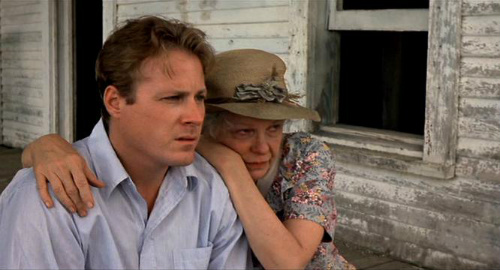
Horton Foote's The Trip to Bountiful illustrates that you can't go home again. Since it was first performed in 1953, the play remains a favorite for stage performance. Indeed, a recent Broadway revival starred a cast of Cicely Tyson, Vanessa Williams and Cuba Gooding, Jr. and was even made into a TV movie for Lifetime earlier this year.
But for many years, Foote resisted the idea of bringing his play to the silver screen. Director Peter Masterson was able to convince the Texan writer. Esteemed actress Geraldine Page (Sweet Bird of Youth, Hondo) went on to win an Oscar for her lead role of Carrie Watts in the resulting 1985 movie.
Mrs. Watts, a 60-year-old widow, lives in a one-bedroom apartment in Houston with her son Ludie (John Heard, Home Alone, My Fellow Americans) and daughter-in-law Jessie Mae (Carlin Glynn, Sixteen Candles, Three Days of the Condor). She fondly remembers days back at her home farm in Bountiful. In her current situation, Jessie Mae and Carrie bicker over the elder woman's near-constant hymn-singing and other habits. Compared to the space Mrs. Watts once had, the apartment is confining.
She pockets her pension check and leaves one morning while Jessie Mae is out, determined to travel back to Bountiful (a fictional town somewhere in south Texas). She befriends a young military wife (Rebecca DeMornay, demure and composed in her '50s era ensemble) on the journey and confides in her on a bus ride.
The opening credits sequence of a mother and child running through a field of bluebonnets leaves no doubt about the Texas setting of The Trip to Bountiful, and the costuming and set design perfectly reflect the time period. Page has a frumpy and careless appearance about her in the role to represent Mrs. Watts' single mindedness. All she wants to do is go home... but unfortunately just returning to a place can't bring back past people or events.
Page as Mrs. Watts is almost constantly on the verge of tears; recalling memories of her son as a boy or failed relationships causes a choked tone to enter her voice. Carrie also has episodes related to heart problems (probably a double meaning, there) that leave her light-headed and dizzy.
The Trip to Bountiful comes off like a filmed stage play in the beginning apartment scenes, but as Mrs. Watts leaves those rooms, the film widens its scope. Masterson's direction and Foote's script give Page an opportunity to show her impressive talent, and she doesn't disappoint.
Texas connections: Writer Horton Foote was from Texas. The Trip to Bountiful was shot in Ellis County/Waxahachie, Venus and Dallas. Richard Bradford, who plays the sheriff, was born in Tyler. Kevin Cooney, who appears as a bus station worker, is from Houston. Director Peter Masterson, a native of Houston, also wrote the screenplay for The Best Little Whorehouse in Texas.
[Still via MovieClips]
Hill Country FF 2014: Pier to Peer Docs
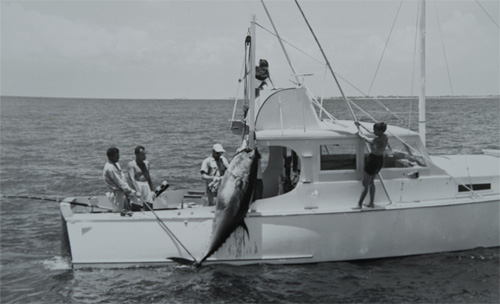
Amid all the shorts I enjoyed at Hill Country Film Festival, I also saw some longer movies. One documentary is technically a short but may be longer at some point, and one feature-length doc will likely be somewhat shorter by the time you see it. Both Bluefin on the Line (pictured at top) and Lord Montagu are set in very different environments but ultimately, are about families working hard to preserve their legacies.
Bluefin on the Line is the latest documentary from sometimes-Austin* filmmaker Bradley Beesley, whose previous films include The Fearless Freaks, Sweethearts of the Prison Rodeo and most appropriately for this subject, Okie Noodling. Elizabeth interviewed the Oklahoma native a couple of years ago for his segment in Slacker 2011. This 37-minute film takes a look at the history and culture of the Bimini Islands over the past century, particularly big-game fishing and how it has affected the people who live there.
I didn't quite realize big-game fishing was a thing, but apparently it was popularized by Ernest Hemingway. Fittingly, his grandson narrates the first section of this film, a breezy overview of big-game fishing in its heyday, especially bluefin tuna. Vintage stills show people holding up fish that look as tall as I am, and I realize I am kind of a short person, but that's impressive nonetheless. The bluefin were ultimately overfished, however, and the Bimini Islands went downhill ever since, with many locals' fishing skills no longer needed. "Tuna Alley" no longer lives up to its name.
Review: Neighbors
 When a wild fraternity moves into the house next to Kelly (Rose Byrne) and Mac (Seth Rogen), a thirtyish couple with a new baby, they feel conflicted. Near constant noise and debauchery will disrupt the peace of their sleepy neighborhood and throw off their routine schedules, but truthfully they crave a little craziness. It wasn’t very long ago that they were carefree and in college themselves, and new parenthood is making them wistful for the past and afraid of becoming boring.
Desperate to avoid seeming like buzzkills (even though they really do want their young neighbors to just keep it down), they try to play along at first and even join the party one night. Real life makes it impossible for them to live in both worlds, though. Very soon, after a series of necessary-to-the-genre misunderstandings and mistakes, the situation has escalated quickly into all-out neighbor war.
Directed by Nicholas Stoller (Forgetting Sarah Marshall, Get Him to the Greek), the movie Neighbors has all the elements necessary to make it the next successful gross-out, slightly romantic comedy with arrested development undertones. However, thanks to a generally good-hearted script obsessed with pop culture and all-in performances from its stars (particularly Byrne as Kelly), Neighbors slightly exceeds expectations by throwing a few surprises into what could be just another immature prank-based film.
Not that Neighbors is smart, exactly, nor does it completely upturn traditional comedy cliches, but it does make an effort to gender equalize the situation. Byrne, who carries herself well throughout, channels the outrage of hundreds of minor female movie characters when Kelly shouts at her husband that it's not fair how he gets to be irresponsible and have all the fun while she is expected to be the bitchy mom whose only job is to scowl and complain. She makes a good point, and from then on not only participates in the shenanigans, she directs them.
Review: Jodorowsky's Dune
 In the mid-Seventies, Chilean director Alejandro Jodorowsky, who was known for his radical arthouse films El Topo and Holy Mountain, took on the greatest challenge of his film career -- adapting for the screen one of the most classic sci-fi novels in history, Frank Herbert's Dune.
For two years, Jodorowsky worked an overwhelming number of hours with his creative team, including French comic-book artist Jean "Moebius" Giraud, screenwriter Dan O'Bannon (Dark Star, Alien), artist H.R. Giger (Alien), and sci-fi paperback illustrator Chris Foss to create over 3,000 storyboards and dozens of paintings along with incredibly detailed costumes and a tome of a script the size of a large phone book.
The film was to star Jodorowsky's own 12-year-old son, Brontis, who endured two years of daily martial arts training in preparation for his starring role alongside icons such as Orson Welles, Mick Jagger, David Carradine and Salvador Dali. Although the film was never made, it left an indelible mark on cinema with evidence throughout many sci-fi cult films of the last few decades including Blade Runner and Alien.
Director Frank Pavich reveals the impact of Jodorowsky's attempt in Jodorowsky's Dune, a fascinating and inspiring documentary about the greatest epic film that was never made. The movie opens Friday in Austin.
Pavich weaves interviews with the creative team involved in the massive project, including audio transcripts of the late Dan O'Bannon and supporters such as Drive director Nicolas Winding Refn and film journalists Devin Faraci and Drew McWeeny. Most importantly, we meet the charismatic and enthralling Jodorowsky himself.
Cinematographer David Cavallo creates an intimate portrait of Jodorowsky in the comfort of his home, setting the stage with images of his scripts, books, and feline companion. The animation by Syd Garon (Blackfish) is stellar, breathing life into the storyboards by Moebius and paintings by Giger that had me giddy with anticipation.
Review: The Amazing Spider-Man 2
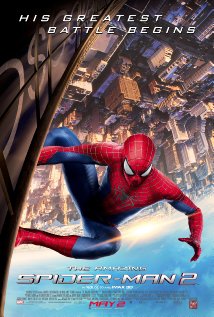 Swinging into theaters this weekend is the sequel to 2012's The Amazing Spider-Man. Scripted by Roberto Orci and Alex Kurtzman and directed by Marc Webb, The Amazing Spider-Man 2 picks up shortly after the reboot with returning stars Andrew Garfield, Emma Stone and Sally Field as well as Dane DeHaan and Jamie Foxx, both new to the series. The sequel exceeded my expectations as Garfield fell comfortably back into the title role.
Peter Parker is just a teenager still trying to find his way less than a year after his powers have been thrust upon him. He has no school for gifted youngsters such as himself to provide peer support. He hasn't had a lifetime to come to terms with his powers under the guidance of a moral compass like Jonathan Kent. Only after the events with The Lizard has he had a chance to ponder the life ahead of him and its effects on those he loves.
Though some would say his on-again/off-again relationship with Gwen Stacy isn't true to the final shot of part 1, in which he throws caution to the wind, I think that reads too much into the scene. Sworn by her father to keep Gwen out of danger by avoiding her altogether, Parker is torn between his love and fear for her. Though like most any teenage boy he often feels invincible, self-doubt and uncertainty frequently win out as he is constantly reminded of the death of her father and his guilt over being unable to prevent it. Being Spider-Man provides his escape from or justification for his feelings over the death of Uncle Ben. Being with Gwen provides his escape from the responsibility of keeping an entire city safe.
Dane DeHaan is perhaps typecast as the rebellious, misunderstood teen vaulted into a position of power while suffering the mental ravages of abuse and neglect. His time on screen as Parker's childhood friend, Harry Osborn, is only background filler as he treads water until assuming his role as one of the seminal Spider-Man villains, Green Goblin. This is not Green Goblin's movie, however, and though the character's actions are pivotal, Green Goblin takes a back seat to the Electro storyline.
Review: Only Lovers Left Alive
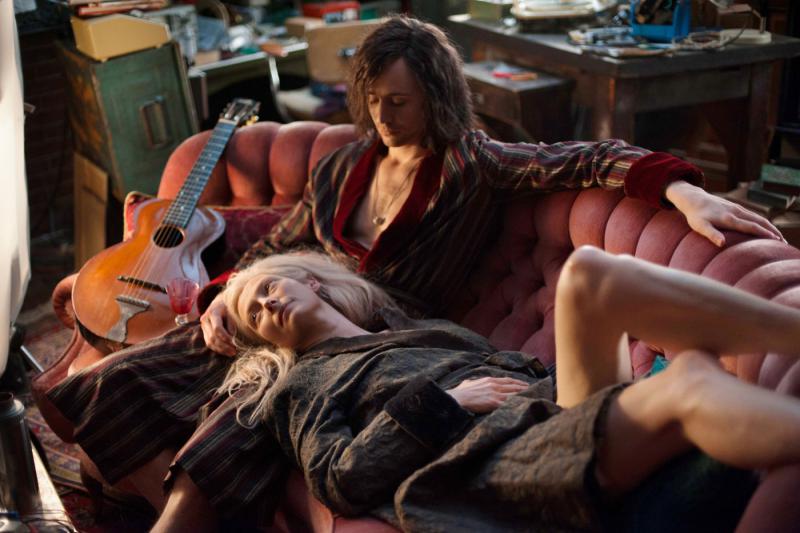
The allure of a seductive yet terrifying monster has always been the hook for me in vampire films. Usually an attractive immortal being who (in the sexiest way possible) preys upon its victims, leaving you both turned on but also scared out of your mind. I was prepared to see this happen again in Jim Jarmusch's latest film, Only Lovers Left Alive. Surprisingly though, it wasn't the case.
I'm not sure that I would classify this movie as a vampire film, but rather a romance story. I found myself longing for the type of relationship that Adam (Tom Hiddleston) and Eve (Tilda Swinton) share. Two creatures of the night that have been together for centuries, the film shows us what life is like for them in the modern world. And it's not what you'd expect: it's quiet and simple, although the two have more money than most average households. (I guess financial gain is a perk of being a vampire.)
Review: The Railway Man
 A particular subgenre I've enjoyed from an early age thanks to my father's influence is war movies, including the classics -- The Bridge on the River Kwai, Kelly's Heroes and The Dirty Dozen topped our list -- with a particular fondness for prisoner-of-war tales including Victory and Merry Christmas Mr. Lawrence. I find the stories of brave servicemen who overcome torturous emotional and physical conditions to be inspiring testaments to courage and bravery.
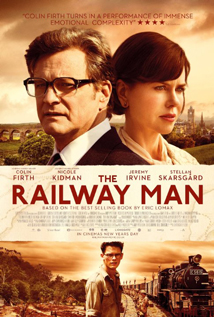
Directed by Jonathan Teplitzky, the movie The Railway Man portrays such a character, Eric Lomax (Colin Firth). It's based on the real-life story of a British army officer and radio engineer who was captured with his unit during the fall of Singapore in 1942. The prisoners of war were used to build the railroad from Burma to Siam through rough terrain, under brutal conditions.
The Railway Man begins with a chance encounter on a train between Eric Lomax and Patti Wallace portrayed by Nicole Kidman. After decades as a bachelor, Eric finds himself in love with the engaging Patti. After a whirlwind romance, they marry and settle into what would seem to be a quiet perfect life. However, Eric suffers from night terrors as he relives his wartime experiences including torture from Japanese officers, aided by their interpreter Nagase (Tanroh Ishida).
Patti seeks the aid of Eric's good friend Finlay (Stellan Skarsgard) to help her husband face his emotional demons -- not an easy task, as Finlay was also in Eric's unit and suffered from their captors' abuse. The men are bound by a code of silence, expected to endure and move on.
The story of their imprisonment is told in a series of extensive flashbacks with the young Eric (Jeremy Irvine) and a young Finlay (Sam Reid), nicknamed Uncle. Unbeknown to their captors, the men had smuggled in the parts to a radio which they reassemble in order to receive news from home. When the radio is discovered, Eric takes full blame and is subsequently tortured to confess what the Japanese believe is the true purpose for the radio.
Lone Star Cinema: The Girl
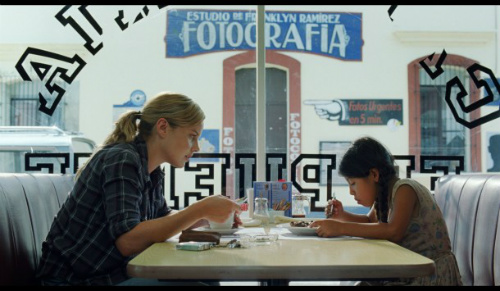
David Riker, who directed independent immigrant drama La Ciudad, helmed a film in 2012 titled The Girl. This seems at first glance a far-too-general name for a movie about immigration, life on the border, motherhood and desperation. Is the "girl" of the title Ashley (Abbie Cornish, Bright Star, Sucker Punch), a young mother struggling to make money so she can get back custody of her son? The viewer wonders as we see her flustered under the keen eye of a social worker, arguing for more shifts at the grocery store, or riding along with her trucker dad (Will Patton, Remember the Titans, TV show Falling Skies) to Mexico.
Ashley becomes convinced that she can be a coyote -- she desperately needs the money this bad idea will bring her. Among the group of people she picks up in a Nuevo Laredo plaza to convey over the border is a young girl, who is definitely the inspiration for the title. Ashley and the child (we find out three-quarters into the film that her name is Rosa) are thrown together by circumstance, and end up helping each other.
