

Local Indies
Why You Should See 'Anne Braden: Southern Patriot'
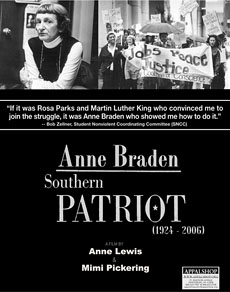 It all started with a tract house in suburban Louisville, Kentucky. Andrew Wade, an electrical contractor and veteran of WWII, and his wife Charlotte tried to buy a new house. After countless rebuffs, one sympathetic realtor suggested that the young African-American couple get a white friend to buy the house and then transfer the deed to the Wades. This was a time when virulent segregation laws were still rigidly enforced in the South (and much of the rest of the U.S.). New suburban developments provided the landing space for white flight from inner cities.
Local journalists Anne Braden and her husband Carl bought the house, signed over ownership, and then the troubles began. First with rocks through the windows, followed by shotgun blasts and burning crosses planted by white-robed KKK members. A bomb explosion finally drove the young couple and their three-year-old child out of the house.
At other times that might have been the end of the whole affair, but it was 1954, the year of the Supreme Court's ruling against school segregation. White racists redoubled their determination to fight any form of integration.
Rather than find the actual person or persons who dynamited the Wade home, a Louisville grand jury charged the Bradens with sedition against the state of Kentucky. Proof? Purchasing a house for an African-American couple in a white neighborhood, explicitly against housing laws and contract restrictions. They were even suspected of blowing up the house themselves in order to enflame racial hatred and stir up a Communist revolution. In December 1954, Carl Braden was found guilty of sedition and sentenced to 15 years in prison. Furthermore, both Anne and Carl were branded "traitors to their race."
Austin-Shot 'Goliad Uprising' Packs the Spirit Theater
 By Tyler Draker
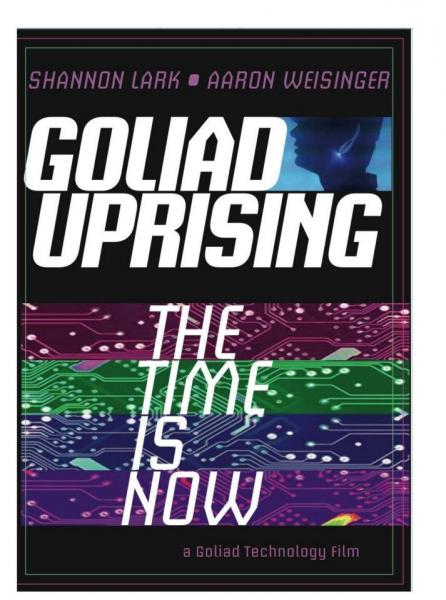
On June 21, the Spirit Theater at the Bob Bullock State History Museum was nearly at capacity for a screening of Goliad Uprising, an independent film by director Paul Bright.
The event, like the film it was built around, was modest. Not much more than a simple sign on an A-frame stand greeted people and told them where to go. But, like the film, it did a good job of working with what it had. The facilities were nice and, perhaps most importantly, the atmosphere was very upbeat and friendly. There was a feeling in the air that these people loved what they were doing and loved working together.
Indeed, most of the people who were at the screening were involved in some capacity with making the movie. Roughly half of the 99 (yeah, 99) actors were in attendance, as well as several other key crew members. For many of them, this was the first time they were seeing the culmination of their efforts.
The results were good. But this isn't a movie review. It's a success story! Goliad Uprising got made, and that's no small feat in and of itself. I have first-hand knowledge only about trying to make short films, and I can imagine how much more numerous the challenges would be in trying to make a feature-length film. Bright even highlighted a few of these challenges in his acknowledgements at the end of the film. One challenge that he brought up was that most of the film's projected funding dried up very close to the beginning of production.
While that's certainly no small mountain to overcome, I think it is important to note that perhaps as recently as 10 years ago, this might have meant the film wouldn't have gotten made. Goliad Uprising certainly looks like it was made with either a tiny budget or no budget at all. But it hasn't been that long that such a thing was even possible. Filmmaking used to be much more expensive. The cost of film stock alone can often break the bank, not to mention the cost or rental fees of a film camera. Suddenly, with the release of HDSLR (5DmkII, etc.) cameras, it's possible to get a camera and lens for under $4,000 and shoot nearly indefinitely.
'3 References' Production Diary: The Wrap
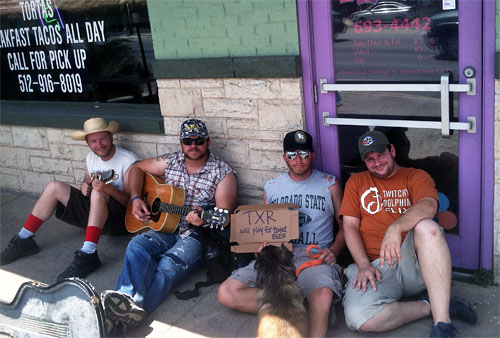
James Christopher is directing the new Twitchy Dolphin Flix film 3 References. This is the final entry in his production diary for Slackerwood.
When Lauren Shelton called a wrap on the production of 3 References, a special kind of depression set over me. I looked around the cast and crew and realized this was the last time this group of people with this chemistry would be working together on this flick. And while I know we'll all work together again, it will never be the exact same. It's what makes doing indie film so special. The experience is its own reward.
We shot just two light days to finish the film. But they were action-packed to be sure and we saw the arrival of some of our favorite people from all across the country to come in and do some cameos and celebrate 3 References.
Review: Leave It on the Track
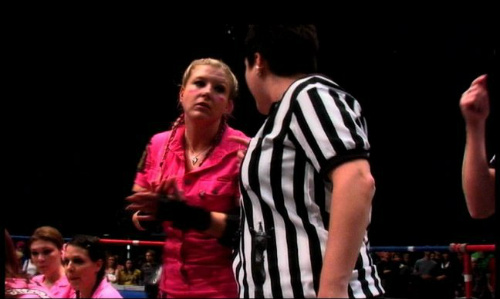
Leave It on the Track, premiering this week at the Edinburgh International Film Festival, is a sort of ode to the women of roller derby. The documentary, from local actor/director Benjamin Pascoe, depicts the Fall 2009 championship bout between the Hellcats and the Cherry Bombs, teams in the banked-track TXRD Lonestar Rollergirls league in Austin.
For newbies to the sport, the film includes explanations of how roller derby is played and how it was revived in Austin and has since spread through the nation (and the world). I haven't yet attended any games (I know, I know), so it was nice to have a refresher on the rules of the game. Cherry Chainsaw (Olivia Vernon) leads the Cherry Bombs, a team that's a recent addition to the league. Chainsaw is harsh and fearless -- okay, most of these ladies are, but we are told by players, and shown clips exhibiting, that she is one of the fiercest. The Hellcats have been in the league from the formation of the TXRD and are managed by Jonny Stranger (a local filmmaker who also serves as one of the producers for the film).
The teams are vying for the Calvello cup, named after Ann Calvello, a tough broad and one of the early legends in roller derby. The women on these teams are strongly dedicated to this sport, which takes so much out of them and doesn't give much in way of financial benefit. Some of the league members have little or no health insurance. One player sustained an injury so bad that folks expected her to leave the game, but she was back on the track as soon as she could be. It's all about the love for the sport, as well as the connection with their team mates.
Saturday Morning Massacre: Ashley Rae Spillers Gets a Debut (and Workout)
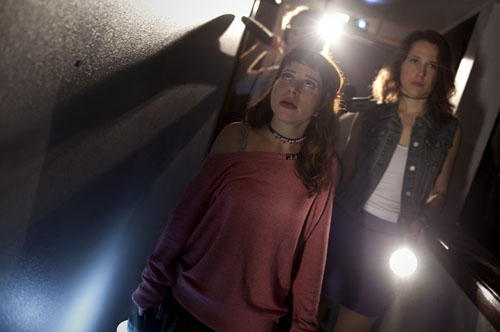
This is the last in a series of four interviews related to the Austin-shot movie Saturday Morning Massacre (Jette's review), which recently premiered at Los Angeles Film Festival. Don't forget to read about our chats with producer Jonny Mars, screenwriters Aaron Leggett and Jory Balsimo, and director Spencer Parsons.
Austin-based actress Ashley Rae Spillers stars in Saturday Morning Massacre as Nancy, the plucky young leader of a group of amateur ghostbusters working their first paying case... and things don't go quite as planned. This is Spillers' first feature-film role, following her appearance in a few short films, including a segment of Slacker 2011. Slackerwood sat down with Spillers before the film's LAFF premiere. Though this was her first feature film role, she's been busy ever since, working with a long list of Austin filmmakers.
Slackerwood: How did you get involved with the film?
Spillers: This is the first feature I'd ever done. Maybe a year before, Jason Wehling called me up and had me do some voiceover for an animated feature he was doing. That's how I got to know Jason and I'd see him from time to time, and I met Spencer [Parsons].
Saturday Morning Massacre: Spencer Parsons Channels Corman and Argento
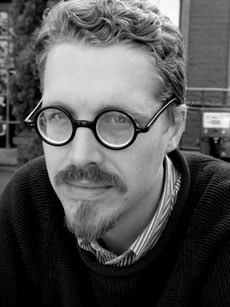 This is the third in a series of four interviews related to the Austin-shot movie Saturday Morning Massacre (Jette's review), which recently premiered at Los Angeles Film Festival. Don't forget to read about our chats with producer Jonny Mars and screenwriters Aaron Leggett and Jory Balsimo, and look for the fourth interview later this afternoon.
Before he moved to Chicago to teach at Northwestern University, Spencer Parsons spent over a decade making movies in Austin. His first feature film, I'll Come Running, premiered at LAFF in 2008 and also screened at Austin Film Festival that year. Despite the move, Parsons hasn't been able to escape Austin completely. His second feature film, Saturday Morning Massacre, shot locally, earned Parsons and crew a return trip to LAFF earlier this month.
Jette and I sat down with Parsons and talked horror, the Austin film scene, his move to Chicago and (of course!) breakfast tacos.
Slackerwood: So we've been hearing from Jonny Mars about the six-week wonder production.
Spencer Parsons: It's really crazy. When I got the call about it and they were pitching it to me, I thought, yeah, it sounds great. In large part, just because as an overall fan of the genre, and also as a filmmaker, I've always read stories about how things were actually made, and so I've read so many stories where you've got [Roger] Corman going, "Hey, you've got a set still standing. Charles Griffith, you go write a script." And lo, two weeks later, you have The Little Shop of Horrors. For real, that really happened.
So under those conditions, I said, "Let's do that, it sounds really fun. Let's do an exploitation movie." We have this opportunity… and not in a grindhouse way, but let's do it under these constraints, and let's do it Corman-school.
Ready, Set, Fund: The Queens of Austin
"Ready, Set, Fund," is a column about crowdfunding and related fundraising endeavors for Austin and Texas independent film projects.
The Austin Film Festival has announced their first round of conference panels for 2012, and the title that came immediately to my attention was the "Crowdfunding Your Indie Film" panel. The panel of to-be-named filmmakers will discuss how to use modern technology to connect and solicit funding from backers for their film projects.
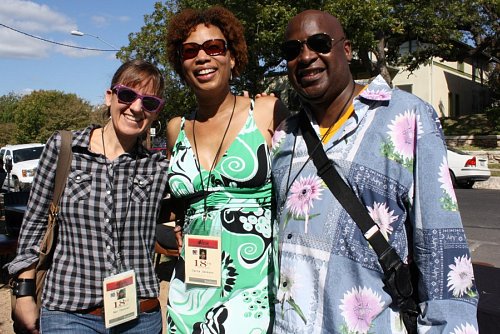
If I had to speculate what local filmmaker I'd most like to see on this AFF panel, it would be Kat Candler, pictured above on left with Carla L. Jackson and Kelvin Z. Phillips of A Swingin' Trio, at AFF 2011. Candler exceeded her fundraising goals on past projects including Hellion as well as for the UT Austin student organization Women In Cinema Summer Production and Operations, for which she is the faculty advisor. Incidentally, over half of the film projects featured in this month's "Ready, Set, Fund" column are helmed by women.
Candler's latest crowdfunding project, which reunites her with Hellion actor Jonny Mars and producer (and former AFF program director) Kelly Williams, is for a new short film, Black Metal. This dark drama exposes the raw emotions evoked within Ian, a thirty-something black-metal singer, when his music is linked to a student murdering a math teacher. Black Metal follows Ian, who is now a husband and father, as he comes to terms with his role in a tragic and senseless murder. The Indiegogo page features a video of Candler getting a "black metal music lesson" from Vesperian Sorrow's lead singer Donn Donni.
Saturday Morning Massacre: Aaron Leggett and Jory Balsimo's Marathon Writing Sessions
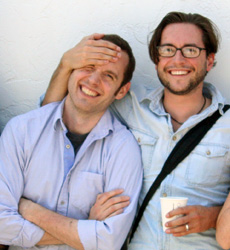 This is the second in a series of four interviews related to the Austin-shot movie Saturday Morning Massacre (Jette's review), which recently premiered at Los Angeles Film Festival. Check back for the others in the next couple of days.
As Saturday Morning Massacre's producer Jonny Mars told us, the writers were brought in after the producers developed a treatment for a horror movie based around the Perry Mansion. Aaron Leggett and Jory Balsimo, longtime writing partners, have the details on how the script came together.
Slackerwood: Tell us how you guys got involved with this film.
Aaron Leggett: We'd been writing with Spencer [Spencer Parsons] for a couple years. Spencer had a short playing at SXSW and he was crashing on my couch since he lives in Chicago now, and he came home one night and said, "I might be working on this crazy horror movie." We're like, "Hey Spencer, we just finished writing a horror script. You should try to get us on board." So he talked to Jason [Jason Wehling] and Jonny and a couple of days later we were on it.
Did they give you a premise?
Jory Balsimo: They had a core story that was already pretty much set in stone. They wanted "Scooby-Doo-ish."
Leggett: We kind of came in and filled in the details. I think there was one big night where we got to see the house.
Balsimo: Yeah, we walked around the house and hashed some ideas at. And then we went to Spider House.
Leggett: It was like a marathon. We got the bones taken care of that first night and then we fleshed out a 25-page treatment based on on those notes we had.
Saturday Morning Massacre: Jonny Mars Finds a Movie in a Mansion
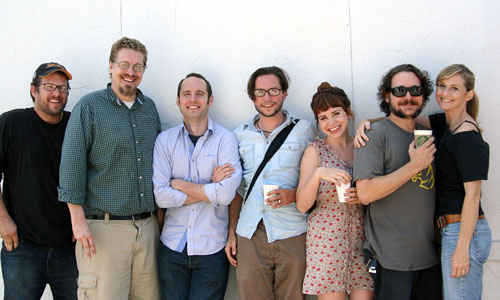
When life drops a creepy old mansion into your lap, you've got no choice but to make a horror movie out of it. And so, within weeks of the fortuitous real estate deal, producer Jonny Mars and crew got to work on the Austin-produced, Scooby Doo-inspired horror film Saturday Morning Massacre (Jette's review), which premiered at the Los Angeles Film Festival earlier this month. The ornate, menacing mansion serves as not only the primary location for the film but is one of its biggest characters.
We sat down to chat with Mars (The Happy Poet, Hellion, America's Parking Lot), a local actor and filmmaker, about how the movie came together, and what it was like acting and producing Saturday Morning Massacre. Mars discussed the intricacies of "run-and-gun" filmmaking, gave us the lowdown on some of the other locations seen in the film and talked a bit about the plethora of upcoming projects he's involved with.
This is the first in a series of four Saturday Morning Massacre interviews, involving many of the people in the above cast and crew photo -- keep an eye out for the other three in the next couple of days.
Slackerwood: How did you get involved in this project?
Jonny Mars: I got a phone call from Jason Wehling. Jason, myself and Jesse Lyda produced this movie. Jason got a phone call from Jesse a year ago at SXSW and he said, "Hey, we just bought this property [the Perry Estate], but we think we're gonna flip it very soon so we've got six weeks, but we think it'd make a great horror film location." So Jason's like, "Whatever." Six weeks isn't a lot of time.
The Show! Delivers Memorable Films and Comedy
 By Sara Grauerholz
Going into The Show! I didn’t exactly know what to expect, but after reading that the evening would be filled with stand-up comedy, sketch comedy and short films, I knew I'd have to check it out.
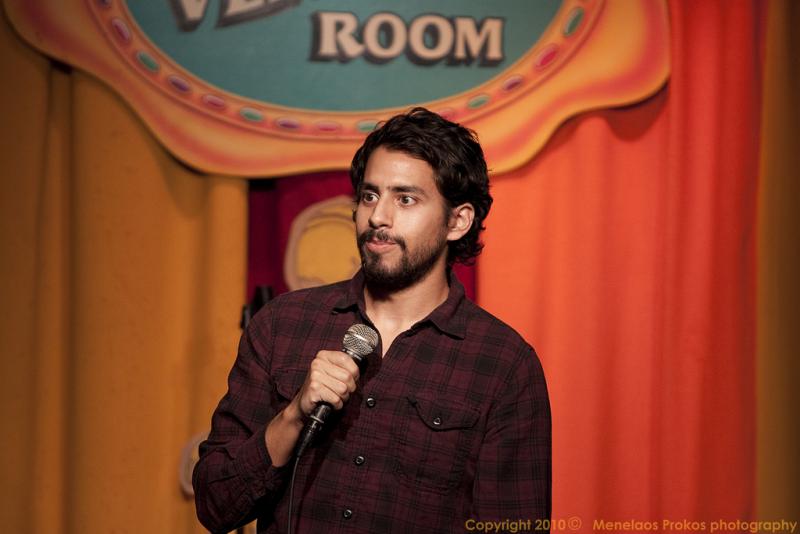
Austin comedian Ramin Nazer acted as emcee throughout the night, which started with some stand-up comedy, and also introduced sketch team Spirit Desire. Several Spirit Desire video clips played on a large screen, and the group also performed live sketches. The group did some fake advertisements, including a reimagining of the characters from Peanuts in their adult years, living on the streets with Pig-Pen, the local drug dealer. Another bit imagined what it would be like if Ray Romano had a dinosaur for a child. These, of course, were all extremely funny, but let’s get into what we want to know more about: the films.
After all of the comedy that started the show, I assumed the films would be in the same style, but they were surprisingly serious. The first one up was Benny, which was a finalist in the Student Academy Awards this year and screened at a number of fests, including Austin Film Festival. Huay Bing Law shot the film while a student at The University of Texas at Austin.
