

Austin-Shot 'Goliad Uprising' Packs the Spirit Theater
 By Tyler Draker
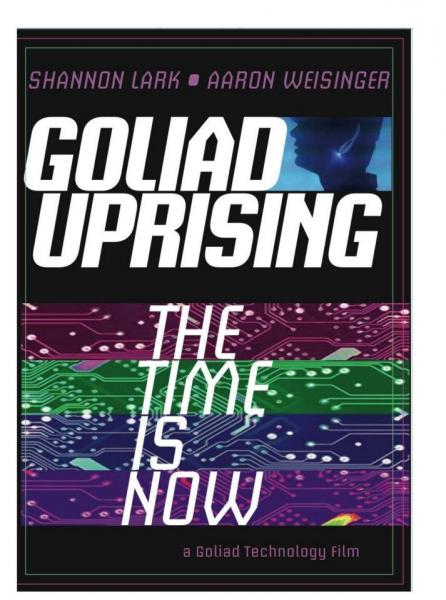
On June 21, the Spirit Theater at the Bob Bullock State History Museum was nearly at capacity for a screening of Goliad Uprising, an independent film by director Paul Bright.
The event, like the film it was built around, was modest. Not much more than a simple sign on an A-frame stand greeted people and told them where to go. But, like the film, it did a good job of working with what it had. The facilities were nice and, perhaps most importantly, the atmosphere was very upbeat and friendly. There was a feeling in the air that these people loved what they were doing and loved working together.
Indeed, most of the people who were at the screening were involved in some capacity with making the movie. Roughly half of the 99 (yeah, 99) actors were in attendance, as well as several other key crew members. For many of them, this was the first time they were seeing the culmination of their efforts.
The results were good. But this isn't a movie review. It's a success story! Goliad Uprising got made, and that's no small feat in and of itself. I have first-hand knowledge only about trying to make short films, and I can imagine how much more numerous the challenges would be in trying to make a feature-length film. Bright even highlighted a few of these challenges in his acknowledgements at the end of the film. One challenge that he brought up was that most of the film's projected funding dried up very close to the beginning of production.
While that's certainly no small mountain to overcome, I think it is important to note that perhaps as recently as 10 years ago, this might have meant the film wouldn't have gotten made. Goliad Uprising certainly looks like it was made with either a tiny budget or no budget at all. But it hasn't been that long that such a thing was even possible. Filmmaking used to be much more expensive. The cost of film stock alone can often break the bank, not to mention the cost or rental fees of a film camera. Suddenly, with the release of HDSLR (5DmkII, etc.) cameras, it's possible to get a camera and lens for under $4,000 and shoot nearly indefinitely.
These advances in technology mean that it's now possible for a much larger group of people to make movies. That's not to say that technology has suddenly made it easy; making a feature film is still incredibly difficult. It just means that now it's more possible than ever. It means technology can get out of the way of the director's vision. Choices aren't limited by the cost of film anymore. (We'll save the discussion of the aesthetics of film vs. digital for later!) Filmmakers can afford to film more and tell more daring stories. It doesn't always work. Goliad Uprising didn't always work. But, it was ambitious and it wasn't afraid to dream big.
Ultimately, making a film is becoming more about a crew's dedication to a vision than it is about the financial backing. More and more directors, like Paul Bright, are getting to make their own films. But, even more importantly, they're getting to make those films into exactly what they want them to be. And, when a filmmaker like Bright gets to realize their vision from start to finish, that is a very good thing.
So, while the premiere of Goliad Uprising may not have been the biggest spectacle, everyone in the audience loved it. I'm glad to have been a part of that audience.
Tyler Draker is an apprentice at the Austin Film Society.