

Austin Film Society
AFS Essential Cinema: Russian Films of the Past Two Decades
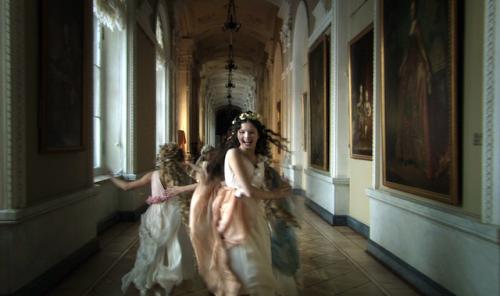
The tumultuous and dangerous political atmosphere that defined 20th-century life in the Soviet Union made it difficult for Russian artists to reach their potential, and it wasn't until the dissolution of the USSR that expressing creative freedom at home became a real possibility.
Beginning in January, Austin Film Society will present a series of movies that reveal the pent-up talent and emotion of six different Russian directors working at a time when they were finally free to analyze and critique Mother Russia and its people. All released in the last 20 years, the eight films of "Pushing the Curtain Aside: Russian Films of the Past Two Decades" portray a range of styles and subjects but share a dedication to originality.
Screenings all take place Thursdays at 7:30 pm at the Marchesa. Go here for more information about screenings and tickets, and take a look at the lineup below.
John Sayles Talks 'Matewan' at the Marchesa
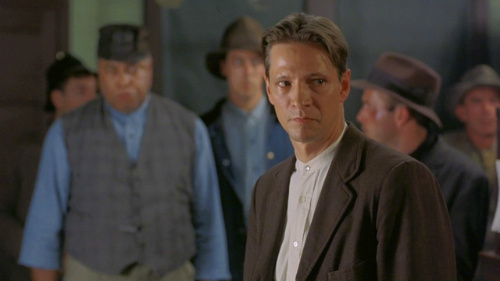
As soon as I heard about the Austin Film Society's special screening of Matewan with director John Sayles in attendance, I purchased my ticket. I've made it a point to see as many Sayles movies as I can, since seeing my first (The Secret of Roan Inish) as a teenager. Unfortunately, the quality of the Matewan DVD I rented a few years back was so awful that I couldn't watch more than 5 minutes of it -- the sound was terrible. I couldn't pass up an opportunity to see the 35mm print at the Marchesa.
I spied the director's tall form in the Marchesa lobby, among the booths at the Blue Genie bazaar, before we were seated. After being introduced to the audience, Sayles explained to us the correct pronunciation for the town in the title: MAYTE-one, not MATT-uh-won (which is how I'd been saying it, oops). He then told us how he found the subject matter through discussions with miners who kept referring to the "Matewan massacre."
AFS Preview: Troubles and Paradise: The 'First Wave' of Irish Cinema
By Philip Fagan
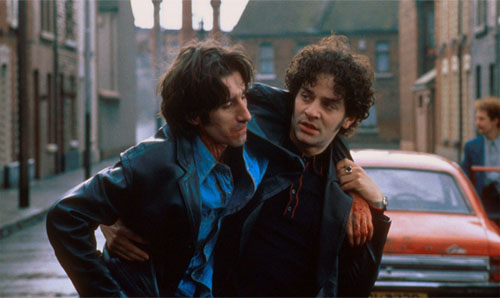
The latest Austin Film Society Essential Cinema series, "Troubles and Paradise: The 'First Wave' of Irish Cinema," starts Thursday, Nov. 21 and runs through Dec. 19 at AFS at the Marchesa. Fagan is guest curator of this series.
It may at first glance seem curious to refer to films produced between 1982 and 2004 as among those comprising an Irish "First Wave" of cinema. However, as with the island's tempestuous political and social landscape throughout the years, the Irish cinema, to the extent that it has existed, has suffered a long and curious journey that is bound up with the same issues of Irish identity that continue to divide the Republicans and Loyalists of the North. The cinema of Ireland that began emerging in the 1980s can be assessed as part of a long, ongoing intellectual mission of examining and forging a cohesive national identity, a battle that continues to be waged on various other fronts.
Irish identity continues to be inherently fractured and debatable and the Irish themselves often tend to self-identify through the lens of well-worn stereotypes, or "Paddywhackery." Is Ireland one country or two? Are its peoples Irish or British? Catholic or Protestant? Or Christian or Pagan even? Is Ireland's "closest cousin" Great Britain or the United States? Has "Irishness" become so closely tied to America on one hand and the struggle against England on the other that maintaining an indigenous Irish identity has become impossible? Are the Irish at heart a race of saints, scholars, poets, and geniuses; or are they inherently uncivilized, atavistic, violent, racist, intolerant alcoholic criminals? And more recently, how are the changing roles of women and the rise of immigrant and gay subcultures impacting a conceptualization of a modern Ireland?
AFS Preview: Mother of George
.jpg)
By Christina Bryant
When it comes to portrayals of Brooklyn, New York on film and TV, we either get Spike Lee's beloved Bed-Stuy of yesterday or Lena Dunham's gentrified Williamsburg. Mother of George offers a refreshing third option. Audiences are welcomed into an intriguing, yet overlooked African immigrant community living in the borough’s Flatbush neighborhood.
Austin Film Society will screen Mother of George this Saturday, November 16 [event info/tickets] at 4 pm at AFS at the Marchesa (6226 Middle Fiskville Rd).
The film opens with the wedding of Adenike (Danai Gurira, who plays Michonne on AMC's Walking Dead) and Ayodele (veteran actor Isaach De Bankolé). In any other movie, they might just be background characters; perhaps the aproned individuals you see pass through the swinging kitchen doors of your neighborhood African restaurant. Instead, Nigerian photographer/director Andrew Dosunmu sets his tale of a newlywed couple facing infertility against an almost Greek tragedy backdrop, full of complexity and nuance.
AFS Docs Preview: Slavery By Another Name
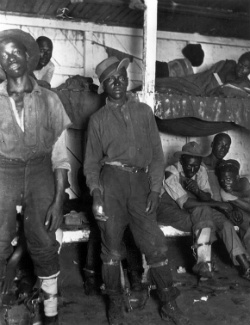 Austin Film Society will screen Slavery by Another Name this Wednesday, Nov. 13 at AFS at the Marchesa [event info/tickets]. The documentary, which PBS originally broadcast in 2012, delves into the ways African-Americans were forced into involuntary servitude in the post-Civil War South, until the 1940s.
I imagine most of us are at least vaguely familiar with the system of sharecropping, but how many of us were taught about peonage in history class? Not me, unfortunately. I was aghast to just be learning about this illegal debt servitude at my current age.
The documentary, based on the book by Douglas A. Blackmon, uses interviews with historians and descendants of victims of forced labor alongside live-action scenes of actors performing specific stories. Laurence Fishburne narrates. The history of practices such as convict leasing (men who really shouldn't have been arrested in the first place were "leased" to corporations for services such as mining), chain gangs (where the Southern states used those same men for highway improvement), debt servitude/peonage and sharecropping is deeply discussed, with illustrations. We get to hear from a few descendants of the white businessmen and farmers involved.
I had a bitter taste in my mouth as I watched Slavery by Another Name, disgusted at the historical events it portrays, not the film itself. Director Samuel D. Pollard is the mind behind a few American Masters programs and a couple segments of the lauded Eyes on the Prize series. This documentary definitely has the feel of a PBS program -- but that's not necessarily a bad thing.
The film's writer Sheila Curran Bernard will participate in a Q&A via Skype on Wednesday, moderated by Paul Stekler from the University of Texas Radio-Television-Film program (and a documentary filmmaker himself).
AFS Preview: The Institute
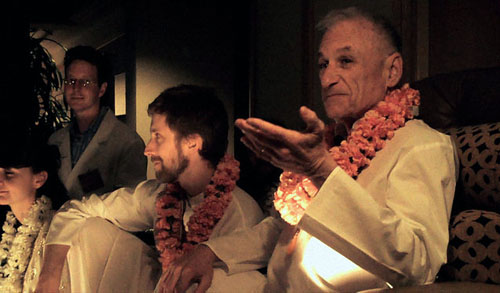
The Institute screens as part of Austin Film Society's monthly Avant Cinema series this Wednesday, October 30 (tickets) at 7:30 pm in the AFS Screening Room (1901 E. 51st St).
Around 15 years ago, a friend and I saw a flyer about some performance art experience that would take place in a building on E. 6th Street. We followed the directions, which took us up to the second floor of some 19th-century building. Tacked onto the locked door of the designated room was a hand-printed note that thanked us for participating in the performance by finding the building, walking up the stairs, and reading the note. At first we felt duped and wondered if "they" were watching us and laughing. But when we got back down to the street, we started laughing ourselves at the realization that we really had been part of a performance, not a hoax of some sort.
Watching The Institute (Spencer McCall, 2013) makes me feel much the same way. How much is "real," how much is fiction? What do we mean by those words, and is there really a strong line dividing one from the other?
We are first introduced to people defined as participants and "ex-inductees" in something ostensibly called The Jejune Institute in San Francisco. They had read strangely worded flyers that began appearing around town. Telephone calls led them to a building in the financial district, where they individually were sent to a room with cheap furniture and a video that explained "The Institute," its history and accomplishments, and its goal of reducing human conflict, violence, and heartbreak.
Watch Highlights of 'Dinner with the Danger Gods'
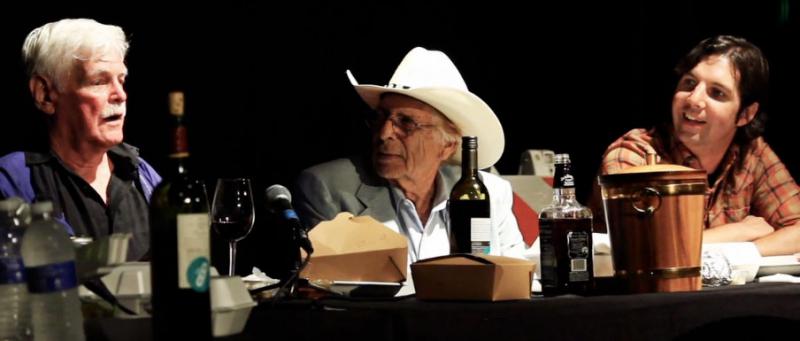
Something happened on September 27 that you should all know about. If you were at the Austin Film Society event "Our Dinner with the Danger Gods," you don't need me to tell you that it was a night for the ages. Those who witnessed it won't forget it. We welcomed a panel of some of the greatest stuntmen in the world to sit down at a table with no prepared material, eat steaks, drink whiskey and tell stories, jokes, lies, whatever. It was an event designed not only for the audience but for the legends themselves.
If you weren't at the event, our friend Brandon Grey filmed it, and it looks beautiful. Zack Carlson, who hosted the Danger Gods the previous evening at Fantastic Fest, and I moderated.
Join Me for 'After Tiller' Discussion This Weekend
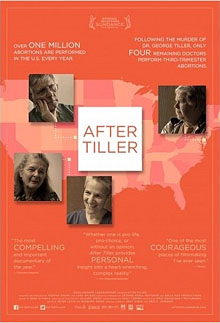 The Austin Film Society and Violet Crown Cinema are teaming up for a post-screening Q&A about the documentary After Tiller on Saturday evening -- and I will be moderating the panel. I'm looking forward to this and hope you'll join us. The info from AFS is below, and you can get tickets now on the Violet Crown Cinema website. Please read Caitlin's review to find out more about the film.
After Tiller, the award-winning documentary about late-term abortion doctors that premiered at Sundance in January, will screen with a special Q&A and discussion this Saturday at the 6:20 pm screening at Violet Crown Cinema, presented by the Austin Film Society and moderated by Slackerwood editor Jette Kernion. The Q&A will feature Dr. Lee Carhart, one of the doctors featured in the film, and Texas Tribune Editor Emily Ramshaw, who closely covered the passing of House Bill 2 in the Texas Legislature this summer. Dr. Carhart will be joining via Skype from Nebraska.
About the film:
After Tiller is a thought-provoking and compassionate documentary that intimately explores the highly controversial subject of third-trimester abortions in the wake of the 2009 assassination of practitioner Dr. George Tiller. The procedure is now performed by only four doctors in the United States, all former colleagues of Dr. Tiller, who risk their lives every day in the name of their unwavering commitment towards their patients.
After Tiller opens at Violet Crown Cinema on Friday, October 11.
About the speakers:
Emily Ramshaw is the editor of The Texas Tribune. She oversees the Trib’s editorial operations, from daily coverage to major projects. Previously, she spent six years reporting for The Dallas Morning News, first in Dallas, then in Austin. In April 2009 she was named "Star Reporter of the Year" by the Texas Associated Press Managing Editors and the Headliners Foundation of Texas.
Dr. Lee Carhart is a OB-GYN physician who practices in Omaha. He is featured in After Tiller as one of the four doctors in the US practicing third-trimester abortions.
Jette Kernion is a writer and the founder and editor of Slackerwood. She is a member of the Alliance of Women Film Journalists and the current president of the Austin Film Critics Association.
AFS Essential Cinema Brings Three Japanese Masters to Austin
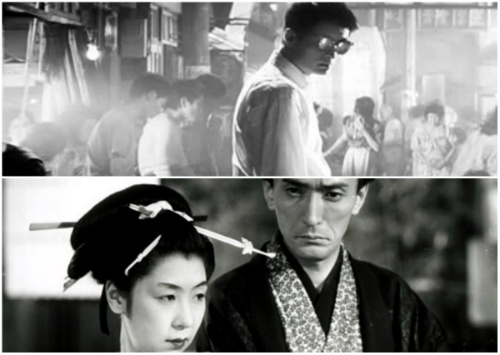
Two films each from directors Akira Kurosawa, Yasujiro Ozu, and Kenji Misoguchi form the basis for Austin Film Society's new Essential Cinema series, "6 by 3 Japanese Master Filmmakers." Lesser-known selections from each director's oeuvre will be shown at AFS at the Marchesa, on Thursdays from October 10 through November 14. If you've only seen Ozu's Tokyo Story, Kurosawa's greatest hits, or you are not exactly familiar with Misoguchi's works, Austin Film Society is providing a perfect opportunity to discover more classics of Japanese cinema.
The six films include one of Ozu's early films (as well as his own technicolor remake), two films by Misoguchi reflecting on gender roles in Japan's history, and two crime dramas from Kurosawa. I asked AFS Director of Programming Chale Nafus about his selections for this series.
Slackerwood: Why were these films and directors chosen?
Chale Nafus: I generally program fairly recent films from Asia each year, but I decided to go back to the roots this time with representative works by the three best known Japanese directors introduced to American audiences in the 1950s -- Kurosawa, Mizoguchi, and Ozu. I also wanted to show early and later works by each filmmaker to provide some sense of changes (or not) in style and content. In the case of Ozu, we will be seeing both his original 1934 Story of Floating Weeds and then his own remake of the same story in 1959.
Gary Kent Prepares You to Meet the "Danger Gods" on Friday
 By Ellie Kotapish
Prepare yourself for jaw-dropping tales and a night in Austin with five of the most daring men in Hollywood. Starting in the 1960s, these "Danger Gods" have been performing stunts of extreme levels for many years. But they are capable of more than just crashing cars and freefalling from tall buildings.
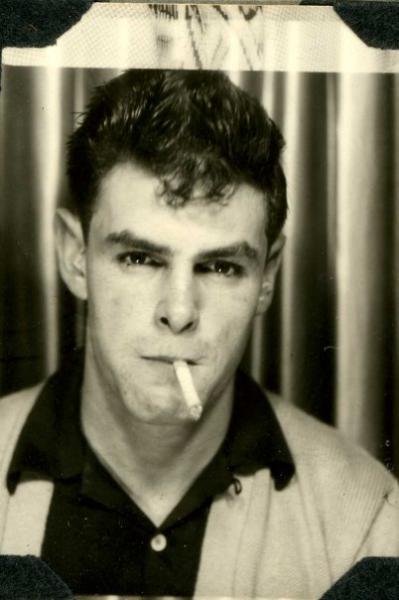
I had a sneak preview of what's to come at Friday night's "Our Dinner with the Danger Gods" event, as special guest Gary Kent (pictured at right in his early stuntman days) discussed revolutionary cinema in the 1970s along with his experience as a stuntman and filmmaker.
Counterculture takeover:
The '60s were a time of revolution in the streets as well as the studios. This change is evident not only in the content of the films but also in the filmmakers themselves. Kent entered into this counterculture takeover fully aware of this "new energy," as he described it. It was this revolution in filmmaking that lured Kent to Hollywood in the first place.
With television absorbing audiences, drive-ins were left with a different crowd and "no product," Kent said. At the same time, this vacuum at the heart of the exhibition market meant independent filmmakers finally had a place to showcase their work. And with no studio control, the subject matter had virtually no limits.
Love of the stunt:
As all these forces were beginning to coalesce, Kent took a bus to L.A. to pursue acting under the naive impression that the actors performed their own stunts. It didn't take him long to realize that his skills as a stuntman were in higher demand than his acting talents.
Kent's first gig as a stuntman – with no experience whatsoever – was on Monte Hellman's film The Shooting (1966). At the same time -- and shooting in the same locations -- he doubled for actors Jack Nicholson and Cameron Mitchell on the film Ride in the Whirlwind (1966).
