

Reviews
Review: Nanny McPhee Returns
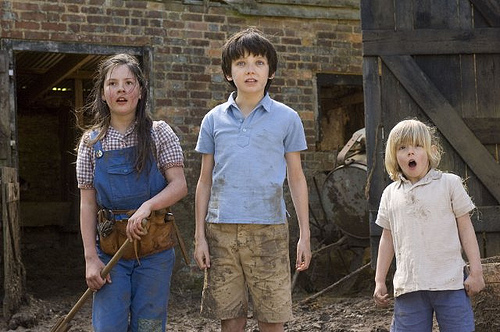
I didn't watch Nanny McPhee when the movie was released in 2005. Frankly, I found the image of the lovely Emma Thompson done up with hairy moles and snaggletooth quite frightening. However, after seeing Nanny McPhee Returns this week, I learned my own lesson from Nanny "little C, big P" McPhee -- don't judge a book by its cover. Award-winning actress and writer Thompson reprises her role as screenwriter and star, but this time she's also the executive producer, which might explain some of the big names in Nanny McPhee Returns. However, it's not just the stars in the cast that make this film enjoyable. Thompson's screenwriting skills provide the youngest members of the cast with well-developed characters.
Based on characters created by Christianna Brand in the Nurse Matilda series, the central plot of Nanny McPhee Returns focuses on the same formula. An unintentional single parent is pestered by misbehaving children, and Nanny McPhee arrives to teach the children five lessons. Maggie Gyllenhaal portrays Isabel Green, a mother overwhelmed by her three children as well as their two spoiled cousins who come to stay with them to avoid bombs falling in London (it's set during WWII). Mr. Green (Ewan McGregor in a cameo appearance) has been away fighting in the war, and the family is in danger of losing the farm. Mrs. Green works in the local shop where she has to clean up after the forgetful elderly Mrs. Docherty (Maggie Smith).
DVD Review: Temple Grandin
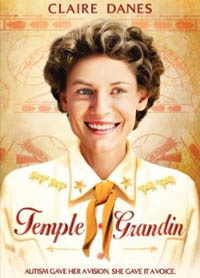

Such an inspirational and thoroughly unique story is, of course, tailor-made for a cinematic treatment. Fortunately, this treatment is Temple Grandin, a much-lauded HBO Films biopic nominated for an astounding 15 Emmy Awards. Released this week on DVD
The film opens in 1966 as a teenage Grandin (a barely recognizable Claire Danes) arrives at the Arizona ranch of her Aunt Ann (Catherine O'Hara) and Uncle Mike (Michael Crabtree), who are caring for Grandin to relieve her exhausted mother, Eustacia (Julia Ormond). Grandin exhibits many classic autism symptoms: She constantly repeats random phrases, fixates on objects, is extremely sensitive to stimuli, has trouble interacting with people and confronts new experiences with fear and confusion. But while at the ranch, she also demonstrates an unlikely talent for designing and building mechanical devices and an innate understanding of animal behavior.
Grandin blossoms at the ranch, and being far more comfortable around animals than people, she wants to stay. Despite her protests, however, Eustacia enrolls her at Franklin Pierce College in New Hampshire. Her introduction to college life is mostly disastrous, and in a prolonged flashback to her childhood and high-school years, we learn why.
Review: The Expendables
I was really excited to see The Expendables at the second annual Cinemapocalypse, especially since Die Hard was scheduled to screen beforehand. Seeing Die Hard when it opened was a memorable experience for me. I recall the realization that I had spent most of the movie literally on the edge of my seat, and only releasing my grip on the armrests when the credits rolled. Die Hard was a defining moment for action flicks, a rollercoaster ride alongside a reluctant hero who viewers could emotionally invest in -- ironically Sylvester Stallone turned down the role of John McClane
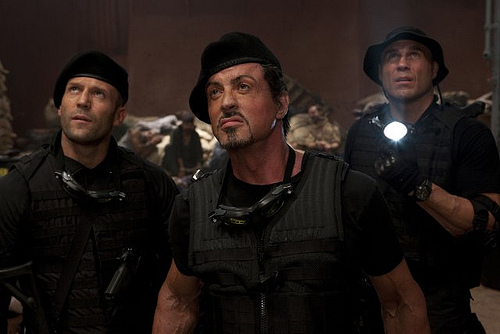
Unfortunately, Sylvester Stallone's The Expendables falls far below the standard set by Die Hard as well as several other films featuring the stellar cast. Plain and simple, The Expendables is pure unadulterated action porn. The loose plot and dialogue exist solely to tie explosive money shots together, with body parts flying every which way. Subplots aren't fleshed out, leaving viewers befuddled.
The opening scene of The Expendables introduces us to a group of aging mercenaries led by Barney Ross (Sylvester Stallone), as they take over a Somalian pirate ship to rescue hostages. With impressive firepower, knife-throwing and hand-to-hand combat, they quickly take out the pirates. However, things get nasty as unstable drug-addicted Gunnar Jensen (Dolph Lundgren) attempts to hang one of the pirates despite orders. His partner Ying Yang (Jet Li) stops him, and Jensen nearly kills Yang, resulting in Jensen being released from services. Filling out the roster is heavy weapons specialist Hale Caesar (Terry Crews) and demolitions expert Toll Road (Randy Couture).
Review: The Dry Land
A war's psychological toll can linger far beyond the war's end. As long as war veterans spend their days reliving the horrors of battle and trying to make sense of experiences that are inherently senseless, we're all reminded that war's true cost is far greater than flag-draped coffins and mangled limbs. The greatest cost of any war is the lingering insanity of those who fight it – and our collective insanity also.
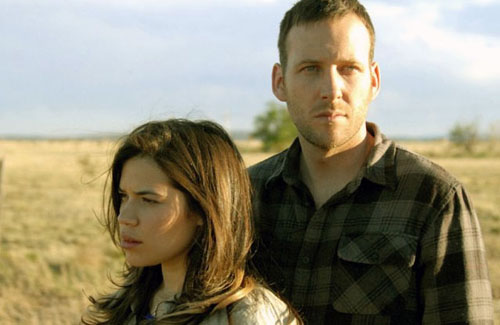
The Dry Land is an effective and often riveting take on this loss of sanity, specifically the harrowing mental breakdowns caused by post-traumatic stress disorder or PTSD, which an astounding number of Iraq and Afghanistan war veterans are suffering through. Opening today at the Arbor, the film is an unflinching look at one soldier's descent into madness as he returns to civilian life in a small West Texas town.
From the minute he sets foot in the dusty, impoverished environs of his hometown after a brutal tour of duty, it's obvious that James (Ryan O'Nan) hasn't left the war behind him. Although the carnage he witnessed still haunts him, he has no memory of a pivotal event: a rocket-propelled grenade attack on his Humvee that killed and severely wounded several members of his squad. Depressed, moody, self-medicating with alcohol and prone to violent rages, James quickly loses control of his life.
Review: Eat Pray Love
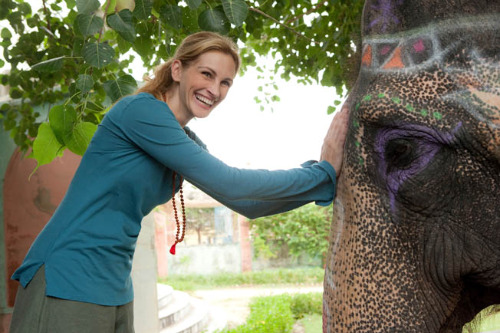
It's been a while since I read Elizabeth Gilbert's bestselling memoir -- and I've read many books since then -- so the story was not exactly fresh on my mind when I watched Eat Pray Love. As someone who is wary of book-to-movie adaptations, I found that the movie remained somewhat true to Gilbert's book, as I remembered it. However, the film fails to capture some of the best aspects and, unfortunately, the true essence of the original work, even as it follows the same plot.
Liz Gilbert (Julia Roberts) endures a painful divorce (from a morose Billy Crudup) and an unhealthy relationship with a younger actor (James Franco) before she realizes she needs to define who she is and what she wants. She expresses to her editor pal Delia (the wonderful Viola Davis) her desire to travel for a year, and the movie flows from there.
Liz goes to Rome to enjoy food, India to attend her guru's ashram, and Bali to study with a medicine man. As she travels, new relationships blossom. In the book, we read about Elizabeth Gilbert growing into her self and coming to love who she is. In the movie, Liz Gilbert cries a lot. I didn't count, but I'd estimate at least eight times. Her handsome Brazilian lover Felipe (Javier Bardem) cries as well, but at least his tears seem authentic. When Julia Roberts cries as Liz, it seems forced and flimsy. Like director Ryan Murphy was yelling at her from behind the camera, "Cry now!" If movie Liz Gilbert is growing into her self, her self is a weepy mess.
Review: Get Low
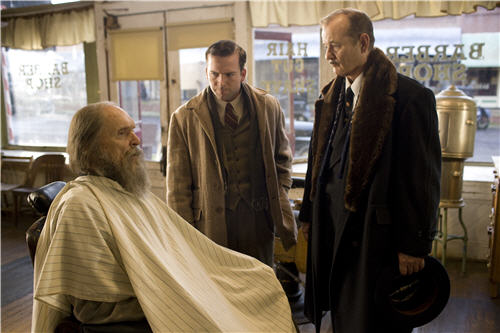
Robert Duvall returns to the big screen in Get Low, a tale of intentions, reputations and secrets too powerful to remain kept in a Depression-era small town.
When recluse Felix Bush (Robert Duvall) comes to town, tongues wag, conjuring up nearly unspeakable tales, each one worse than the last. Rumors range from strange powers to cold-blooded murder, and he's become such a frightful figure that he's the bogeyman children scare themselves with, as they wonder just what the old man does on his land so far from town. Townsfolk are shocked when he shows up in down in his mule-drawn wagon at a time when cars are taking over the road. Felix is planning for a funeral. But not just any funeral, a living one -- where anyone and everyone who has a story about him will come and tell it to the rest of the gathers and Felix himself.
Local funeral-home owner Frank Quinn (Bill Murray) is more than willing to take Bush's money and sets his assistant Buddy (Lucas Black) to ensure a tidy profit. But what seems an eccentric wish turns into a mystery: Why has Bush isolated himself all these years, and what is his relationship with Mattie Darrow (Sissy Spacek), recently returned to town? As the funeral party plans evolve, the mystery deepens, as Felix clearly has an agenda revolving around his past secrets.
Review: Middle Men
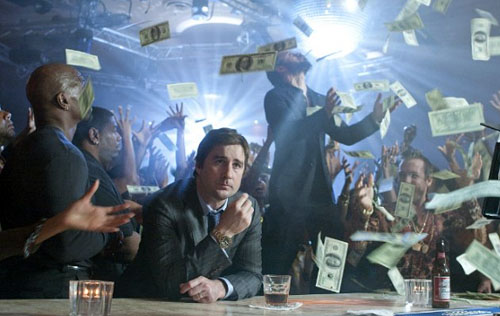
I rarely think of myself as a techie geek -- I don't feel knowledgable enough about programming to quality. I'm not normally an early adopter. I don't have Linux installed on any of my computers ... okay, except for the household media computer and my husband did that. The point is, I'm as surprised as anyone that I felt Middle Men didn't deliver enough techie storyline, instead relying on mundane plot elements like kidnapping, wild Vegas escapades, drug-addled geniuses and Mob-owned strip clubs. Maybe the trailer was trying to invoke the same vibe as The Social Network to draw in the geeks, who might be fascinated by a story of bizarre Internet success based on real life ... but I felt misled and disappointed.
Middle Men is about a trio of gentlemen who more or less accidentally jump-start the online porn industry in the late 1990s by creating billing services for websites. Wayne (Giovanni Ribisi) and Buck (Gabriel Macht) stumble upon the idea late one night, Buck bangs out some code, and the money starts rolling in at a surprising rate. But they handle everything terribly, and eventually Jack Harris (Luke Wilson), a guy from Houston who helps people negotiate and fix things, straightens out their biggest difficulties and sees the potential for a multimillion dollar business. Unfortunately, Buck and Wayne still drag trouble behind them wherever they go, and in the meantime, Jack feels torn between his family living in Houston and his new Los Angeles lifestyle.
Review: Step Up 3D

If you've seen any of the Step Up movies, you might expect that Step Up 3D would showcase some great dancing (in 3D!) and also have some semblance of a plot. And it does! But it is carried out in a less than cohesive manner with some very lackluster acting.
The plot, as I understood it, is focused on two guys, "filmmaker" Luke (Rick Malambri) and NYU freshman Moose (Adam G. Sevani), as well as their respective love interests, Natalie (Sharni Vinson) and Camille (Alyson Stoner, also in the original Step Up). Luke owns a building, left to him by his parents, called The Vault. Here he fosters a dance group and runs a club on the floor below. He is having financial problems (of course) and is in danger of losing his building. He sees Moose dance in the park and invites him to join his dance crew, the Pirates. He tells Moose that he is BFAB: "born from a boombox" (more about this is in the documentary-style opening to the film). If Moose joins their dance team, they will surely win the World Jam dance contest and the $100,000 prize, which will save the farm -- err, I mean warehouse building.
Review: The Other Guys
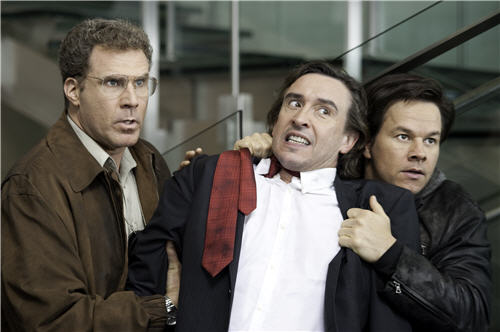
Imagine some comedy geeks playing a drinking game while conjuring the most ridiculous cop movie ever. Then have one of them with no sense of subtlety whatsoever write it up with more expositive outbursts than any one film should ever have. And then have everyone in the film take every possible joke too far. The result is The Other Guys.
The movie's premise is that there are superstar cops, and then there are The Other Guys. You know, the ones who just can't make the grade. It's a promising premise until it gets overloaded with bad jokes and caricatures, and The Other Guys doesn't let up from scene one, with a preposterous chase and arrest worthy of a Die Hard spoof. Every joke is repeated ad nauseum, not once or twice, but over and over, each rendition more painful than the last, and very few of them were funny. In fact, this reviewer only laughed twice, and had more fun watching other reviewers mimic her flabbergasted expressions.
Review: The Disappearance of Alice Creed
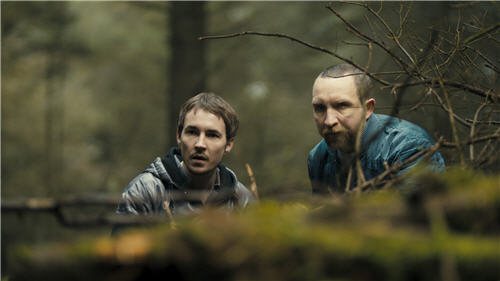
For the first ten minutes or so of The Disappearance of Alice Creed sets an unsettling tone as two industrious men silently and meticulously complete increasingly unnerving DIY work on a van and an apartment.
Fraught with sinister possibilities, the twisty plot reveals itself in fits and starts in The Disappearance of Alice Creed. Two men (Eddie Marsan and Martin Compston) kidnap a young woman (Gemma Arterton) for ransom, and as in most thrillers, things are not as they initially appear. Very little is revealed before Alice's abduction, and very little exposition is used, allowing the story to reveal itself almost at the pace Alice learns about her captors and their intentions.
The nearly overwhelming ambition of writer/director J. Blakeson's script could easily have taken a darker, exploitive path with titillating abuse of the victim, but only toys with those conventions. Instead, the focus is on the relationships of the three characters and how they evolve over the course of the 100 minutes of the film. Unfortunately, Blakeson's direction lacks the subtlety necessary to build and deliver on the initial riveting attention. Over and over the audience ended up laughing at sudden reveals that belied the artistry of the opening sequence.
