

Austin Film Society
Spending the 'Summer @ Austin Studios' with Young Filmmakers
By Josiane Amezcua
Growing up in Laredo, I spent my summers going to a math and science camp at the local university. While I learned a lot, it was not my first choice for summer vacations. I always wanted to go to a film camp, but it was not an option where and when I grew up. Luckily, for kids in Austin interested in movies, the Austin Film Society provides a variety of film camps this summer, led by several talented filmmaking mentors. Interns at the Austin Film Society assist the camps and are also able to lend their knowledge to the young filmmakers.
Summer @ Austin Studios 2012 presented week-long camps that included Indie Filmmakers I, II and III, Animation Adventure, Scary Filmmaking, Animation Creation and Sci-Fi & Fantasy Filmmaking. Children from ages nine through 18 not only had the opportunity to learn about the different types of film, but also made their own movies. The campers were given the chance to film on the lot at Austin Studios, which provided the perfect setting for many of their videos.
As a community education apprentice for AFS, I had the opportunity of assisting with the summer camps this year. From helping to make clay models for Animation Creation to building props for Scary Filmmaking, it was fun helping out and being part of the camp experience. It was a joy to see the passion the campers displayed when making their movies. During the Indie and Animation Film camps, whenever I would ask about their videos, the kids would light up and speak with such enthusiasm when describing their stories. From music videos to stop-motion Lego movies, they showed a great amount of creativity and made some unique films.
AFS Delivers a World of Police Thrillers to Austin

Good cops, bad cops ... Austin Film Society is bringing us a month of top-notch police procedurals in its latest Essential Cinema series. The cops might not be good but the movies certainly are.
"Officers of Uncertainty: The Policier Legacy in Contemporary International Cinema" features a great mix of police movies -- one American, one French, one Turkish and one from Hong Kong. The films screen on Tuesday nights at 7 pm at Alamo Drafthouse on South Lamar throughout August. All films will be shown from 35mm prints.
The series kicks off tonight with Polisse (pictured at top), a 2011 French film directed by actress/filmmaker Maiwenn. It's about the difficulties of working in the Child Protection Unit of a municipal police force, focusing on a journalist who is drawn a little too closely to one of the officers. Tickets are still available but you can buy them online at the AFS site only until 3 pm -- after that, you have to get to the theater early and hope there's room.
Next Tuesday, August 14, the series returns to the U.S. for We Own the Night, James Gray's crime thriller from 2007 starring Joaquin Phoenix, Eva Mendes and Mark Wahlberg. It's set in the 1980s, centered around two brothers: One owns a Brooklyn nightclub, the other is a cop fighting drug lords.
Three Filmmakers Named to 2012 TFPF Review Panel
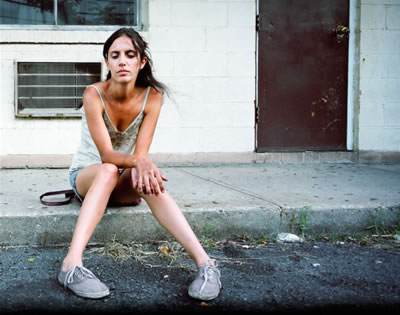 We're excited at the Austin Film Society to annouce that filmmakers Matthew Akers (Marina Abramovic: The Artist Is Present), Paola Mendoza (Entre Nos) and Brent Hoff (Wholphin) will be coming to town in August to serve on our 2012 Texas Filmmakers' Product Fund review panel. All three will be part of the process of dividing up the $100,000 in cash and in-kind support that will go toward helping Texas filmmakers work on their film and video projects.
TFPF, created in 1996, has given away around $1.2 million to assist Texas filmmakers in getting their projects made. Funding for the program comes from revenues from benefit film premieres as well as donations and the Texas Commission on the Arts. So far, over 348 projects have been the beneficiary of TFPF grants. This year, we received over 168 applications seeking funding. Grants for the 2012 TFPF will be announced on Monday, August 27.
"We're honored to have three highly accomplished filmmakers join us in Austin to determine this year's Texas Filmmakers' Production Fund recipients," said Holly Herrick, AFS associate artistic director. "The panelists represent a broad spectrum of the creative potential of independent film; all have worked across forms and genres throughout their careers. They are well suited to identify a diverse group of projects in need of TFPF support."
AFS Pilot Program Teaches Students Game Design
 By Ayshea Khan
In March, Austin Film Society Community Education Manager Katy Daiger Dial explored the connections between filmmaker and game designer as a part of the AMD Game On! Workshop at SXSWedu 2012. In an age where movies and games are modeled after one another, where exactly do the two professions intersect? Can they work together to provide effective learning tools for our students?
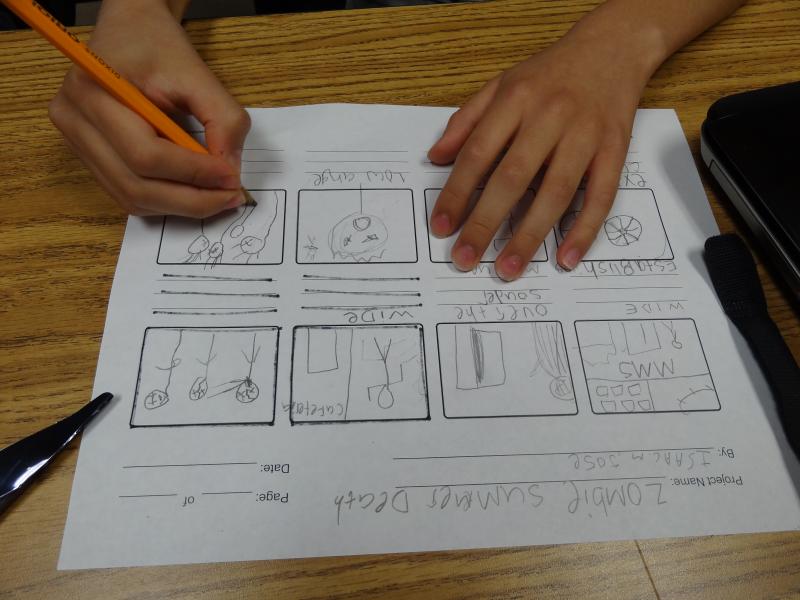
Thanks to the support of the AMD Foundation’s Changing the Game initiative and AISD's ACE Afterschool, AFS had the opportunity to explore these issues and find some answers with the Summer Digital Media Magic pilot program. This three-week summer workshop served as a continuation of June's AFS Film Club for Martin and Mendez middle-school students. A transmedia curriculum consisted of core game design concepts alongside filmmaking techniques. Digital Media Magic not only gave students a free and fun reason to get out of the house, but also continued Film Club's mission to cultivate creativity and skills necessary in a 21st-century workforce.
While learning the elements of game design, it was important to AFS that the program not stray from AFS's filmmaking roots altogether. As the AFS community education senior apprentice, I was put to the task of drafting filmmaking lesson plans that would support game design curriculum and vice versa. For example, what happens when you change the space of your video game? Is it similar to changing the location of your scene?
Why You Should See 'Anne Braden: Southern Patriot'
 It all started with a tract house in suburban Louisville, Kentucky. Andrew Wade, an electrical contractor and veteran of WWII, and his wife Charlotte tried to buy a new house. After countless rebuffs, one sympathetic realtor suggested that the young African-American couple get a white friend to buy the house and then transfer the deed to the Wades. This was a time when virulent segregation laws were still rigidly enforced in the South (and much of the rest of the U.S.). New suburban developments provided the landing space for white flight from inner cities.
Local journalists Anne Braden and her husband Carl bought the house, signed over ownership, and then the troubles began. First with rocks through the windows, followed by shotgun blasts and burning crosses planted by white-robed KKK members. A bomb explosion finally drove the young couple and their three-year-old child out of the house.
At other times that might have been the end of the whole affair, but it was 1954, the year of the Supreme Court's ruling against school segregation. White racists redoubled their determination to fight any form of integration.
Rather than find the actual person or persons who dynamited the Wade home, a Louisville grand jury charged the Bradens with sedition against the state of Kentucky. Proof? Purchasing a house for an African-American couple in a white neighborhood, explicitly against housing laws and contract restrictions. They were even suspected of blowing up the house themselves in order to enflame racial hatred and stir up a Communist revolution. In December 1954, Carl Braden was found guilty of sedition and sentenced to 15 years in prison. Furthermore, both Anne and Carl were branded "traitors to their race."
Blue Starlite Brings Modern Comforts to the Drive-In Experience
 By Sara Grauerholz
There are certain ingredients that make for the perfect Fourth of July: Eating barbecue, relaxing with friends and family by the pool, seeing fireworks and, yes, watching Independence Day. I was lucky enough that my Fourth of July included all of these things, and to cap things off, I was able to watch the movie at the Blue Starlite, an awesome urban boutique drive-in theater here in Austin.
The Blue Starlite is not new to Austin, having held an eastside location for two years, but the Fourth of July was the first screening in their new site at Austin Studios. Since I had never previously been to a drive-in, the entire concept excited me from the beginning. I had already heard fun stories from people who had attended the Blue Starlite specifically, as well as other drive-ins, so I was curious to check it out. After researching it online, it sounded like a great way to spend an evening, especially with such a great film choice for the holiday.
My guest and I pulled into the Austin Studios lot right as the sun was setting and were able to catch some fireworks going off in the distance. A few cars were already lined up in front of the screen. The crew members were showing folks to the best spots, and pointing out where restrooms and concessions were.
Music in Film in Music: A Night at Austin Studios
 By Mario Hernandez
When used correctly, music can add emphasis and depth to a scene; it's a partnership that has endured since the earliest days of film. On Wednesday, June 27, the Austin Film Society and the Austin Music Foundation co-hosted an event on the intersection. The "Music in Film in Music" panel addressed the common question, "How do I get music in film?"
Held at SoundCheck Austin at Austin Studios in a room full of musicians and filmmakers, the experience launched with a panel discussion that included musician Adrian Quesada of Grupo Fantasma, filmmaker Andrew Shapter (who served as moderator and flawlessly kept the discussion active), music supervisor Dominique Preyer and sound supervisor/mixer Tom Hammond.
Once the discussion kicked off, the audience focused on absorbing the essential ingredients required in the creative process of incorporating music in film. Shapter presented the audience with an example of how costly and complicated licensing fees and publishers can be in order to allow usage of a song in a film.
Speaking from his experience with of his documentary film Before the Music Dies, which criticizes the American music industry, Shapter shared that the cost to make the film was around $125,000, while the licensing fees alone totaled $165,000. Granted, the documentary profiled A-list artists like Erykah Badu, Eric Clapton and the Dave Matthews Band, but the fact remains that for any independent filmmaker, the legal and financial obligation for copyrighted music is likely going to be much more than they can afford.
With that being said, a filmmaker never wants to write personal agreements between parties using paper and pencil, or worse, by taking someone’s word for it. This is dangerous, and as Preyer cautioned, all agreements must be documented contractually.
"It's kinda like paying taxes. You gotta be honest," Preyer advised the audience.
'Now, Forager' Brings Food and Film to the Butterfly Bar
 By Olivia Calderon-Stucky
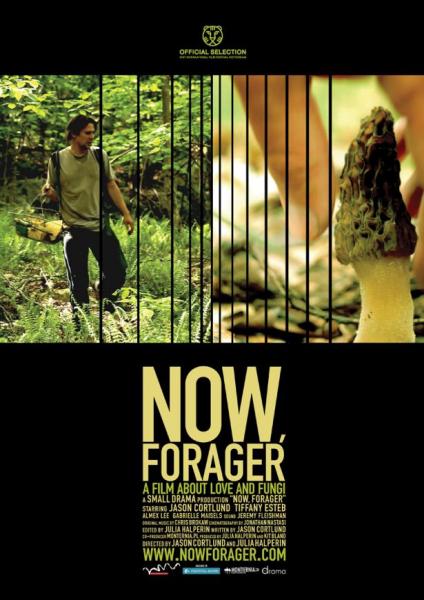
It was an unsurprisingly hot summer night at Butterfly Bar last Monday evening, but neither the heat nor the mosquitoes could diminish the pleasant ambience of the Austin Film Society's "Meet the Filmmakers" event, featuring excerpts from the movie Now, Forager. With proceeds benefiting the Texas Filmmakers Production Fund, the never-before-offered event had 40 or so people mingling in the backyard-like setting and indulging in two of the greatest things on Earth: food and film.
Six dinner tables were prepared for a family-style meal of locally sourced food from Farmhouse Delivery. The menu was lovingly prepared by chef Sonya Coté, executive chef of Hillside Farmacy, and included a feast for the eyes as well as the palate.
Dishes inspired by selected film clips began with hen yolks in mushrooms basted with shallot butter and herb. After this intoxicating appetizer, diners moved onto a wild cornbread soufflé, followed by a cold and sour soup with summer greens and sliced egg white. The pièce de résistance came just as dusk emerged: fresh redfish, the entirety of the fish grilled to perfection and served on a bed of smashed potatoes.
Diners settled even further into their seats to watch selected clips from Jason Cortlund and Julia Halperin’s Now, Forager, a narrative ode to food and fungi. Now, Forager follows main characters Lucien and Regina, who make a living gathering wild mushrooms and selling them to New York restaurants. Their marriage as well as their unstable but simple lifestyle is threatened after Regina seeks stability in a restaurant job, while Lucien devotes himself wholeheartedly to nomadic foraging.
Selections ranged from luminous and poetic sequences of the main characters foraging in the woods, to a birds-eye view of the artistry involved in catching and flaying a fish. Audiences saw close-up shots of white mushrooms while accompanied by voice-over of Lucien saying their esoteric scientific names. We saw the quiet tension between the couple after Regina takes a daytime job, throwing the order of their uncomplicated universe into disarray.
The film is minimalist, simple — a love letter to the kind of small-scale sustainability that seems very hip with the foraging and local food going community. AFS's Austin Culp was on hand to ask keen questions of the filmmakers giving us all insight into the movie and its production. We learned why the filmmaking duo decided to choose this subject. They wanted to pay actual tribute to the food in a food film, versus using fake food or not really focusing on the food and cooking.
Austin Music and Film Collide in Two Upcoming Events
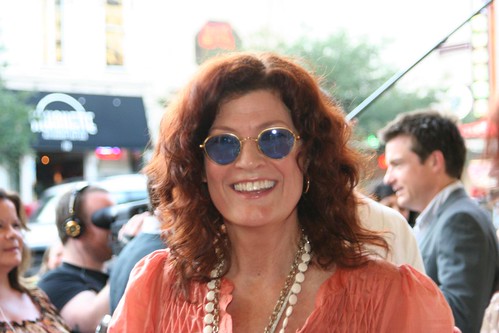
A panel on music and film and a musical performance from a movie star, all in one week -- that's Austin for you.
Next Wednesday, June 27, join Austin Film Society for the "Music in Film in Music" panel at Soundcheck Studio on the Austin Studios lot. Director Andrew Shapter (Before the Music Dies) will moderate the panel, which includes music supervisor Dominique Preyer and sound editor Tom Hammond. The panelists will discuss how to find music for your film -- or how eager musicians might connect with the right film to score.
This event will also include the results of a scoring competition. Audience members and panelists will view a clip from the in-progress documentary Yakona, accompanied by music from the winning composers.
Blue Starlite Drive-in Announces Summer Schedule at Austin Studios
Austin's own mini urban drive-in, Blue Starlite, is revving up for the summer. The drive-in will kick off this season's schedule at their new location on July 4. The Blue Starlite is even building a movie screen for their new site at Austin Studios.
Besides the holiday-appropriate screening on July 4 and a special late-night horror screening, most of the films for the month of July have a distinctly Austin flavor, thanks to a partnership with Austin Film Society.
Bike-in or walk-in tickets for the movies are $5, but you'll need to bring your own seating. Car packages range from $25 to $55. Note for cars: For any double features, an additional $10 lets you stay for the second film.
Here's the lineup:
- Wednesday, July 4, 9 pm: Independence Day. "Welcome to earth." [tickets]
- Friday, July 13, 9 pm: Dazed and Confused (dir. Richard Linklater), with a Friday the 13th showing of Night of the Living Dead following at 11:15. [tickets]
