

Austin Film Society
Duplass-a-Thon: Reflections on the Unexpected
 By Zach Endres
You often hear that life takes strange turns, and you don't realize how true this is until you think back to a year ago and realize the old you would never see the new you coming. So much can happen in so little time. Your normal commute to work ended up in a wreck, which led to life-altering injuries or a fancy new car purchased self-indulgently for once. You moved to a new city when you were all but set on staying in a rut on familiar turf. You got your dream job. You got a job you didn't even know was your dream job until you got it. You lost your job. You dyed your hair. Someone you know died. You died.
It's often hard to notice these turns when they're isolated incidents, because not all of them are painfully obvious. Sometimes it takes an impromptu post-screening concert outside the Alamo Drafthouse Village for the reality of the statement "Life takes strange turns" to sink in, something small but memorable to prod you to think back and discover how far you've come or how far you've fallen, and to get you thinking about what the next year might hold.
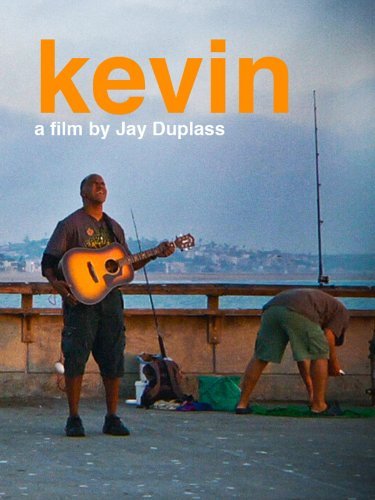
The Austin Film Society's Duplass-a-Thon -- a screening of former-Austinites Mark and Jay Duplass's most recent feature, The Do-Deca-Pentathlon, and a couple of their shorts -- provided an unexpected convergence of life and art, as the subject of Jay Duplass's short documentary Kevin played a set of original songs for an intimate crowd in the muggy Austin night. We came for the Duplasses, but we stayed for Kevin Gant. Who would have thought?
Jay's debut documentary covers Gant's career as an Austin musician in the '90s, his subsequent, unexplained disappearance and his re-emergence in 2009 (when Jay discovered him working at UPS). Strange turns, indeed. With the help of Jay's documentary and its festival rounds -- it premiered at SXSW 2011 -- Kevin's muse suddenly reignited. He picked up his guitar once more, and it didn't take long for him to end up in front of the Drafthouse, gaily playing songs for us all.
Holly Herrick on Film Programming, Moving to Austin and Charles Durning's Little Sidestep
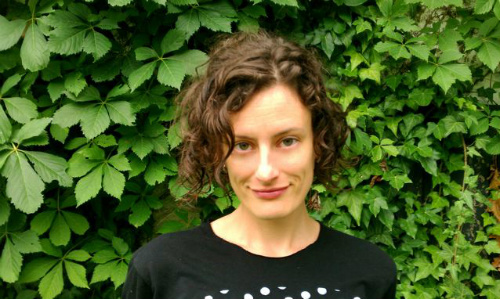
Holly Herrick joins the staff of Austin Film Society this week as Associate Artistic Director. Herrick's most recent work was with the Hamptons International Film Festival where she served as Programming Deputy Director. She has also written for film site Hammer to Nail (her filmmaker husband Michael Tully, also new to Austin, contributes to the site as well).
She took a break during her move from Brooklyn to Austin over the weekend to answer some questions for us (via email).
Slackerwood: What drew you to Austin and this new position with the Austin Film Society?
Holly Herrick: The Austin Film Society always stood out to me as an organization that took an original, creative approach to developing local and regional film culture. As a festival producer and programmer, I was positioned between the film industry and communities that felt they could benefit from a greater emphasis on film programming and filmmaking in their region.
El Cine Latinoamericano y Yo
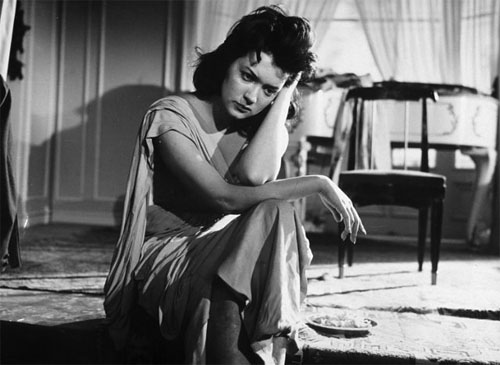
The Austin Film Society's latest Essential Cinema Series, "CineSur: Films of Latin America," begins tonight at 7 pm with Zona Sur at the Alamo Drafthouse on South Lamar.
In 1962 or 1963, when I still couldn't vote or legally drink in a bar, I lived just a few blocks from the Teatro Panamericano in Dallas, the principal Spanish-language movie theater in el barrio (often dismissively referred to by non-Spanish-speakers as "Little Mexico"). The Panamericano was a beautiful building constructed for the Dallas Little Theatre in the 1930s, and was later purchased by the enterprising J.J. Ródriguez in 1943. While I was more frequently at other theaters experiencing Fellini, Antonioni, Truffaut, Godard, Kurosawa and the products of a dying Hollywood, I have fond memories of seeing Mexican films at the Panamericano.
Macario (Roberto Gavaldón, 1960) was haunting and mystical, while Los hermanos Del Hierro (My Son, the Hero, Ismael Rodríguez, 1961) was an unforgettable Western. While I didn't always understand the humor of Tin Tan and Resortes, I loved watching Cantinflas, who was somewhat reminiscent of Chaplin. There were also pre-post-modern movies featuring mashups of legendary monsters, beguiling space creatures and masked wrestlers, but I was still a novice cineaste, and thus far too snobbish to see the delight inherent in such films. That awareness wouldn't happen until 40 years later, but I still cringe when I meet people who think those hilariously awful movies are Mexican cinema.
Throughout the 1960s, I was in Mexico nearly every summer. Naturally my friends wanted to see foreign films (i.e., American films). The era of classic Mexican cinema (La Época de Oro, approximately 1936-1957) had passed. Only toward the end of the '60s would a more radicalized, sexually liberated, university educated, anti-Hollywood group of directors appear. I never could have imagined that one day I would be bringing those directors –- Jaime Humberto Hermosillo, Arturo Ripstein and Felipe Cazals -– to Austin to present some of their powerful films. In 1966-1968, I was at UT Austin getting my M.A. in English, with a minor in film studies, reportedly only the fourth person in the history of the English department to be allowed that minor.
An Evening at SEEFest Austin with 'Hello! How Are You?'

By Dillan Harris
Director Alexandru Maftei's 2010 film, Buna! Ce Faci? (Hello! How Are You?) screened recently as part of the Austin Film Society's Essential Cinema series "SEEFest, Films of Southeast Europe." SEEFest Los Angeles founder and director of programming Vera Mijojlic was on hand to share some thoughts about the movie.
AFS Director of Programming Chale Nafus gave a brief introduction to the film and guest curator before the microphone stopped working. A few awkward moments passed before the problem was solved. "I think God was telling me to shut the (bleep) up," Nafus explained.
Nafus' candidness was reflected in the film itself, which was refreshingly, awkwardly and sometimes comically honest. Mijojlic mentioned that the film is the first comedy to come out of Romania in the last 20 years, and it is not without a subtle sense of melancholy. The story of Gabriel and Gabriela’s passionless marriage and their curiosity for something more becomes comical when the two, independent of the each other, learn to use a computer and explore the anonymous confines of chat rooms. Only this anonymity hides the fact that they are actually chatting with one another.
TFPF Workshops: An Insider's Perspective
 By Mike Fleming
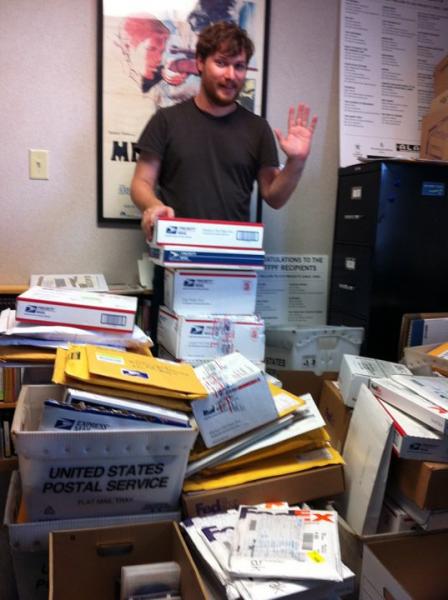
The deadline for Texas Filmmakers' Production Fund applications is rapidly approaching and it was with that in mind that I recently attended a TFPF Workshop with Austin Culp, Austin Film Society's Interim Artist Services Manager, at the AFS offices.
During the past few weeks Culp and Ryan Long, AFS Programs and Operations Manager, have been traveling all over the state to give workshops just like this one. The final result of these workshops will be something like two hundred separate applications, most of them arriving on the June 1 deadline date. In the past it has been quite a lot to sort through, which is why this year TFPF is switching to mostly online applications, a whole new wrinkle in the sorting process.
Since this is the first year that applications are entirely digital, the online application itself represents a respectable portion of the presentation, but it is by no means the meat and potatoes of the workshop.
One of the first things I learned about the TFPF program (because it was the first thing asked) is that there are no typical projects that are more likely to get funding than others. Many different types of films are accepted into the program, such as The Vulture Project, Zero Charisma and Far Marfa. According to Culp, the variation in the alumni roster can also be attributed to the varied group of TFPF reviewers.
Every year, candidates for funding go through three rounds of review by about 20 first-round reviewers. In the final rounds of review the applications are typically sent to three working filmmakers or film professionals who are not from Texas and have different backgrounds in filmmaking. This ensures that every year the films that apply for funding are scrutinized on different terms, which ultimately translates to a different crop of funded films every year. According to Culp, "Plenty of good films have applied for funding before and not gotten it. If a film doesn't get funding it doesn't necessarily mean it's a bad one."
The Intern's Lot: 'Caris' Peace' at AFS Doc Nights
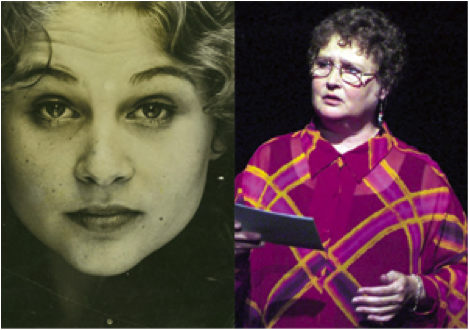
By Josiane Amezcua
"Anyone can give up, it's the easiest thing in the world to do. But to hold it together when everyone else would understand if you fell apart, that's true strength." -- Author Unknown
After coming across this quote a few years back, it stayed with me and immediately came to mind when I saw the trailer for Caris' Peace, a documentary about courage and overcoming struggles. The quote reflected to me what the documentary was going to be about, so I knew it would be meaningful and one worth seeing. With anticipation, I took the opportunity to attend a screening of the film at the South Lamar Alamo Drafthouse as part of the Austin Film Society Doc Nights series. It was then that I was introduced to Caris Corfman, a talented stage and film actress.
From the mid 1970s to early 1990s, Corfman was a star and earned recognition in several Broadway and Off-Broadway productions. She also shared her talent onscreen, making notable appearances in television and film.
Interview: Vera Mijojlic of SEEFest, Part Two
 Vera Mijojlic recently concluded the 7th annual SEEFest Los Angeles (Southeast European Film Festival), which she created and continues to direct. It is rightly called "the premiere cinematic showcase where films from 15 countries of South-East Europe are presented as an annual thematic snapshot of that turbulent region."
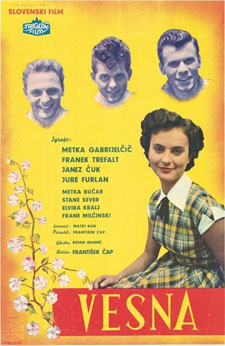
She also curated Austin Film Society's SEEFest Austin this spring, which includes seven films that have played at different times in SEEFest Los Angeles. Vera will be in Austin tonight (May 22) to present the Slovenian film Vesna (Frantisek Cáp, 1953) at Alamo Drafthouse on South Lamar.
I visited with Vera in August 2010 in Los Angeles, and recently asked her some questions via email. This is the second part of our interview -- read the first part if you haven't already.
Chale Nafus: Among all your film and cultural writing, I understand that you have also written short stories and children's plays.
Vera Mijojlic: My stories were about kids in complex situations. The one that got the most awards and ended up in a book was "Albertino," about a Jewish boy in a small Bosnian town whose friends are Serbian and Muslim kids, a perfectly natural thing in a place like Bosnia. Enter the Nazis and WWII. The world of these three kids changes, with Albertino disappearing and his surviving friends growing up really fast. I wrote it as a poetic first-person account told by a little girl who survives the war.
Other stories were about the tempest mirroring the internal turmoil of a teenager, and one was a semi-enigmatic story about a mirror and the person who breaks it after a silent interaction with her own image. I also wrote poetry and published some, but it never amounted to much.
Interview: Vera Mijojlic of SEEFest, Part One
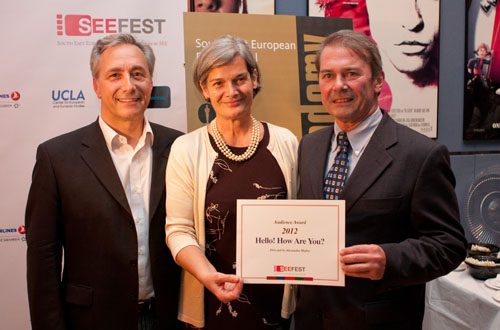
Last week, Vera Mijojlic concluded the 7th annual SEEFest Los Angeles (Southeast European Film Festival), which she created and continues to direct. It is rightly called "the premiere cinematic showcase where films from 15 countries of South-East Europe are presented as an annual thematic snapshot of that turbulent region."
Vera Mijojlic curated Austin Film Society's SEEFest Austin this spring, which includes seven films that have played at different times in SEEFest Los Angeles. Vera will be in Austin tonight (May 15) to present the Romanian film Hello! How Are You? (Alexandru Maftei, 2010) and next Tuesday, May 22, to present the Slovenian film Vesna (Frantisek Cáp, 1953), both at Alamo Drafthouse on South Lamar.
I visited with Vera in August 2010 in Los Angeles, and recently asked her some questions via email.
Chale Nafus: You were born in Bosnia Herzegovina, which at the time was part of Yugoslavia. Tell us about your family history.
Vera Mijojlic: For as long as anyone can remember, every person in my family, on both sides, was born in Bosnia. They were Serbs, and the ancestral home was a quaint town of Bijeljina in north-eastern Bosnia. In the past 20 years it has turned into an overdeveloped monstrosity which I do not recognize at all.
AFS Welcomes Holly Herrick as Associate Artistic Director
Austin's film community is about to get a new member: Holly Herrick, who's worked with the Hamptons International Film Festival and the Sarasota Film Festival, among others. Austin Film Society announced today that Herrick has been named to the newly created Associate Artistic Director position, and will start on June 15.
Looking at Twitter posts about the announcement this morning, I realized that Austin will also get a new filmmaker/film writer, since Herrick's husband Michael Tully of Hammer to Nail will be moving with her. The couple currently resides in Brooklyn.
The official press release from AFS is reprinted below with details about the new position and also Herrick's background. I look forward to meeting her this summer.
Austin Studios Expansion Planning Update
 For three years, Austin Film Society has been planning to expand Austin Studios to include the adjacent National Guard Armory. You may have seen our posts or heard us talk about how great it will be, because in addition to more filming space, we'll have scalable offices for producing, post-production, classrooms and anything else related to creative media production. It will be a beehive of artists supporting themselves and each other.
In 2006, AFS received $5 million in bond funds and it has paid off. Since we completed renovations in 2009, Austin Studios has brought $290 million into the local economy. You may have caught the news that ABC Family's The Lying Game has been renewed for a second season. That show alone will pour an amazing $16 million into Austin's economy over just a few months! The equation is simple: The more capital improvements we can make at the outset, the better the space will function and the cheaper the rent will be.
In 2009, AFS commissioned a detailed facilities assessment of the National Guard building, which revealed the need for the $6.1 million in repairs and improvements. In 2010, AFS held two Town Hall meetings for the film community and a videogame leaders roundtable. The purpose was to identify priorities for the space, which emerged as:
- Affordable, scalable space
- Privacy combined with easy access to communal space
