

New Releases
Review: The American
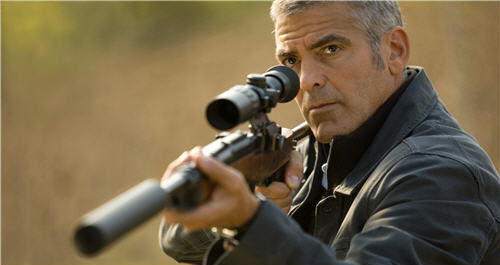
Opening with a silent panoramic shot of winter twilight in remote Sweden, The American quickly separates itself from typical international thrillers. Unfortunately, it also means that it won't find the audience normally drawn to such films.
Based on the Martin Booth novel A Very Private Gentleman and adapted by Rowan Joffe (28 Weeks Later), The American is the tale of Jack, an assassin (George Clooney) at the end of his career, paranoid and tense, and reluctant to take one last assignment. After Jack is targeted by a hit squad, he runs to Italy only to have his handler set up a place to lay low in a remote town.
Director Anton Corbijn leans heavily on moody imagery and panoramic shots to set the mood. Corbijn, whose background is in music videos and documentaries, relies more on imagery than dialogue to drive the story. The frequent wide shots set a tone of increasing isolation and sense of entanglement in Jack/Edward's life, whether he's talking to his handler, a client, or the people who insist on getting involved with him.
Review: The Last Exorcism
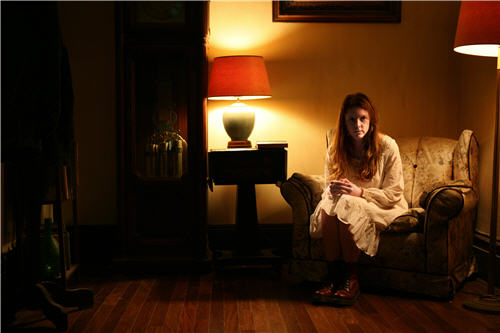
When it comes to contemporary scary tales, most films resort to fantastic gorefests and extremism to provoke reactions from the audience. Thankfully, The Last Exorcism rarely resorts to such cliched convention.
Shot in documentary style, the subject is Cotton Marcus (Patrick Fabian), a reforming evangelist who's out to prove how believers can be convinced that demonic possessions and exorcisms are faked to exploit them. Cotton is arrogantly charming, fully aware of his power to persuade, and how that factors into his ability to hoodwink the faithful. When he randomly selects a request to perform an exorcism to expose the trickery behind them, he and the documentary crew are off to rural Louisiana to answer a desperate farmer's pleas. Unfortunately for Cotton, he is asked by a desperate father to perform an exorcism he never wants to do; one on a child.
The acting in The Last Exorcism is outstanding, starting with Fabian (Big Love) as Cotton, whose glee at revealing his tricks could have been annoying, if it wasn't clear his goal is to help people. Ashley Bell, Caleb Landry Jones and Louis Herthum as the Sweetzers all seem straight off the farm, with homespun earnestness and love for their family that expresses itself in different ways for each character.
Review: Animal Kingdom
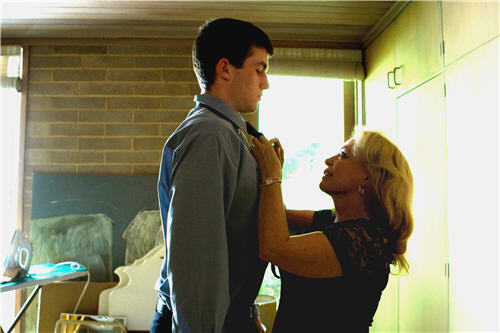
When a teenager suddenly finds himself reunited with his estranged criminal family, his life spins out of control until he's forced to decide his place within the Animal Kingdom.
"J" Cody (James Frecheville) has no memory of his dysfunctional extended family, whose criminal background keeps them under surveillance. A sullen and quiet young man, J has no clear place in their world or any power in it. His grandmother Janine (Jacki Weaver) is cheerfully indulgent and prone to barely appropriate displays of affection with her unstable sons (Luke Ford, Ben Mendelsohn, Sullivan Stapleton). When rogue police take action against one of their own, J is pressured to choose between his family and the law.
Few of the characters in Animal Kingdom have any redeeming qualities, and what few there are usually mask a darker purpose. Director and writer David Michod made sure every character had a dark side. Animal Kingdom may bring to mind the Nash Edgerton feature The Square and Spider, the short that played with it, and for good reason: Spider and Animal Kingdom were both written by Michod. But unlike those films, there's not even any redeeming circumstances.
Review: Winnebago Man
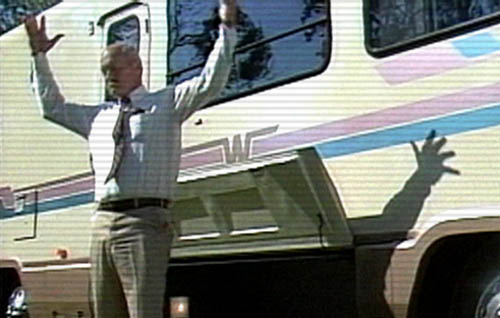
Who is Jack Rebney?
After seeing Winnebago Man, I'm still not entirely sure. But in a way, not knowing Rebney may be a point of this documentary, which sheds barely a flicker of light on one of the Internet's most famous cult figures.
Rebney is better known as The World's Angriest Man, whose famously foul-mouthed rants during a 1989 taping of a Winnebago sales video have made him an Internet legend. In a collection of outtakes (compiled by the video crew without Rebney's knowledge), he leaves no F-bomb undropped and no Judeo-Christian deity unblasphemed, as he angrily curses at the heat, the flies, the crew and himself. Rebney's creative use of vulgar epithets borders on an art form, and his screw-this-job tirades have made him a hero to frustrated workers everywhere.
The outtakes began circulating via crudely copied VHS tapes in the early 1990s. When the Internet matured enough to allow trading videos and posting them on websites, Rebney's rantings quickly became a cyberspace sensation. And then came YouTube -- and the rest, as they say, is viral video history. But although Rebney had an Internet connection, apparently he had no clue about his unlikely fame.
Review: Nanny McPhee Returns
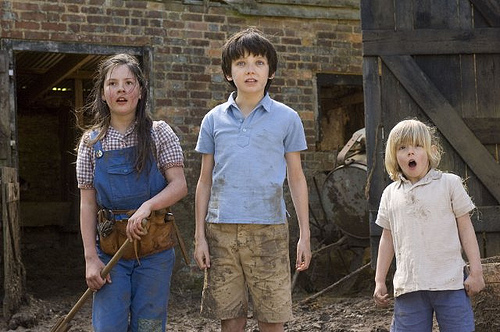
I didn't watch Nanny McPhee when the movie was released in 2005. Frankly, I found the image of the lovely Emma Thompson done up with hairy moles and snaggletooth quite frightening. However, after seeing Nanny McPhee Returns this week, I learned my own lesson from Nanny "little C, big P" McPhee -- don't judge a book by its cover. Award-winning actress and writer Thompson reprises her role as screenwriter and star, but this time she's also the executive producer, which might explain some of the big names in Nanny McPhee Returns. However, it's not just the stars in the cast that make this film enjoyable. Thompson's screenwriting skills provide the youngest members of the cast with well-developed characters.
Based on characters created by Christianna Brand in the Nurse Matilda series, the central plot of Nanny McPhee Returns focuses on the same formula. An unintentional single parent is pestered by misbehaving children, and Nanny McPhee arrives to teach the children five lessons. Maggie Gyllenhaal portrays Isabel Green, a mother overwhelmed by her three children as well as their two spoiled cousins who come to stay with them to avoid bombs falling in London (it's set during WWII). Mr. Green (Ewan McGregor in a cameo appearance) has been away fighting in the war, and the family is in danger of losing the farm. Mrs. Green works in the local shop where she has to clean up after the forgetful elderly Mrs. Docherty (Maggie Smith).
DVD Review: Temple Grandin
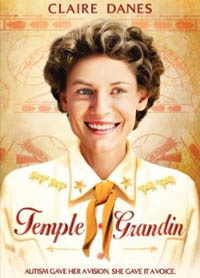

Such an inspirational and thoroughly unique story is, of course, tailor-made for a cinematic treatment. Fortunately, this treatment is Temple Grandin, a much-lauded HBO Films biopic nominated for an astounding 15 Emmy Awards. Released this week on DVD
The film opens in 1966 as a teenage Grandin (a barely recognizable Claire Danes) arrives at the Arizona ranch of her Aunt Ann (Catherine O'Hara) and Uncle Mike (Michael Crabtree), who are caring for Grandin to relieve her exhausted mother, Eustacia (Julia Ormond). Grandin exhibits many classic autism symptoms: She constantly repeats random phrases, fixates on objects, is extremely sensitive to stimuli, has trouble interacting with people and confronts new experiences with fear and confusion. But while at the ranch, she also demonstrates an unlikely talent for designing and building mechanical devices and an innate understanding of animal behavior.
Grandin blossoms at the ranch, and being far more comfortable around animals than people, she wants to stay. Despite her protests, however, Eustacia enrolls her at Franklin Pierce College in New Hampshire. Her introduction to college life is mostly disastrous, and in a prolonged flashback to her childhood and high-school years, we learn why.
Review: The Expendables
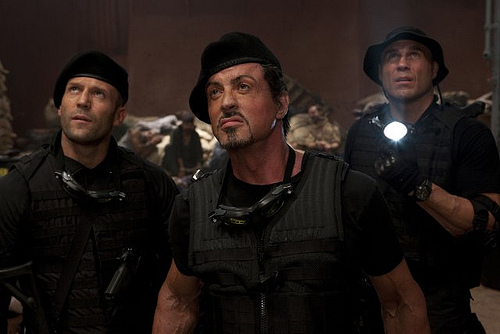
I was really excited to see The Expendables at the second annual Cinemapocalypse, especially since Die Hard was scheduled to screen beforehand. Seeing Die Hard when it opened was a memorable experience for me. I recall the realization that I had spent most of the movie literally on the edge of my seat, and only releasing my grip on the armrests when the credits rolled. Die Hard was a defining moment for action flicks, a rollercoaster ride alongside a reluctant hero who viewers could emotionally invest in -- ironically Sylvester Stallone turned down the role of John McClane
Unfortunately, Sylvester Stallone's The Expendables falls far below the standard set by Die Hard as well as several other films featuring the stellar cast. Plain and simple, The Expendables is pure unadulterated action porn. The loose plot and dialogue exist solely to tie explosive money shots together, with body parts flying every which way. Subplots aren't fleshed out, leaving viewers befuddled.
The opening scene of The Expendables introduces us to a group of aging mercenaries led by Barney Ross (Sylvester Stallone), as they take over a Somalian pirate ship to rescue hostages. With impressive firepower, knife-throwing and hand-to-hand combat, they quickly take out the pirates. However, things get nasty as unstable drug-addicted Gunnar Jensen (Dolph Lundgren) attempts to hang one of the pirates despite orders. His partner Ying Yang (Jet Li) stops him, and Jensen nearly kills Yang, resulting in Jensen being released from services. Filling out the roster is heavy weapons specialist Hale Caesar (Terry Crews) and demolitions expert Toll Road (Randy Couture).
Review: The Dry Land
A war's psychological toll can linger far beyond the war's end. As long as war veterans spend their days reliving the horrors of battle and trying to make sense of experiences that are inherently senseless, we're all reminded that war's true cost is far greater than flag-draped coffins and mangled limbs. The greatest cost of any war is the lingering insanity of those who fight it – and our collective insanity also.
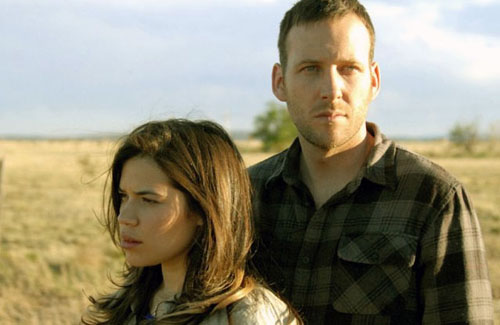
The Dry Land is an effective and often riveting take on this loss of sanity, specifically the harrowing mental breakdowns caused by post-traumatic stress disorder or PTSD, which an astounding number of Iraq and Afghanistan war veterans are suffering through. Opening today at the Arbor, the film is an unflinching look at one soldier's descent into madness as he returns to civilian life in a small West Texas town.
From the minute he sets foot in the dusty, impoverished environs of his hometown after a brutal tour of duty, it's obvious that James (Ryan O'Nan) hasn't left the war behind him. Although the carnage he witnessed still haunts him, he has no memory of a pivotal event: a rocket-propelled grenade attack on his Humvee that killed and severely wounded several members of his squad. Depressed, moody, self-medicating with alcohol and prone to violent rages, James quickly loses control of his life.
Review: Eat Pray Love
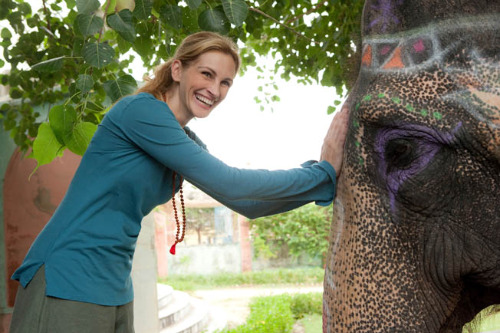
It's been a while since I read Elizabeth Gilbert's bestselling memoir -- and I've read many books since then -- so the story was not exactly fresh on my mind when I watched Eat Pray Love. As someone who is wary of book-to-movie adaptations, I found that the movie remained somewhat true to Gilbert's book, as I remembered it. However, the film fails to capture some of the best aspects and, unfortunately, the true essence of the original work, even as it follows the same plot.
Liz Gilbert (Julia Roberts) endures a painful divorce (from a morose Billy Crudup) and an unhealthy relationship with a younger actor (James Franco) before she realizes she needs to define who she is and what she wants. She expresses to her editor pal Delia (the wonderful Viola Davis) her desire to travel for a year, and the movie flows from there.
Liz goes to Rome to enjoy food, India to attend her guru's ashram, and Bali to study with a medicine man. As she travels, new relationships blossom. In the book, we read about Elizabeth Gilbert growing into her self and coming to love who she is. In the movie, Liz Gilbert cries a lot. I didn't count, but I'd estimate at least eight times. Her handsome Brazilian lover Felipe (Javier Bardem) cries as well, but at least his tears seem authentic. When Julia Roberts cries as Liz, it seems forced and flimsy. Like director Ryan Murphy was yelling at her from behind the camera, "Cry now!" If movie Liz Gilbert is growing into her self, her self is a weepy mess.
Review: Get Low
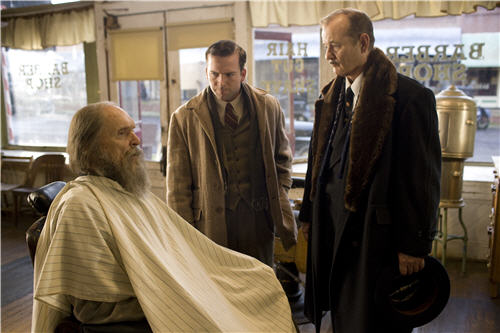
Robert Duvall returns to the big screen in Get Low, a tale of intentions, reputations and secrets too powerful to remain kept in a Depression-era small town.
When recluse Felix Bush (Robert Duvall) comes to town, tongues wag, conjuring up nearly unspeakable tales, each one worse than the last. Rumors range from strange powers to cold-blooded murder, and he's become such a frightful figure that he's the bogeyman children scare themselves with, as they wonder just what the old man does on his land so far from town. Townsfolk are shocked when he shows up in down in his mule-drawn wagon at a time when cars are taking over the road. Felix is planning for a funeral. But not just any funeral, a living one -- where anyone and everyone who has a story about him will come and tell it to the rest of the gathers and Felix himself.
Local funeral-home owner Frank Quinn (Bill Murray) is more than willing to take Bush's money and sets his assistant Buddy (Lucas Black) to ensure a tidy profit. But what seems an eccentric wish turns into a mystery: Why has Bush isolated himself all these years, and what is his relationship with Mattie Darrow (Sissy Spacek), recently returned to town? As the funeral party plans evolve, the mystery deepens, as Felix clearly has an agenda revolving around his past secrets.
