

Finding Worthy Causes at Lights. Camera. Help.
I don't envy the judges of this year's second annual Lights. Camera. Help. Film Festival, which ran from last Thursday through Saturday. After viewing so many great non-profit and cause-driven films and PSAs representing worthy causes, I would have had a difficult time picking the best. Three winners for feature-length, short-form, and PSA films were selected from the pool of 33 finalists. The winners will receive the proceeds from this year's festival, which includes any donations made on the website during the festival season.
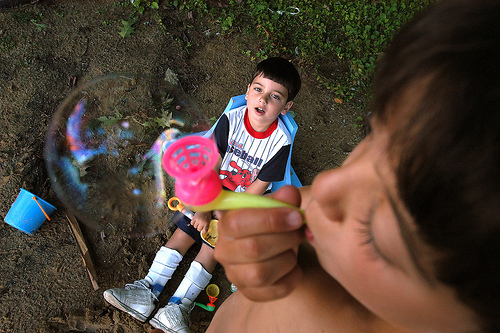
The feature winner, Including Samuel, portrays a family’s hopes and struggles as they engage their child Samuel (seen above with his brother Isaiah), who suffers from cerebral palsy. Although Samuel is the main subject, his father, filmmaker Dan Habib, delivers a well-balanced film by also documenting the experiences of four other individuals with disabilities. Alana Malfy, a high-school student, is part of Beyond Access, a University of New Hampshire pilot project working with public schools to fully include students who experience the most significant disabilities. Malfy benefits from the program but she also faces social challenges that daily test the patience and understanding of classmates and teachers.
Some of the most enlightening commentary in Including Samuel comes from Keith P. Jones, who despite his cerebral palsy is a leading Boston disability rights activist and successful hip-hop artist. Jones states that as a black man in a wheelchair, most people assume that he is a victim of gang violence. The Including Samuel Project is a program of the Institute on Disability at the University of New Hampshire. Proceeds from the Institute build more inclusive schools and communities through curriculum, training and outreach.
The short-film winner at Lights. Camera. Help was Girls of Daraja, which chronicles how the Daraja Academy is improving education opportunities for girls in Kenya. As the first free all-girls boarding school in East Africa, the Academy gives 26 underprivileged students the chance at a secondary education. I was astounded to learn by watching both Girls of Daraja and 16 Blades of Grass that in many of the world’s poorest countries, families must pay to send their children to secondary school. It was heartbreaking to see that hundreds of thousands of teenagers hungry for knowledge are unable to attend high school because of financial reasons or even social beliefs. 16 Blades of Grass reveals that a young Indian girl who had passed her crucial 10th grade exams is pulled out of school to work on her family's farm.
The PSA winner was EcoViva, with two final entries featuring the organization's environmental program in El Salvador. Having spent a month in a remote portion of Costa Rica, I was glad to see a film focusing on what the local indigenous people can do to adopt sustainable practices to protect their environment, water and livelihoods.
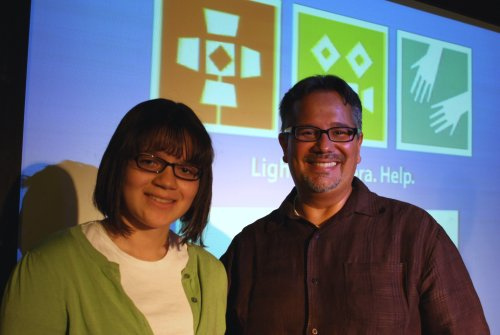
At first glance, The Future of Education PSA that promotes the college preparatory Ann Richards School here in Austin might seem a stark contrast to the previous films. However, the core message is very similar -- countless young women from underprivileged socioeconomic backgrounds both near and far want an education, especially a challenging one. The Future of Education was created by Amanda Rife (pictured above with AISD Instructional Technology Facilitator Juan Orozco) who at 14 years of age was the youngest filmmaker at this year's festival. Amanda expected her animated film to only screen once, after she created it as part of the Dear Michelle Project. Students created short films based on they had letters written to Michelle Obama about issues they'd like to see change in our country. Check out Reid's The Future of Education on YouTube.
Several of the filmmakers, including Reid, expressed that they'd never expected to be able to show their works at a film festival until they'd heard of Lights. Camera. Help. A Livestrong representative who was at the fest to support the screening of MISSED: Stories of Young Adults with Cancer stated that the intent of their short film was to create a compelling piece to give cancer survivors a voice. Typically the film screens at medical conferences, and this was the first film-fest screening for MISSED.
If you missed Lights. Camera. Help., I highly recommend watching the films that were finalists online, including the upbeat and enlightening The Other Child, a short documentary about the siblings of children with autism. Created by the Dan Marino Foundation, you can view the short film here. One of my personal favorites of the festival was Hunger is Unacceptable, created for Capital Area Food Bank by the same filmmaking team that created the silent yet powerful 30-second PSA posted on the Hunger is Unacceptable website. I was pleasantly surprised to see a dog I'd "met" at the Austin Pets Alive South Congress location featured in the short film Shelter, but saddened enough by the less fortunate animals to be seriously considering adopting a dog. That's a good sign that the "call to action" of this film was heard, along with the messages of many other films represented at Lights. Camera. Help. Film Festival.
[Photo Credits: Samuel and Isaiah, by Dan Habib, from includingsamuel.com; Amanda Rife and Juan Orozco, by Debbie Cerda]
Thanks for the great article!
Hi Debbie,
Thanks for the great article and your tremendous support of the festival and Lights. Camera. Help. as a whole.
Aaron