

Review: The White Ribbon
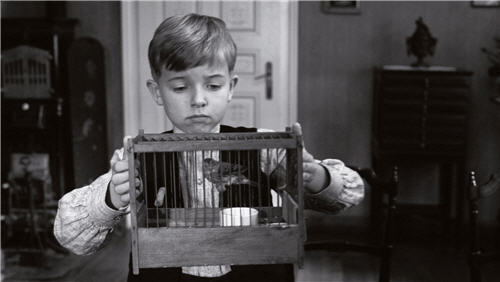
Michael Haneke's morality tale The White Ribbon (Das weisse Band - Eine deutsche Kindergeschichte) is racking up wins and nominations, including two Oscar nods and the Palm D'Or. Yet all the attention seems to be more of a nod to the roots of fascism than to the film itself.
Set in a seemingly bucolic German village prior to WWI, The White Ribbon reveals the town's ugly underbelly. An act of malice fells a horse and lands a village doctor in the hospital. Shortly after, a mill accident results in the death of a mother. The German village is full of secrets and malice, with few true innocents, showing everyone as either victim or culprit ... or both.
The director of Caché and Funny Games (both versions) enjoys deconstructing the bête noire in idyllic settings. The film covers roughly a year in the life of the village, but at 144 minutes, the observations are diffused and obscure instead of focused and observant. With long, silent, black-background opening credits, The White Ribbon is not a movie for the average movie fan. In fact, it will challenge even the cineastes among us to sit still through what feels like real time. While it's been nominated for cinematography awards, if seen on a less than perfect screen, The White Ribbon is hard on the eyes.
Michael Haneke clearly masters look humanity's dark and seamy side in the eye, but he seems incapable of moving beyond voyuerism and actually crafting a film around it. Perhaps he feels he'd cage it, but as an audience member, there's only so many times one can watch the same material when the only major differences are years and buildings and not get bored.
The lack of a resolution isn't what makes The White Ribbon unsatisfactory. The fact that Haneke seems to find very little worth salvaging in the generations that lived through that particular time period feels as if he's condemning humanity without a trail. Again.