

In Conversation with Spike Lee: A Special Evening
 By John Elder
Do you have a film that is special to you? Not necessarily a favorite film, or even a film you would consider to be good. I'm talking about a film that you have a soft spot for. No matter the reason, this is a movie that is close to you, and you're close to it. You can identify with something about it. It hurts a tad to hear someone criticize it. It might be a guilty pleasure, but that's only half way there, because a guilty pleasure isn't necessarily special.
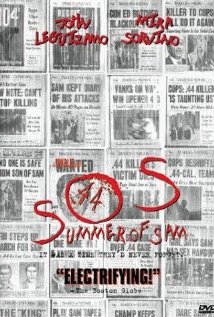
On Saturday September 8, I was fortunate enough to be at The Paramount for their "In Conversation" series. This installment featured Spike Lee and his 1999 film Summer of Sam. It was an event I'd had on my radar for a few months and had been eagerly awaiting. To see the director of Do The Right Thing in person giving a talk about one of his films, no matter how routine or rehearsed, had me in great anticipation.
Here's the Paramount Theatre's pitch: "Join us for an intimate interview with Spike Lee followed by a screening of Summer of Sam." I figured we'd get some very general questions with some very general answers to go with them. Preceding the prepared Q&A, we'd get some prepared remarks on Summer of Sam recited like a daily routine. Even if this was a routine gig for Spike Lee, I was still excited to be graced with Lee's presence.
Let me just say that I was pleasantly surprised. I now know why Summer of Sam is a very special film to Spike Lee (besides the fact that he made it). After hearing from Lee himself, that he wanted Sam to be "loud and full of colors," I now know what his guilty pleasure is, too. Summer of Sam is Lee's dramatization of the Son of Sam murders in Brooklyn during 1977. There is plenty of graphic violence, sex, and drugs to go around as we follow the lives of several eccentric characters in a closely-knit Brooklyn neighborhood. The film is loud and colorful, and its certainly not for the faint of heart, of which I saw a few leaving the theater a couple murders or expletives in.
Lee's spiel preceding the screening was genuine and personal. And not only that, but because the audience was able to participate in the Q&A afterwards, unprompted questions were asked, and Lee took each and every one to heart. Luckily, Austin kept it classy for the most part, besides the occasional shameless plugs.
Lee truly seemed like he was trying to answer the best he could. Every now and then he had trouble recalling the name of the... the thing, or that guy who was in that movie, but this wasn't poor preparation on his part. In fact, having the same trouble myself, recalling the names of films, people or even objects in the heat of the moment, I was able to relate to Lee's humanness. It made me like the guy. Even though his answers and presentation didn't flow like an Obama speech, it was earnest, and much better than a series of meaningless anecdotes. It was real.
The Summer of Sam was also, in a way, the Summer of Spike. It was that same summer in which he started using a Super 8 camera to document the happenings of his life in Brooklyn. And so returning 20 years later to do a film on events that transpired that summer must have been an indescribable feeling for him. I won't go any further on Lee's story and why the film is his "special film" because I know I can't do it justice. What would it mean coming from me, anyway?
What I can say is this: In a way, Lee's discussion on Summer of Sam and why it's a special film to him was a special experience to me. And although I can't say I fell in love with the film, or even liked it, I'll remember it in a special light given the circumstances in which I saw it.
John Elder is an apprentice at Austin Film Society