

SXSW Review: Sunset Strip
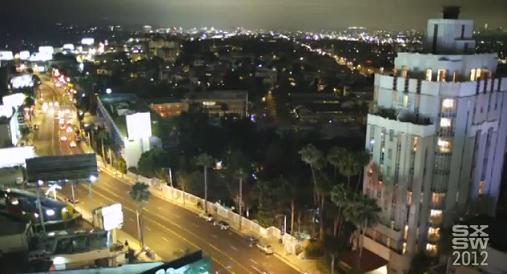
There are few stretches of American road more familiar than the Sunset Strip, a street famous for its nightlife and infamous for its history. It's a mile and a half of legendary clubs, restaurants, stores and hotels, a boulevard with a name that evokes images both glamorous and debauched.
The documentary Sunset Strip captures the titular street in all its moods and guises, celebrating its colorful legends and explaining its history in fascinating detail. With its endless parade of photos, film clips and A-list celebrity interviews, the film pays loving tribute to a place that has mirrored American popular culture for nearly a century.
The Strip's somewhat lurid reputation dates back to its inception in the 1920s, when its location just outside the Los Angeles city limits -- and thus outside the LAPD's jurisdiction -- fostered a vibrant mix of nightclubs, speakeasies and casinos. Sunset Strip's simple, linear structure begins in this era, taking us back to a time when the road was barely more than a country lane. The Thirties, Forties, and early Fifties were a time of glamour and glitz, which the film documents with plenty of clips from movies of the era and glittering photos of Hollywood elites at the Trocadero and other legendary clubs.
By the 1960s, the movie stars had gone; the counterculture quickly replaced them and made the Strip its home for the next decade or so. I was most interested in this segment of Sunset Strip, not only because of my lifelong love of all things hippie, but also because the film is at its most colorful when it shows us with clips of iconic musicians, protests (the most famous of which inspired the Buffalo Springfield song "For What It's Worth") and shows at the Whisky a Go Go. Thanks to interviews with some of the era's wrinkled, grey-headed survivors -- Peter Fonda and record producer Lou Adler now look like hip grandfathers -- we're also reminded that the Sixties happened half a century ago.
Sunset Strip continues in this vein through the Strip's glam rock, punk rock, New Wave and heavy metal eras, when drug-fueled bad behavior seemed to reach its pinnacle and the party threatened to come crashing to earth when John Belushi died of an overdose in his bungalow at the Chateau Marmont. The film takes a somber turn at this point, telling us that the area has since lost much of its low-rent, indie culture authenticity as landmarks closed and corporate offices moved in. But the clubs still pack 'em in and the Strip's spirit lives on.
For all Sunset Strip's glorious vintage film footage and photos, the film's most impressive aspect is its astounding lineup of interviewees, from Hollywood royalty to rock gods and goddesses to charmingly oddball Sunset Strip denizens. There are so many that it's hard to choose which names to drop, but here's a sampling: Dan Aykroyd, Alice Cooper, Phyllis Diller, Mick Fleetwood, Hugh Hefner, Tommy Lee, Courtney Love, the entire Osbourne family, Mickey Rourke and Sharon Stone. (Here's the entire list; obviously, relatively unknown director Hans Fjellestad and his crew weren't shy about contacting agents of the rich and famous.)
All those interviewed tell terrific stories and are exceedingly fond of the Strip, which no doubt has a unique magic and a place in the heart of many an A-lister. Fjellestad ties the interviews together with enough other captivating material to avoid a talking head feel, although some of the comments are a bit redundant toward the film's end.
A very informative exercise in star-studded entertainment, Sunset Strip is a solid documentary that should appeal to fans of celebrity culture and those who want to learn more about one of America's iconic landmarks. It's a great history lesson and a mostly feel-good nostalgia trip though nine decades in a place at the center of American pop-cultural history.