

DVD Review: October Country
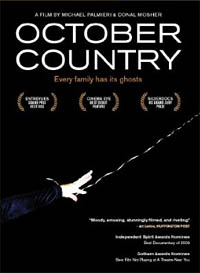 The documentary October Country, which played the Dallas International Film Festival this spring, is now available on DVD
Filmed over the course of a year from one Halloween to the next, we see an American family that seems normal at first. It is through the camera lens that we are allowed a more intimate view of the issues that his family struggle with in their daily lives. Patriarch Don Mosher is a veteran of the Vietnam War, Desert Shield and Desert Storm. He suffers from post-war trauma, never speaking with his wife or family about his experiences. What they do know is that he can't be around fireworks as they remind him too much of the bombs of war. Don's relationship with his sister Denise is nearly non-existent as he does not approve of her lifestyle. She is a self-proclaimed witch, which doesn't bother Don -- he'd be happy if she could make a living at it. Instead Denise is unemployed and living off disability payments because of her rheumatoid arthritis, and so Don considers his sister to be of no use or value in society.
Don's wife Dottie Mosher is the most frequent narrator in this documentary. Dottie appears to be the family member who tries the hardest to keep the family together. Her efforts include providing a home for their son, Chris, who has been in and out of foster homes since the age of 5 until he finally comes to live with the Moshers. Unfortunately, Chris's involvement with drugs and petty theft prove to be too much when he's finally caught with stolen goods that were taken from the Mosher household. Dottie is also trying to ensure that her granddaughter Daneal doesn't repeat the mistakes of her daughter Donna, to no avail. Daneal has continued the cycle of getting pregnant at a young age and then being in physically abusive relationships. The only Mosher female that has much of a chance of breaking the cycle is Donna's youngest daughter, Desiree -- but will she be scarred from the loss of her own father, jailed after molesting his eldest daughter Danael?
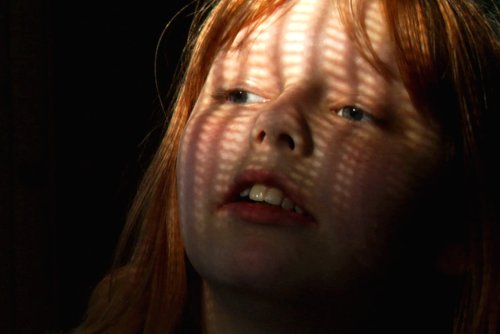
October Country may sound like an over-long and exploitative episode of Jerry Springer, but it's far from that despite the amount of drama I've just described. I see and hear brilliance in Desiree's words about how she will break the cycle, the concern as Donna speaks about the decline of their community, and eloquence in Don Mosher's private moments in the lens. The direction and cinematography are of high production value. Despite Donal Mosher's personal connection to the film's subjects, the film both benefits from his subjectivity and Palmieri's more objective cinematography by creating an extremely intimate and caring view. Even a bright spark can be seen in the eyes of toddler Ruby with a crayon in hand or as she zooms across the room as her mother Daneal talks about the physical abuse from her ex-husband. All these images are woven together with a well-matched soundtrack to create a bittersweet landscape of the Mosher family's lives.
October Country effectively awakens viewers' social consciousness to the disenfranchised working class. When a bright young girl states that she just wants to graduate from high school, and not repeat the mistakes of her mother and sister of making poor choices, you have to wonder what has become of the American Dream.
Extras: The DVD extras