

Review: Crazy Horse
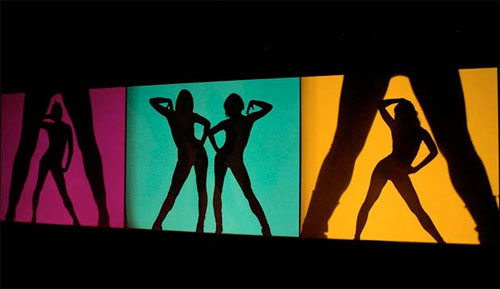
When I was asked to check out Crazy Horse, I wasn't really sure what to expect -- except for the obvious nudity that would appear in a movie about a French burlesque. I hadn't seen any of director Frederick Wiseman's previous work, so his documentary style was very surprising and slightly jarring. Where were the talking heads to give me background on the subject? Or the narration to provide a hint of explanation? Not in this movie! Wiseman's trademark style is to thrust the viewer in the midst of a situation with no exposition or interviews. In this film, we spend a couple of hours at "the best nude dancing show in the world," Le Crazy Horse in Paris.
Throughout Crazy Horse various acts from the venue's new spectacle, "Désir," are interspersed with footage from behind-the-scenes. The show, choreographed by Philippe Decouffle, uses lights and dance to create an experience that is at times hypnotic and entrancing. Mirrors are used for a number -- accompanied by a cover of Britney Spears' "Toxic" (I think it's this one) -- while upside-down legs flow in and out of sight. Another act features two women painted by kaleidoscopic lights as they perform crazy acrobatics. One woman performs with ropes -- a far more erotic act than you'll see in Cirque de Soleil. I found myself simultaneously amazed at the talents on display and dismayed at the lack of vocal talent (not really a problem until the ladies sing songs like "Baby Buns" and "Désir").
We also glimpse behind-the-scenes meetings between staffmembers and Decouffle as he asks the club to close for a short time before the show opens (the owners say no). Thus, we have the theme of art vs. commerce. Decouffle has a certain artistic vision for the show, but is limited by the budget, time and staff available. Or so I assume -- this was the theme I pieced together from discussions Decouffle has with others during the film.
I didn't come away from the movie feeling like the women onstage were objectified exactly, but they never really seem fully humanized either. They quietly follow instruction through their dance numbers, they giggle at videos of ballet bloopers backstage, and they are only named when someone refers to them. As one performer visits with the costumer about her new duds, the costumer tells her that her costume must work with the lights to create the best silhouette (a round ass). In another scene, Declouffe chats with a group of the ladies about issues of production. I wish there had been more from the women involved in Crazy Horse besides the visions of their onstage personas. Wiseman said in a Q&A that he had footage of dancers being interviewed by media, and decided not to use it. That, to me, seems a missed opportunity.
Decouffle and his bald artistic director Ali (as well as a female staffmember whose name I didn't catch) are all interviewed by various media before the show's opening. While the female staffer takes the opportunity to discuss how empowering eroticism can be, Ali chooses to ramble about his ideals of and rules for female beauty. Ali is a character. During a recording session, he is shown mouthing the words along as the women weakly sing-yell the show's title song. He admits to attending the show about 14 times before he was even on staff. Honestly, Ali comes off as creepy and strange, especially in comparison to the determined and focused Decouffle.
In the Q&A linked above, director Wiseman tells that he shot Crazy Horse during the spring and summer of 2009. He admits that one of the themes in his various works is different uses of the body. Crazy Horse truly is a unique vision of form and movement. As an art film, it is beautifully shot and a wonder to watch. As a documentary, I found it lacking and even dull at times. Still, I imagine a ticket to see this film costs much less than a visit to Le Crazy Horse. It's almost as good as being there!