

Mike Saulters's blog
Review: Force Majeure
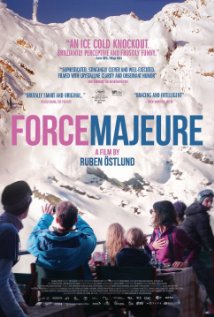 When faced with starvation, some animals eat their young. When facing death, the wisdom goes, nature rewards parents who protect themselves at the expense of their children as, after all, they can always have more children if they survive. There is also a theory that in times of great stress and danger, instinct can take over our actions and override the conscious brain. This week's release at the Arbor, Force Majeure, explores both of these.
Written and directed by Ruben Östlund, the Swedish submission for Best Foreign Language Film in the next Academy Awards won a jury prize at Cannes and audience praise at Fantastic Fest. Peppered with humor at times so subtle I felt it got lost within the drama, Force Majeure reminded me in some way of Escape From Tomorrow. Both films find dark humor with a family of four on holiday when things begin to go nightmarishly wrong.
In this case, that scenario takes the form of a controlled avalanche that proves a little more energetic than expected, threatening the lives of Tomas (Johannes Kuhnke), Ebba (Lisa Loven Kongsli) and their children Vera and Harry (siblings Clara and Vincent Wettergren) as they lunch during their ski trip in the French Alps.
Instead of protecting his family or helping get his children out of the situation, Tomas flees the actually harmless snowdrift. Ebba, shocked by the revelation her husband has failed in a moment of weakness to live up to his role as protector, begins to question their marriage. The children are helpless in the face of the very real possibility that their parents may break up the family as their mother obsesses over an action their father patently denies.
Review: Big Hero 6
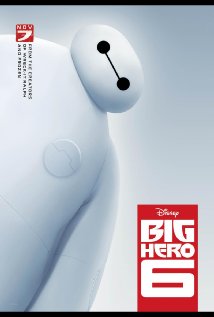 The Walt Disney Animation Studios team continues to knock hits out of the park, following up Wreck-It Ralph and Frozen with this weekend's adaptation of the Marvel comic Big Hero 6. Directed by Don Hall and Chris Williams (Bolt), Big Hero 6 is perhaps a first in presenting modern Asian-American leads as positive role models in a major Hollywood studio production for children.
Young Hiro Hamada (Ryan Potter) is something of a robotics savant, hustling cash in the underground world of robot fighting a la Real Steel. He's encouraged by older brother Tadashi (Daniel Henney) to apply himself and join him in the advanced robotics program led by Roberto Callaghan (James Cromwell). There he meets fellow students Go Go (Jamie Chung), Wasabi (Damon Wayans Jr), Honey Lemon (Genesis Rodriguez), and Fred (TJ Miller).
An unexpected disaster leaves Hiro reeling, and with the help of his friends and Baymax (Scott Adsit), his brother's helpful medical robot, Hiro transforms the group into superheroes in order to fight the evil threatening their city of San Fransokyo.
The screenplay by Jordan Roberts, Robert L Baird and Daniel Gerson is fun for kids, presenting science as a cool way to create fun things. It also treads into some darker subject matter, including how to responsibly deal with grief. Nevertheless, Big Hero 6 is clever and funny with entertaining characters (though fans of the comic will note some changes due to the rights to two characters being owned by 20th Century Fox).
Each character in Big Hero 6 has unique and useful powers fitting their personalities and skills, and everyone is sure to choose a favorite. (Mine was TJ Miller-voiced Fred, who loves to pretend he is a kaiju and gets many of the funniest lines as they are improvised by the actor-comedian.) "Come early, stay late," is the rule for this so that you won't miss the absolutely brilliant short Feast playing along with it or the hilarious post-credits stinger.
Mondo Gallery Hosts 'Batman 75th Anniversary' Show
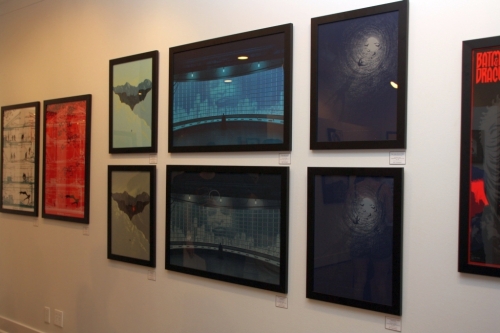
Just a week before Halloween, Mondo launched its "Batman 75th Anniversary" gallery show featuring prints and original works from dozens of artists including Martin Ansin, Craig Drake, Jason Edmiston, Kilian Eng, Francesco Francavilla, Brandon Holt, Alex Pardee, JC Richard, Kevin Tong, Tom Whalen, and many others. Check out my photos below from opening night.
Review: Birdman
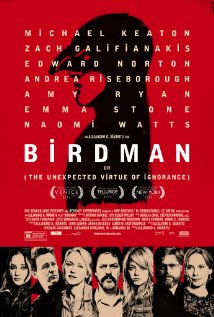 Although Michael Keaton has stated the personality of his character Riggan Thomas is the most dissimilar to himself of any he has ever played, Birdman, it could be argued, is his JCVD. Directed by Alejandro González Iñárritu (Biutiful) and scripted by Iñárritu along with Nicolás Giacobone, Alexander Dinelaris and Armando Bo, it chronicles the efforts of a former Hollywood superhero to reignite the spark of his ailing career.
Hoping to regain relevance, pay homage to the hero who inspired him, and put his family life back together, Riggan Thomas is in the final days of launching a Broadway play he has written, directed, produced and stars in. Guided by an inner voice that sounds not unlike the growling baritone of Beetlejuice, Thomas confronts innumerable internal and external crises that threaten to crush the production.
Behind the scenes, his daughter (Emma Stone), fresh out of rehab, is intent on punishing him for being an absent father. On stage, he must deal with the antics of Mike (Edward Norton), the Broadway darling who is not only perfect for the role but will also bring legitimacy and more importantly, ticket sales to the production. Internally, he struggles with remorse, self-doubt, anger, desperation and an angry flirtation with being a drunken asshole.
So, Thomas has a completely different personality. Keaton may not bare his soul in this, but he bares nearly everything else. He and Norton spend a sizable amount of time in Birdman performing in tighty-whiteys, both for shock value and comedic effect. He doesn't stop at shedding his clothing, however, as even his hairpiece is stripped away. Layer after layer, we peek behind the stage, through the dressing room door, and beneath the clothing and pretense to explore the psyche of an A-list actor.
Review: Annabelle
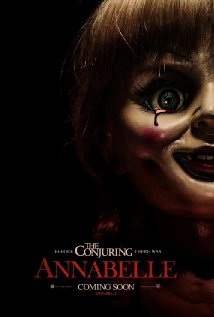 A number of films have been inspired by the cases of paranormal investigators Ed and Lorraine Warren, most notably The Amityville Horror. The most financially successful was 2013's The Conjuring, in which the couple played by Patrick Wilson and Vera Farmiga assist the Perron family (Ron Livingston and Lili Taylor) with the demonic presence troubling their home. That film, which made over $318 million worldwide, is bookended with the tale of another of their cases. In it, the Warrens help a young nurse dealing with the sinister presence inhabiting a doll given to her by her mother. The film closes with a scene set in the basement room where the Warrens keep demonically possessed curiosities, the doll "Annabelle" in her glass case reigning as the most evil and feared. It serves as a perfect introduction for this week's prequel, Annabelle.
I did not expect the studio heads in their mad rush to capitalize on The Conjuring's success to shit all over it, but of course, this is New Line, the company that brought us the Val Kilmer career-killing abortion The Island of Dr Moreau. They cut a $20 million budget to $5 million and replaced venerable Conjuring director James Wan with John R. Leonetti, whose hottest previous credits were Mortal Kombat: Annihilation and The Butterfly Effect 2. They hired an uncredited script polisher from the 2010 remake of A Nightmare on Elm Street who clumsily crafted an origin story set on the other side of the country, a script full of anachronisms, with no connection to the original film other than a vague mention of the Warrens as "some couple the church works with back east." And they replaced Farmiga and Wilson with younger lookalikes.
Fantastic Fest Review: The Tale of Princess Kaguya
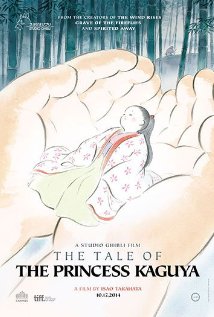 My favorite Fantastic Fest 2014 selection easily won the audience award for best film. Studio Ghibli's latest, The Tale of Princess Kaguya, is also my pick for the best feature from the Japanese animation studio. Directed by Ghibli co-founder Isao Takahata, it is at the surface a straightforward retelling of the 10th-century folktale The Tale of the Bamboo Cutter, perhaps the oldest Japanese story. That simple description, however belies a work of enormous artistic depth evoking powerful emotions.
A bamboo cutter working in the forest finds a glowing stalk of bamboo with a blossom that opens to reveal a tiny princess. He takes her home to raise her with his wife, and she grows with amazing swiftness from an infant into a girl of exceptional beauty and limitless talents. Believing her sent by the gods along with the gold he finds in the bamboo, the old man's vision of Kaguya's future involves a life at court and marriage to a wealthy high-ranking official. She would be happier, however, back home in the hut she first knew, playing in the forest and fields.
Kaguya is enchanted with the simple beauty of nature, finding as much joy in plants and frogs as in the beautiful colors of her fine silks, but there is a mournful sadness in her song. When she plays the koto, the emotion conveyed is overpowering. The success of this film is in no small part due to composer Joe Hisaishi's work. Hisaishi's numerous credits include all of Ghibli's biggest films: The Wind Rises, Ponyo, Howl's Moving Castle, Spirited Away, Princess Mononoke, Kiki's Delivery Service, My Neighbor Totoro, Castle in the Sky and Nausicaa of the Valley of the Wind.
The very few complaints about The Tale of Princess Kayuga regard its length and pace. At 137 minutes, it exceeds the length of Princess Mononoke by three minutes, but little could be trimmed from this emotionally dense film. Takahata packs a lifetime's worth of experience raising a child into that running time, celebrating and reaffirming the meaning of human experience and lamenting how swiftly it passes. Along with Kaguya's parents, we experience the joy of new life, hope for a bright future, disappointment as she makes her own, contrary choices ... and finally acceptance.
Fantastic Fest 2014 Wrap-up: 26 Ways to Party
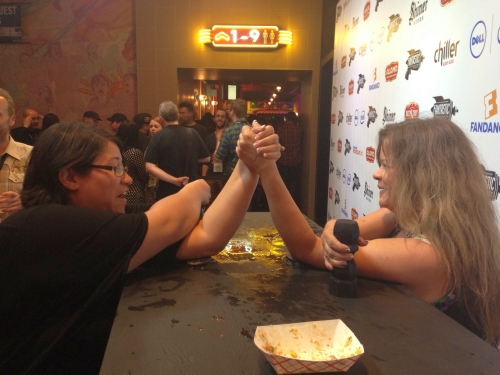
Fantastic Fest 2014 came to a close last week, and the tenth iteration of the festival was as packed with great films and events in the second half as in the first.
A highlight of the festival was I Am A Knife With Legs, the micro-budget comedy written, directed, edited by, and starring Los Angeles comedian Bennett Jones who answered audience questions in character as the existential Europop star Bené. The heavily musical film brings to mind creations such as Borat, though considerably cleaner, stranger and more inventive.
Tuesday night's Secret Screening was introduced by Alamo Drafthouse owner and festival co-founder Tim League, who toyed with the audience, providing nebulous background on the film but dimming the house lights without telling attendees what to expect. The German title Ich Seh, Ich Seh was of little help as well, and it was revealed only after playing that the English title of the film is Goodnight Mommy. This is one film best seen knowing as little as possible about it. Audience opinion was divided but generally positive.
Review: The Boxtrolls
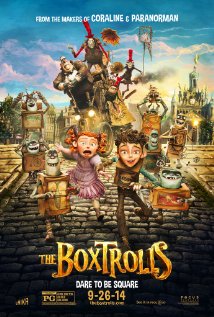 I am always eager to see the latest Laika release. Output is slow from the animation studio due to the time-consuming and meticulous nature of its handmade stop-motion films, but bottling magic is no easy task. There is an ineffable tone in the studio's films -- perhaps because of its complete attention to details, perhaps because of some way natural lighting works compared to digital renderings -- that instills a sense of realism.
With The Boxtrolls, Laika takes on steampunk, creating a Victorian-looking village populated by hundreds of unique, charming (and some not so very) characters. Based on the children's book by Alan Snow, Here Be Monsters, directors Graham Annable and Anthony Stacchi bring to life Eggs (Isaac Hempstead Wright, aka Bran Stark from Game of Thrones) and Winnie (Elle Fanning) as they fight to save their misunderstood friends from the evil designs of wily exterminator Archibald Snatcher (Ben Kingsley).
I found the script somewhat less engaging than Laika's previous two movies, Coraline and ParaNorman, as it felt more appropriate for a younger audience. However, the film was never boring and often uproariously funny. The town of Cheesebridge is full of puns, especially in the character names like Lord Portley-Rind or Snatcher. ("My favorite was The Briehemoth.") There is also an oddball musical number, "The Boxtrolls Song," written by Eric Idle. Kingsley's villainous Mr. Snatcher steals the show (along with the trolls), as he performs with an accent that had me thinking he was Michael Caine.
Fantastic Fest 2014: Fest Half Full
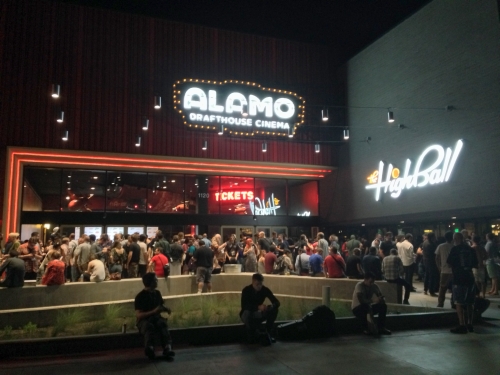
The tenth Fantastic Fest is halfway done, and that means many of the filmmaker guests and industry folks will be departing, but it also means an influx of new faces as second-half badgeholders join in the fray as most of the films' second screenings come around. Now begins your chance to see all the first-choices that the system didn't give you or the second-choices that took a backseat to something you couldn't wait to see.
For incoming second-halfers, you have probably been keeping track on Facebook and Twitter, but some of the hottest tickets for repeats will be Babadook, The Tale of Princess Kaguya, I Am a Knife With Legs, Cub, Force Majeure, Electric Boogaloo, John Wick and Tokyo Tribe.
Fantastic Fest 2014: Grounded in 'Realiti'
 I'm a couple days into my tenth Fantastic Fest, and it's easy to see why I keep coming back. Before the fest even officially starts, there are parties at Pinballz and Peter Pan Putt-Putt and barbecue with friends arriving from around the world.
Day One began with Kevin Smith rapping with Tim League backed by dozens of people in eyeball costumes. It ended with a food fight free-for-all of which I saw only the aftermath: League in a cheeky Carmen Miranda outfit and dozens of people soaked and slathered in every sort of slop.
In between, there was a walrus Freaky Friday (Tusk), an Australian Inception Realiti), and Cub Scout Carnage (Cub).
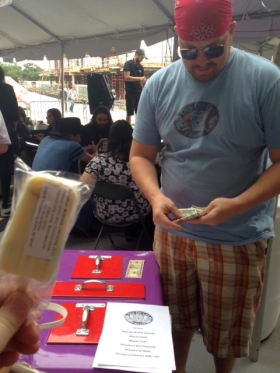
Day Two was a full slate with Jacky in the Kingdom of Women, the Marko Zaror action flick Redeemer, James Gunn-produced horror The Hive, and surreal comic Free Fall. In between these movies, I visited Devin Steuerwald's Dia de las Paletas cart (pictured at right) to keep cool with frozen treats.
So far, the programming at Fantastic Fest 2014 has been heavy on realism, with characters and situations that could actually happen, and short on supernatural or escapist themes. My slate this year has been full of confusing films; Realiti and Free Fall were both difficult to follow in spite of some really amazing scenes and great performances. That said, I did skip the Studio Ghibli premiere of The Tale of Princess Kaguya, which has received rave reviews [note from Jette: I really liked it myself], to see Jacky in the Kingdom of Women.
