

Interview: Vera Mijojlic of SEEFest, Part One
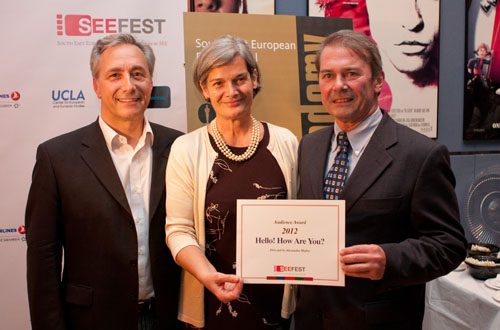
Last week, Vera Mijojlic concluded the 7th annual SEEFest Los Angeles (Southeast European Film Festival), which she created and continues to direct. It is rightly called "the premiere cinematic showcase where films from 15 countries of South-East Europe are presented as an annual thematic snapshot of that turbulent region."
Vera Mijojlic curated Austin Film Society's SEEFest Austin this spring, which includes seven films that have played at different times in SEEFest Los Angeles. Vera will be in Austin tonight (May 15) to present the Romanian film Hello! How Are You? (Alexandru Maftei, 2010) and next Tuesday, May 22, to present the Slovenian film Vesna (Frantisek Cáp, 1953), both at Alamo Drafthouse on South Lamar.
I visited with Vera in August 2010 in Los Angeles, and recently asked her some questions via email.
Chale Nafus: You were born in Bosnia Herzegovina, which at the time was part of Yugoslavia. Tell us about your family history.
Vera Mijojlic: For as long as anyone can remember, every person in my family, on both sides, was born in Bosnia. They were Serbs, and the ancestral home was a quaint town of Bijeljina in north-eastern Bosnia. In the past 20 years it has turned into an overdeveloped monstrosity which I do not recognize at all.
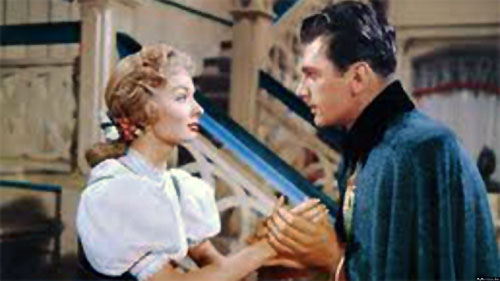
When I was little I spent every summer there, at my maternal grandparents' home. In Bijeljina I saw my very first movie, The Student Prince (Richard Thorpe, U.S., 1954). My grandfather (a wine merchant whose business was nationalized after 1945) took me to see it, and I remember that he had to leave in the middle of the film, but I was so mesmerized by the moving pictures that I didn't mind, and wasn't afraid. I might have been 5 or 6. Yugoslavia was already on best terms with the West and we got to see a lot of American movies, but with a lag time of several years. Only in the early 1970s was Yugoslavia able to show American movies a year or two after their original release.
Most of my father's family perished in WWII so I don't have cousins on his side. My mother's family was large and they almost all survived the war. World War II was a traumatic experience for my parents' generation. Once Hitler invaded Yugoslavia in 1941, the country split into several Quisling states and immediately hostilities between the Serbs, Croats, and Muslims fanned a bloody war-within-the-war, with Tito's partisans fighting the Germans as well as nationalists on all three sides. My dad was a Tito partisan, and so was my mom's brother. They were Communists, idealists, and they believed in the possibility of living together in a free society.
My dad loved photography, and though he would never realize his dream to become an architect, he was the Bosnian equivalent of the board president of a documentary film production company called Sutjeska Film in Sarajevo. So I grew up watching docs and reading scripts that he was bringing home to read. My mom, a history student and a voracious reader, stayed at home, and she instilled in me the love of books and history.
But most of all my parents raised me to be independent and a free thinker, to fight injustice and to protect those who are unjustly under attack. They taught me to love and respect older people and to listen to their stories, which to this day I love to do. They gave me this strong sense of freedom to be who I want to be, and they introduced me to two loves of my life, books and movies.
Tell us about your experiences in the public schools of Yugoslavia (Bosnia)?
Mijojlic: The schools were serious learning institutions! That pretty much sums it all up. I had a great education, all of it free. The curriculum was always demanding, and we had a ton of homework every day. Teaching tools were modest, of course, but that environment stimulated our imagination to no end. We did have some visual tools, slide shows and short info-movies, for example, one about TB and how it spreads (I remember that one well! It was scary). Biology lessons were taught with the aid of animation or slideshows.
Gymnastics I did well, but in basketball I couldn't hit the hoop and pretty much failed at every game. Another difficult subject for me was fine arts education because I can't paint, draw or make watercolors, much less sculpt. I had a lovely teacher, an elegant lady dressed like a movie star from old Hollywood movies I was seeing at the Kinoteka [movie theater]. She spent a lot of time trying to train me but eventually gave up and assigned essays on art rather than art-making. So while my classmates were doing portraits or making pottery, however modestly but still recognizable, I was researching big, coffee-table art monographs my teacher would bring to class. Thanks to her, and later in high school to my art history teacher, I learned how to see art and to appreciate what is not immediately obvious.
The elementary (8 grades) and high school in Sarajevo were great and I learned a lot, but still I was always somehow in my own world that was different from that of my peers. While girls in school all wore makeup and spent all their money on the latest fashion, I spent every penny of my pocket money on tickets for the Kinoteka, the Yugoslav Film Archive's theater (each Yugoslavian republic's capital city had one). I watched everything, sometimes three movies per day on weekends. That was the chief reason I started tutoring, to get extra money for the movie tickets.
In the Sarajevo Kinoteka theater I was such a regular visitor that they decided to give me a card, like a pass for all shows. I couldn't believe such things happened in real life. I would wait until all other visitors would get in and then find my seat. I watched everything indiscriminately. My tastes developed in an eclectic way, influenced by many factors from my own life, so it felt like movies and reality were one and the same. I watched Nelson Eddy and Jeanette MacDonald melodramas and Tom Mix westerns because my father was telling me about seeing their movies before the war.
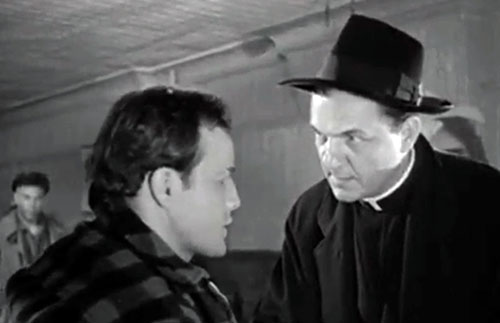
My dad was crazy about Westerns. Unaware of John Wayne's politics (not that it would make much of a difference, dad knew a thing or two about the public and private sides of artists), he watched every one of his films. He also never missed reruns on TV of On the Waterfront, and he used to say always the same thing, that the priest played by Karl Malden should be appointed to the Central Committee in Belgrade to clean things up. Dad liked thrillers, dramas, WWII movies, action movies, and he loved Buster Keaton, Laurel and Hardy, Charlie Chaplin, as well as good documentaries. He had no patience for melodramas or love stories. He thought they were all a bunch of nonsense. He also thought that 90% of films from the Eastern bloc were bad propaganda movies. But he admired Andrzej Wajda [Poland], and after seeing Andrei Rublev (Tarkovsky, USSR, 1966), he spent hours talking with his doc movie friends, smoked a pack of cigarettes and felt as close to god as a communist can ...
My mom liked good dramas, historical and war movies, and she really liked two actors: Gregory Peck and Gerard Philipe. She took me to see Roman Holiday, The Charterhouse of Parma, My Fair Lady, Becket, Who's Afraid of Virginia Woolf, The Little Foxes, The Lion in Winter, To Kill a Mockingbird, The Night of the Generals, The Leopard, Bitter Rice, The Bicycle Thief, The Night Porter, and here in L.A. thanks to her I saw The Cranes are Flying (USSR, 1957) again.
I also watched a lot of silent films from the Soviet Union, Dziga Vertov and Sergei Eisenstein included of course, Czech-German films (Erotikon, with Yugoslav/Slovene actress Ita Rina), all the standards [such as] The Passion of Joan of Arc, The Cabinet of Dr. Caligari, Frankenstein (I loved Boris Karloff and felt bad for him), L'Atalante, and so on. I had a lot of catching up to do, at once watching the Italian neorealism masters as well as Melville, Coppola, Kubrick, Ken Russell, Lindsay Anderson (loved The Sporting Life when I first saw it), and lots and lots of all kinds of movies, plus docs, many of which were usually great in Yugoslavia at the time.
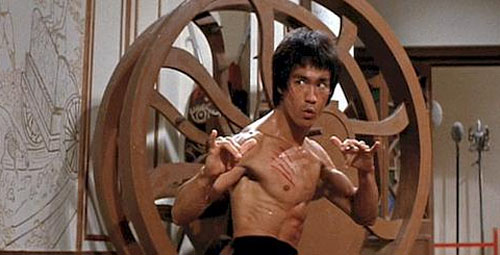
I loved many of the "B" movies (nothing "b" about them, but that's another conversation), Robert Aldrich's The Grissom Gang, as well as Bruce Lee's Enter the Dragon which I saw again in L.A. some 10 or 15 years ago, at the Nuart, and when I got there the line was so long I thought I wouldn't get in! When the movie started everyone in the audience knew the lines, and it was just like in Sarajevo and Belgrade, when the young street urchins who had the monopoly on ticket scalping would keep the tickets for themselves and watch Bruce Lee, mouthing the lines of the dialogue in a weird, incomprehensible English which they parroted in a murmur very like the mumbling of a prayer in a church. That's why I loved Bruce Lee, because I loved the kids who loved him.
Another crucial part of my public education in Sarajevo was the Institute for Foreign Languages where I learned English. By the age of 14 I was already fluent. It was my parents' best investment. The Institute was not free, but the tuition was fairly affordable. The head of the English department was a guy whose last name was Kalman. After his initial interview with me he urged my parents to let me study as a full-time student, something they were hesitant about because I also had to attend regular school. I spent hours studying several evenings per week and completed all available courses before I finished 8th grade at the elementary school. I remember reading a lot of O. Henry short stories, which were required and favorites at the Institute. "The Gift of the Magi," of course, was my favorite. Many years later, here in L.A., I read that story to my kids, and told them about my Institute days in Sarajevo when I first heard about O. Henry.
I certainly have an O. Henry surprise in store for you when you are in Austin. Now, while you were still in high school, you went to Paris. Tell us about that experience.
Mijojlic: [That happened] at the height of my Kinoteka persona. I will never forget how I arrived, dressed up and preppy, with two elegant suitcases filled with clothes that were better suited for a matron than a young teenager. I wore my hair in a chignon, was deadly serious about everything, and had no social skills for a city like Paris. I spent my entire time there studying at the Alliance on Boulevard Raspail, renting cheap rooms that used to be for maids, got myself a secretarial job at a trade office of a Yugoslav company on Avenue Hoche, and spent my evenings going to theaters on Champs-Elysees and following that with a late-night visit to the great drugstores, where I would order peche melba and feel worldly. I walked a lot and got to know the city pretty well. I kept coming for a while every August, and a few times when I was in Paris around the time of the Cannes festival I took the night train to the coast and met my film friends who had a movie at the festival.
So, when you were ready to go off to Belgrade to the University, what did you decide to study?
Mijojlic: I chose journalism because I wanted to write about my experiences with movies. Maybe it's not quite the whole truth. I didn't know what I would do with myself at the time. I thought I wanted to be a writer, smoke cigarettes, become a drunk, lead a short and scandalous life and author one good collection of short stories (hello, O. Henry!). My dad devised an ingenious plot: a wager. He bet that I would not finish the first year at the University, and if I did, he'd treat the whole family to a spectacular lunch. The reward was negligible, but the challenge was something that I simply had to take on. So I did finish the first year, and all others, and got a degree. By that time I was already writing a column for the Sarajevo cultural review called Echo (Odjek), and my essays went under a headline "Letters from Belgrade."
For the term paper, I wanted to do Nietzsche, but Nietzsche as the poet. I was influenced by my great-uncle who possessed a vast library and who read to me from the German edition of Thus Spoke Zarathustra, translating as he read. In his reading, Zarathustra came across as a poetic vision of humanity, and my uncle begged to differ from the interpretation of Nietzsche as the ideologue and doctrinaire thinker. This session with my great-uncle made a lasting impression on me. My essay was not a memorable one, but my experience with it meant a lot to me.
Later, preparing for exams in the politics of culture, I used as the basis of my general approach a short collection of essays, On the Repulsive (1972), by a wonderful, groundbreaking Yugoslav/Serbian filmmaker Zivojin Pavlovic. [He wrote] about the relationship between the viewer and the object of his/her viewing (art, photograph, TV). It is a great book, one of those booklets like Raymond Queneau's Exercises in Style, or Boris Vian's L'arache-coeur (Heartsnatcher). With the voice of my great-uncle in the background, I deconstructed the confluence of politics and culture and peeled back the layers of newspeak in the media. I was probably Miss Smarty-pants of the month, but the professor gave me a good grade.
While getting your degree in journalism at the University of Belgrade, you continued writing "Letters from Belgrade" for the Sarajevo cultural review Echo (Odjek). Were you writing other articles and essays at the same time?
 Mijojlic: Yes, I was an accredited journalist covering short and documentary festivals, international film festivals, the Yugoslav National Film Festival in Pula, the Cannes Film Festival, as well as the annual Writers Congress, music festivals, and art salons. I was still a student, and I led a glamorous life, at least by my Kinoteka standards. I was a chain smoker, which I had to quit after coughing bouts became intolerable. (My father died of lung cancer, a long time ago).
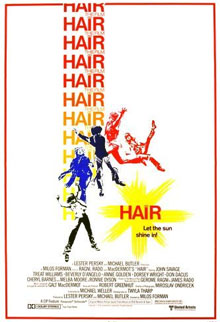
The cultural scene in Belgrade in the late 1970s/early 1980s was fantastic, and with a Yugoslav passport anyone was able to travel everywhere and have enough money to go shopping in London or at least in Trieste, Italy. I was interested in everything, so I covered everything and wrote like crazy. As a freelance writer, I published articles and reviews in any paper that would have me, including the main Belgrade daily Politika, and the newsmagazine NIN. One of the highlights of those years was my two-page spread in NIN on Milos Forman's Hair, which I saw in Paris. Another was my interview with Glenda Jackson, whom I met on the set of Hedda. Then interviews with Francis Ford Coppola, Robert de Niro, Michelangelo Antonioni. There was an interview I didn't do, but memorable nonetheless -- with Sam Peckinpah. He had pretty much thrown out every journalist who ever approached him during his stay in Belgrade. By chance one morning I found him alone in the lobby of the hotel, sober and in a semi-foul mood. We had a pleasant conversation and laughed a lot, but I didn't flip out my notepad. I somehow felt that it was a private moment and that he just didn't feel like saying anything much for public consumption.
Tell us about your experiences with American and French film production companies shooting in Yugoslavia.
Mijojlic: Oh, that was the greatest fun! I started working on films because writing didn't pay very much. Thanks to my knowledge of English and French, I was hired to work on international productions filming in Yugoslavia. I was production secretary, 3rd assistant director, interpreter, and most often assistant to foreign producers. I went location scouting with them, sat in on negotiations with local banks about money transfers, listened to ludicrous financial schemes where money owed to foreign conglomerates by local bottling companies would be used to cover part of the production costs. It never was, but I enjoyed being the fly on the wall when these talks took place.
My film production experiences included Benia Le Roi (Silberman Productions), Twist Again a Moscou (Gaumont), The Secret Diary of Sigmund Freud (20th Century Fox), The Fortunate Pilgrim (NBC), The Dark Tower (Howard Productions), and dozens of screenplays that I translated and breakdowns which I did, so local line producers could put together budgets. Most importantly, I learned how hard it was to make a movie, even a bad one. I never forgot the 20-hour days, and the bone-chilling night shoots in the middle of winter, when we were all pulling cables out of the frozen snow and lighting a castle in the middle of nowhere like a Christmas tree. I met great people -- Sophia Loren, Hal Holbrook, Klaus Kinski, Philippe Noiret, Pierre Guffroy (Oscar-winning production designer on Tess) -- and worked with fantastic local crews who built incredible sets and labored day and night to make these movies.
I understand you also helped with the film production documenting the 1984 Winter Olympic Games in Sarajevo, your hometown.
Mijojlic: That was the glorious time in Sarajevo. I was hired by Jalbert Productions, who won their first contract for the official documentary film of the Games. The company still exists, in Huntington and New York, N.Y. and they specialize in sport films. Although I grew up in Sarajevo where everyone went skiing, I never liked snow and during the Games I was happy to stay indoors at the press center, where I ran the office and organized whatever they needed from me while they were up there on Olympic venues filming. It was a special kind of filming, when you only have one chance to capture the action -- you can't very well ask the athletes to please repeat the race for the second take. We had several camera units and with pre-production I worked close to three months. It was an exciting time, only 8 years before the bloody war would start on those same streets.
[Look for Part Two of Chale's interview with Vera Mijojlic next week before the Vesna screening.]
[Photo credit: Pascal Ladreyt, executive director, ELMA (European Languages and Movies in America); Vera Mijojlic, founder and director of SEEFest; and Catalin Ghenea, Consul General of Romania in Los Angeles on the closing night of SEEFest, May 7, 2012. Photo courtesy of SEEFest.]